Detailed Explanation of Key Points in Freshwater Farming Techniques for Whiteleg Shrimp
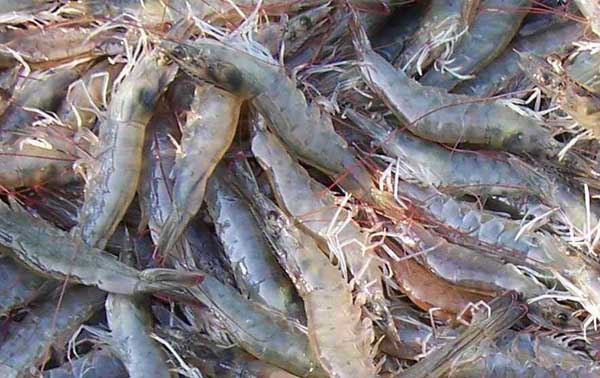
Whiteleg shrimp, also known as Penaeus vannamei, is native to the Pacific coast of Central and South America from Peru to Mexico, and is one of the three finest shrimp species with the highest farming output in the world known to date. In July 1997, the Guangxi Freshwater Research Institute succeeded in desalination farming of whiteleg shrimp, and it is now being promoted nationwide. Whiteleg shrimp has outstanding advantages such as high yield, with output per mu reaching 400 jin; high value, at 30-40 yuan per jin; and strong disease resistance, generally not being infected by explosive shrimp diseases. This year our city plans to introduce this species as an important variety for developing our city's aquaculture industry. The main farming techniques are introduced below for the reference of the vast number of aquaculture farmers:
Pond Conditions
An area of 2-3 mu, mud-sand bottom, with a water depth of about 2 m, and the water inlet filtered with 60-mesh silk bolting cloth. Before stocking the fry, retain 50 cm of water, clear the pond with 110 kg/mu of quicklime and 32 kg/mu of tea seed cake, and install one 1.5 kW impeller-type aerator.
Fry Stocking
Stock fully desalinated shrimp fry about 2.1 cm long, and note that fully desalinated fry must be used! It is best to go to the nursery a few days before purchase to observe the desalination situation, so as to buy fry with confidence. One day before stocking, turn on the aerator to increase oxygen, and before a large batch of fry is put into the pond, release a small number for a test. The stocking density is 40 tails/sq m; one month after stocking the shrimp fry, release 30-40 silver carp and bighead carp of 0.25 kg/tail.
Farming Management
1. Feed: Feed feeding follows the principles of "fixed time and fixed amount, fixed location and fixed quality, small amounts fed frequently, and specific adjustments." Set up three to four feeding trays in the pond. For half a month after stocking the fry, feed four times a day, with a daily feeding amount per 10,000 shrimp fry of 5 eggs, 0.2 kg of peanut bran, 0.75 kg of small fish, and 0.3 kg of small shrimp feed. After half a month, feed three times a day, mainly with compound feed, at a feeding amount of 30-40% of shrimp body weight, with appropriate supplementation of natural bait. The feeding amount gradually decreases as the shrimp grow.
2. Water quality: Although the shrimp fry are desalinated fry, they still have seawater habits, so 50 ppm of crude salt should be added to the pond before stocking the fry, and crude salt should be added in appropriate amounts afterward. Within one week after stocking the shrimp fry, maintain a water level of 50 cm, then increase it by 5 cm per day until the water depth reaches about 160 cm. Change 20% of the water every 4-5 days, and apply 12-15 ppm of quicklime every 10 to 15 days. In order to provide a good living and growing environment for the shrimp, half a month after stocking the shrimp fry, transplant some water hyacinth, with an area of 20%, and fix it with moso bamboo to prevent it from spreading everywhere. Turn on the oxygen-increasing pump at the appropriate time; normally turn it on at 10:00 p.m. on schedule and turn it off at 8:00 a.m. the next day. In case of special circumstances (stuffy heat, before heavy rain), turn it on in time!
3. Records: For better farming and development in the future, it is hoped that the vast number of farmers will keep daily records, including shrimp growth conditions, feeding conditions, air temperature and water temperature, and so on.
In short, farming whiteleg shrimp has broad prospects and economic benefits.