Detailed Explanation of Key Points of Chinese White Shrimp (Penaeus chinensis) Aquaculture Technology
What we usually call "duixia" (true shrimp) generally refers to the shrimp in the genus Penaeus and the genus Metapenaeus. Taxonomically, they belong to the phylum Arthropoda, class Crustacea, order Decapoda. The Chinese white shrimp is mainly distributed in China's Bohai Sea and Yellow Sea, and its traces can sometimes also be seen in the East China Sea and South China Sea, but in very small numbers. Below is an introduction to China's main aquaculture species, the Chinese white shrimp (also known as the Oriental shrimp).
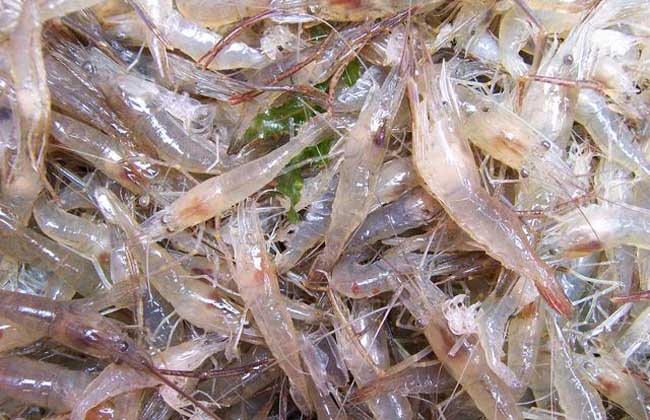
Reproductive Habits and Life History of the Chinese White Shrimp
Female and male Chinese white shrimp reach maturity at different times. Males can reach sexual maturity in the same year, while females do not mature until April or May of the following year. After the males mature, they mate with females from about mid-October to early November. During mating, after the female has molted and before the new shell has hardened, the male deposits the spermatophore into the female's seminal receptacle. After mating, the female's seminal receptacle changes from its original flat, transparent state to a plump, slightly convex, milky white appearance.
From April to June of the second year after mating, the female's gonads mature and she spawns. The spawning water temperature for the Chinese white shrimp in natural sea areas is 13-18 degrees C. Under artificially controlled temperature conditions, spawning can be advanced to March. The Chinese white shrimp has the habit of spawning multiple times (in batches). When the female spawns, she releases the sperm from the seminal receptacle to combine with the eggs as she lays them.
From spawning, fertilization, and hatching to the postlarval stage, the Chinese white shrimp goes through 3 completely differently shaped stages and 9 molts, namely the nauplius, zoea, and mysis stages before reaching the postlarval stage. The postlarva then undergoes 14 to 22 more molts before reaching sexual maturity to mate and reproduce.
Environmental Factors for Shrimp Seedling Rearing
Shrimp seedling rearing in the south is generally carried out in cement ponds. The suitable environmental factors for Chinese white shrimp seedling rearing are:
1. Water temperature: The most suitable water temperature for spawning and fertilized egg hatching is 18-20 degrees C, for the nauplius stage 20-22 degrees C, for the zoea stage 22-24 degrees C, and for the mysis stage 23-25 degrees C. However, when the shrimp are reared to the postlarval stage, 2-3 days before the seedlings are ready to leave the pond, the temperature should be gradually lowered to approach the water temperature of the grow-out pond, so as to avoid death from too great a temperature difference after leaving the pond.
2. pH value is generally between 7.8 and 8.6.
3. Salinity is generally around 25‰.
4. Dissolved oxygen is above 4 milligrams per liter.
Grow-out Technology for the Chinese White Shrimp
1. Pond clearing and pest elimination: After the pond is built or an old pond is repaired, 20 days before the planned stocking, pond clearing must be carried out. Pond clearing includes removing silt, miscellaneous algae, and animal pests. The method for eliminating pest organisms is as follows: for ponds that do not collect water, after harvesting the shrimp, drain the pond water and expose it to the sun for a winter, which achieves the purpose of elimination. However, for ponds that cannot be drained and sun-dried, chemicals must be used for elimination. Commonly used chemicals include tea seed cake, bleaching powder, derris extract, and quicklime.
2. Cultivation of live food organisms: After clearing, water can be introduced to cultivate live food organisms. These are the basic bait for shrimp stocking and have the advantages of simple method, high nutritional value, labor saving, and reduced production costs. In a shrimp pond with well-cultivated basic bait, no bait needs to be provided within half a month after the shrimp seedlings are stocked.
3. Shrimp seedling transportation and precautions: Whether shrimp seedlings are transported properly has a great impact on their survival rate. Dissolved oxygen and water quality during transportation are the main factors. At present, most are transported using oxygen-filled polyethylene bags. This method is lightweight, safe, and adaptable to various means of transport. In a polyethylene bag with a volume of 10 liters, put in about 1/4 fresh seawater and about 20,000 shrimp seedlings, then fill with oxygen to about 3/4, and then tie the bag opening tightly. Transportation within 10 hours will not be a problem. If the bags are placed in cardboard boxes, it will be safer. Precautions for shrimp seedling transportation include: (1) Do not use the nursery water from the seedling-rearing pond for loading the seedlings; use fresh seawater instead. In addition, turbid or contaminated seawater must not be used. (2) The transportation time is best arranged in the early morning or evening, avoiding the intense midday heat. The transport water temperature is best controlled to be similar to that of the seedling-rearing pond, and try to avoid exceeding 20 degrees C.
4. Precautions when releasing seedlings: When releasing seedlings, pay attention to whether the physical and chemical factors in the shrimp pond are suitable for the survival of the seedlings. Generally, when stocking in April, the water temperature should rise and stabilize above 14 degrees C. When releasing seedlings, the water depth should be no less than 40 cm, the salinity should be 20‰-30‰, and the pH value should be 7-8.6.
5. Routine management during grow-out
(1) Pond patrol and observation. After the shrimp seedlings are stocked, it is necessary to conscientiously patrol the pond and carefully observe the dynamics in the shrimp pond and changes in environmental factors, so as to prevent accidents. The main contents of pond patrol and observation are: whether the gate and filter screen are tight and intact, whether the shrimp's activity, feeding, and molting are normal, whether the differences in environmental factors are too great, and whether the pond water has any abnormal odor.
(2) Water exchange. Water exchange is a necessary measure to improve the water quality conditions of the shrimp pond. It can increase dissolved oxygen in the water body, regulate salinity, pH value, and water temperature, control excessive reproduction of unicellular algae, carry away metabolic waste, improve environmental conditions, increase live food organisms, and stimulate shrimp molting. The specific operation is generally: in the early stage (within half a month after the shrimp seedlings are stocked), focus on adding water, adding a small amount each day until the shrimp pond is full; thereafter, exchange an appropriate amount of water every day; in the middle and late stages, the daily water exchange volume can be increased to about 30%. In the late stage under normal conditions, the daily water exchange volume is best controlled at about 50%, so as to avoid too great differences in environmental factors when the water exchange volume is too large.
(3) Feeding. At present, in the southern Zhejiang area, the feed for shrimp aquaculture is mainly small fish and shrimp caught with stake nets, and some compound feed and clams, snails, etc. are also fed.
Research shows that the feeding of shrimp has the following characteristics. First, the central nervous system of shrimp is simple, and it is very difficult for them to form conditioned reflexes, so conditioned stimuli cannot be used as feeding signals. Second, the visual range and activity range of shrimp are both small, and they mainly rely on smell to find food. Third, shrimp capture food with their chelipeds, hold the food with their maxillipeds, then tear it apart with their small maxillae, and chew it into the stomach with their large mandibles. Therefore, the feed needs to have a certain shape; it cannot be too fine, nor can it be too large. Fourth, the feeding of shrimp changes regularly with the molting cycle. Newly molted shrimp do not eat anything because their bodies have not yet hardened. Fifth, under good water quality conditions, for healthy shrimp within the suitable temperature range of 7-32 degrees C, the food intake of shrimp increases as the water temperature rises. Therefore, when feeding, the amount of feed and the size of feed pellets need to be determined according to the above characteristics and the individual size of the shrimp. Under normal conditions, one hour after feeding, more than 70% of the shrimp should have full or half-full stomachs. 4. Compound feed for shrimp. Due to the continuous expansion of shrimp aquaculture area and the fishing moratorium management during the breeding season, compound feed must be used during the aquaculture process to replace natural bait. The advantages of good compound feed are: it can suit the nutritional needs of shrimp at different stages, especially by using the complementary effect of proteins to improve feed utilization, reduce pollution of water quality and substrate by bait, reduce disease, and facilitate storage and feeding. Therefore, at a time when diseases are seriously affecting the shrimp aquaculture industry, experts call for the use of compound feed for shrimp aquaculture as much as possible, which can play a role in preventing and controlling diseases.
Diseases and Disease Prevention and Control
Diseases of cultured shrimp can be divided into two major categories: biological diseases and non-biological diseases. Biological diseases include viral diseases caused by baculoviruses, rickettsia-like organisms, pathogens, etc., bacterial diseases caused by Vibrio, etc., fungal diseases caused by Fusarium, etc., protozoal diseases caused by Epistylis, etc., and helminthic diseases caused by nematodes, tapeworms, etc. Non-biological diseases include nutritional diseases caused by malnutrition, environmental factor diseases caused by poor water quality, and toxic diseases caused by harmful chemical substances.
The occurrence of shrimp diseases is quite complex. Although the existence and invasion of biological and non-biological disease factors are the direct causes of shrimp disease, it is not necessarily the case that the presence of pathogenic organisms will definitely cause disease or even death. This also depends on the health status of the shrimp body and environmental conditions. Therefore, protecting the environment and strengthening the physique of the shrimp can play a preventive role.
At present, the prevalence of diseases during the shrimp grow-out period has become a global problem. It has dealt a devastating blow to the shrimp aquaculture industry, and no effective prevention and control method has yet been found.