Detailed Explanation of High-Efficiency Cage Culture Techniques for Freshwater Shrimp
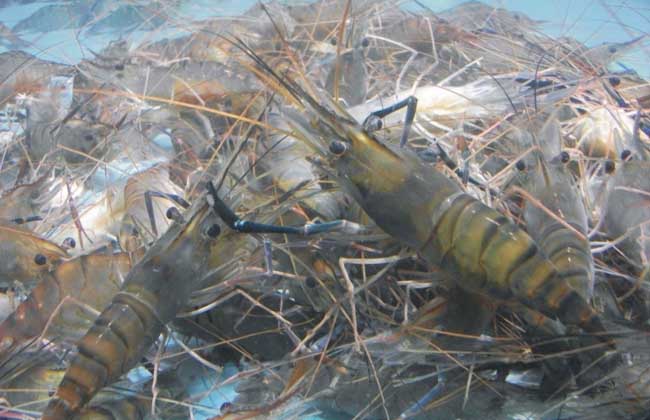
Cage culture of freshwater shrimp is generally carried out in rivers, lakes, reservoirs and other waters with good conditions. Because large water surfaces have the advantages of good water quality, sufficient dissolved oxygen, and convenient removal of wild trash fish, they are very beneficial to the growth of freshwater shrimp. Therefore, making full use of the superior natural conditions of large water surfaces and actively developing cage culture of freshwater shrimp is a culture method with great prospects for development, and also an important way to develop and utilize large water surface resources.
Selection of Culture Waters
The waters where shrimp cages are set up should generally be selected as reservoir bays, lake inlets and river channels with clear water quality, sufficient sunlight, slight slow flow, a pH value of 7-8.5, a water depth of more than 2 m, flat bottom, little sludge, and no pollution. Such waters have superior environmental conditions, are suitable for the growth of freshwater shrimp, and can generally achieve relatively good culture results.
Structure and Installation of the Cage
Moso bamboo floats and polyethylene netting are used as the net clothing; ropes are threaded through the four sides of the cage bottom and tightened and fixed to the lower ends of bamboo tips and bamboo strips to replace sinkers. To reduce cage cost, increase water exchange, improve wind resistance, and facilitate removal of wild fish and selective harvesting, the cage should be built in a rectangular shape, with specifications of 10 m X 6.67 m X 1.3 m. Mesh size is the main factor affecting water quality inside the cage. If the mesh is too dense, attachments on the cage walls easily increase and block the mesh, water inside and outside the cage is not easily exchanged, and water quality will deteriorate; if the mesh is too large, although water exchange is good, small trash fish easily enter the cage to prey on shrimp fry, affecting shrimp fry survival rate and yield. Therefore, the mesh of the net clothing on the cage bottom and walls should preferably be 24 meshes/cm2. For the depth to which the cage is sunk into the water, considering that the carapace of freshwater shrimp is difficult to withstand relatively large water pressure, 0.9 m is preferable. If the water layer is too deep, their gills will be compressed, causing breathing difficulty. The height of the escape-prevention net should preferably be 0.4 m. Because the second pair of walking legs of freshwater shrimp is relatively well developed and has strong climbing ability, the mesh specification of the net clothing used for the escape-prevention net cloth should preferably be 196 meshes/cm2. The cage is installed in an open floating style and can rise and fall freely with changes in water level. The installation method is: use 4 moso bamboo poles and bind them into a rectangular bamboo frame of 10 m × 6.67 m. Drill one round hole with a diameter of 5 cm at each of the four corners of the bamboo frame, insert one 1.4 m bamboo tip into each hole, inserted 0.9 m below the hole. Install a simple pulley at the lower end of each bamboo tip, and tie ropes at the four corners of the cage bottom so that they pass through the pulleys, are tightened, and then fixed to the bamboo frame.
The four corners of the upper opening of the escape-prevention net are also tied with ropes, tightened against the bamboo tips, and bound firmly to the upper ends of the bamboo tips. On the bamboo frame of the cage, bind one thick bamboo strip 1.3 m long every 2-3 m; the lower end of the bamboo strip is tied to the cross rope at the cage bottom, and the upper end is tightened against the cross rope at the upper opening of the escape-prevention net and bound firmly. Drive one moso bamboo stake close to each of the four corners of the cage, with the lower end into the mud and the upper end exposed above the water surface. Then tie the top ends of the bamboo tips fixed on the cage to the bamboo stakes with rope loops. Make the cage sink 0.9 m below the water surface, with 0.4 m exposed above the water surface as the escape-prevention net. For cage layout, arrange every 5 cages in one row, with a cage spacing of 4-5 m and a row spacing of 5-6 m. Because freshwater shrimp mostly disperse to seek food at night, do not set up fixed feeding platforms. Place 3-5 sq m of water hyacinth and other aquatic plants in each cage. The aquatic plants should be arranged in strips along the longitudinal direction of the cage shape, and must not be placed close against the escape-prevention net, to prevent the shrimp from using the aquatic plants as a ladder to climb along the cage wall and escape. The roles of placing aquatic plants in the cage: first, they can be used as natural feeding platforms for bait; second, the underwater root system can serve as a habitat for shrimp; third, the tender roots can serve as green feed for shrimp; fourth, the leaves can provide shade and lower temperature, promoting the shrimp's appetite; fifth, after entering winter, the aquatic plants are frosted, sink to the cage bottom, and can serve as a warm overwintering place for shrimp.
Shrimp Seed Stocking
Cage shrimp culture can raise two batches a year. The first batch is summer stocking, usually carried out in March and April, using overwintered shrimp seed for stocking. The stocking specification is 1000-2000 individuals/kg, with a stocking rate of 50,000-60,000 individuals per mu. After harvesting in mid-July, autumn culture is then carried out, generally stocking in late July to August with shrimp seed bred and cultivated in the same year. The shrimp seed specification is 2000-5000 individuals/kg, with a stocking rate of 80,000-100,000 individuals per mu. Before shrimp seed enters the cage, it must be weighed, counted, and handled with water. During handling, the shrimp seed must not be piled up and pressed, and the time out of water should generally not exceed 5 minutes, nor should it be exposed to the scorching sun. The shrimp seed stocked in the same cage should be uniform in specification and stocked sufficiently in one go. The stocking time should preferably be chosen on cloudy days or in the morning and evening of sunny days. Shrimp seed that has been transported needs to be kept for 1 day before being put into the cage. For natural shrimp seed obtained by capture, dead seedlings must be removed before stocking.
Feeding and Management System
The bait fed in cage shrimp culture is basically the same as that fed in pond shrimp culture. However, cage shrimp culture requires an appropriate increase in the number of daily feedings. Generally, feed twice a day: at 8 a.m., feed 1/3 of the daily bait amount, and after 5 p.m., feed 2/3 of the daily bait amount. Powdered bait is placed on the aquatic plants, and other bait is broadcast over the whole cage. The daily feeding amount is generally controlled at 5%-8% of the weight of shrimp stored in the cage. After the bait is placed, carefully observe the feeding situation of the freshwater shrimp. If the bait is eaten relatively quickly, the feeding amount can be appropriately increased that day and the next day. In addition, when the weather is cool and the climate is suitable, the feeding amount can also be appropriately increased.
Generally, compound bait is used to culture freshwater shrimp, and the feed coefficient is usually between 4.34-5.47. The protein content of the compound bait is required to be above 35%. Powdered feed loss is relatively serious, and the feed coefficient is relatively high. Compound pellet bait should be actively promoted for culturing freshwater shrimp. Cage culture of freshwater shrimp. The management work of cage shrimp culture is also very important, and it is required to achieve four diligences, four preventions, and removal of wild fish. The four diligences are: diligent patrolling, diligent inspection, diligent cage brushing, and diligent maintenance; the four preventions are: preventing sunken cages and shrimp escape, preventing human destruction and theft, preventing strong winds from overturning the cages, and preventing pesticide pollution; removal of wild fish means clearing wild fish and enemies dangerous to freshwater shrimp. One month after shrimp seed is put into the cage for culture, fish such as mandarin fish, carp, topmouth gudgeon, Hemiculter leucisculus, eel and river crab will all pose dangers to freshwater shrimp, and their invasion must be strictly prevented; if found, they should be removed in time. The method of removing wild fish is to pull up the cage, gather the fish and shrimp in one corner of the cage, and catch the wild fish and harmful fish by hand. Generally remove once every half month. Water rats also eat shrimp very seriously, and efforts should be made to catch and kill rats. Water birds also often come to cause damage and can be driven away and killed with a shotgun.