How to Achieve High Efficiency in Pond Farming of Freshwater Shrimp? Key Technical Points Explained
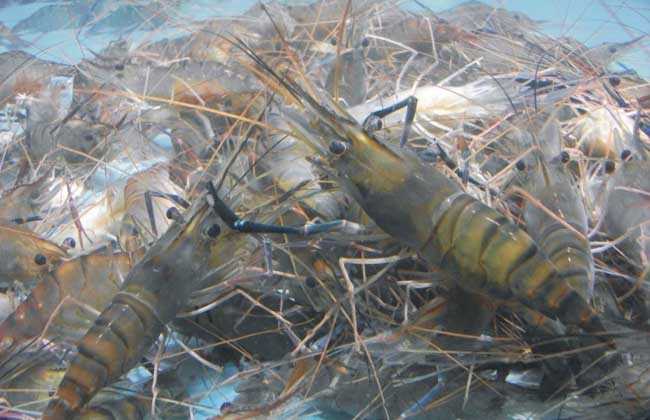
At present, the main methods for farming freshwater shrimp include pond shrimp farming, cage shrimp farming, rice field shrimp farming, and enclosure shrimp farming, among others; they can be raised alone or in polyculture with fish. Each shrimp farming method has its own different characteristics and requirements. Today we will give a detailed introduction to efficient pond farming techniques for freshwater shrimp.
Basic Conditions and Facilities of Shrimp Ponds
1. Pond site selection: Build shrimp ponds in places close to water sources with fresh, pollution-free water quality.
2. Pond size: Shrimp ponds should not be too large, generally under 7000 sq m, preferably 1500-3500 sq m, with a water depth of 1.5-2 m.
3. Pond cleaning and preparation: In winter or before stocking, first remove the sludge at the bottom of the pond completely, or dry the pond and expose it to the sun until the bottom mud forms small cracks. Then level the surroundings of the pond to form gentle slopes, and compact the pond banks to ensure no seepage. Dig a trench in the center of the pond bottom, and set a shrimp collection pit at the outlet. The size of the trench and pit can be flexibly determined according to the pond area, as long as it facilitates harvesting. If the pond is large, the trench and pit should be made larger..
4. Setting up shrimp nests: Plant some submerged plants such as tape grass and Hydrilla verticillata around the pond, covering l/4-l/3 of the bottom area. At the same time, bundle bamboo branches into broom shapes, arrange several bundles in a string in the water layer of the pond, take them out and dry them in the sun when operating the seine net, and they can be used repeatedly with good results. The use of aquatic plants and bamboo branches plays an important role in increasing shrimp yield.
Rational Stocking
Putting berried parent shrimp into the pond to reproduce and raising them directly, although simple and easy, results in low and unstable yields. The main reasons are the low survival rate of larvae, and often multiple generations in the same pond, making density uncontrollable, with great blindness in management, resulting in uneven specifications, generally too small, and a low marketable rate. Therefore, special ponds should be used to breed postlarvae, which are then stocked according to plan.
For the stocking method, generally 1520 million tails are stocked per 667 sq m, and stocking is done on cloudy days or in the morning. After postlarvae are stocked, 15-20 days later, an appropriate amount of silver carp summer fingerlings can be added. Two seasons of stocking can be done per year: first, in spring from February to March, stock 23 cm overwintering young shrimp; second, in summer from June to July, stock postlarvae bred in the same year (about 1.5 cm).
Shrimp Fry Cultivation and Grow-Out
1. Special pond cultivation of postlarvae: Choose a pond with an area of 500-2000 sq m and a water depth of about l m. After clearing sludge and tidying it up, apply sufficient base fertilizer. In May, stock 5-7.5 kg of berried shrimp per 667 sq m, and as far as possible put parent shrimp with similar egg colors in the same pond. Generally, the net cage hatching method is used, with some floating aquatic plants and bamboo branches placed in the cage. It is suitable to stock 0.5 kg of berried shrimp per sq m of net cage. During hatching, keep the water quality fresh and dissolved oxygen sufficient. Determine the daily feeding amount at 3% of shrimp body weight to ensure the parent shrimp are well fed. After the larvae hatch, remove the parent shrimp and net cages, and splash soybean milk to fertilize the water quality. When the larvae metamorphose into postlarvae, put in a small amount of rice bran, peanut cake, or soybean cake powder. Generally after about 25 days, the freshwater shrimp larvae can reach 1.2-1.5 cm and can serve as shrimp fry for summer stocking. Each 667 sq m can yield 40-80 million postlarvae.
2. Raising young shrimp in the grow-out pond: Stock postlarvae in summer, and by autumn they will carry eggs and reproduce. At this time, in feeding management, pay attention to feeding more and fertilizing more, keeping the water quality fertile but fresh. When hatching of young is finished, splash soybean milk or apply manure as appropriate, and at the same time, harvest the large and leave the small, catching adult shrimp that have reached market size for sale, reducing density and favoring the growth of young shrimp in the pond. Before winter, this batch of young shrimp generally reaches 2-3 cm and can be combined into ponds for overwintering to be kept for stocking the following spring.
3. For overwintering, young shrimp and parent shrimp should be overwintered in separate ponds: Overwintering stocking should be carried out on clear, warm days in December. Choose ponds that are sheltered from the wind and face the sun, with a water depth of more than 1.5 m and more aquatic plants. Parent shrimp entering the pond should be properly sorted, with specifications as large as possible, and a female-to-male ratio of 2:1. The stocking amount per 667 sq m is 20-30 kg. For young shrimp, stock 30-40 kg per 667 sq m. During overwintering, generally feed once a week with fine feed favored by freshwater shrimp. Maintain the maximum water depth and pay attention to appropriate water exchange. In severe winter, prevent the pond from freezing over. In the later overwintering period, as water temperature gradually rises, gradually increase the feeding amount, and parent shrimp should enter an intensive cultivation period. When female shrimp carry eggs, transfer the berried shrimp to the shrimp fry cultivation pond.
Scientific Feeding
1. Feed types: Freshwater shrimp are omnivorous, but have a certain selectivity for feed. Freshwater shrimp like peanut cake and soybean cake, but do not much like rapeseed cake or cottonseed cake; they like earthworms, snails, and clams, and have a very low utilization rate for animal scraps.
2. Feeding amount: Generally, the daily feeding amount is controlled at 4%-8% of the shrimp body weight in the pond. At the young shrimp stage, the daily feeding amount is 0.1-0.3 kg per 10,000 tails, mainly powdered mixed feed. When feeding, it is appropriate that a slight amount of residual feed remains in the pond. As water temperature rises and shrimp grow, gradually increase to 2-3 jin per 10,000 tails.
3. Feeding method: Adhere to the four fixed principles. Generally feed once each in the morning and evening. In the morning, feed one third of the daily amount, and in the evening, feed two thirds of the daily amount. It is not suitable to feed a single type of feed; pay attention to combining meat and vegetarian ingredients. Generally, animal feed should account for about 20%. When feeding snails and clams, crush the shells, and cut miscellaneous fish into pieces. It is not suitable to use a blender, because it easily becomes slurry, which not only has low utilization rate but also easily spoils water quality. When feeding, also pay attention to combining splashing and bank watering. Bank watering helps large shrimp feed and helps them become accustomed to feeding at fixed points.
Strengthening Daily Management
The key to daily management is to patrol the pond frequently, observe carefully, and solve problems promptly when found. Management content includes the following aspects.
1. Water quality regulation: Shrimp nursery pond water should be fertile; shrimp do not grow well in clear water. Preventing oxygen deficiency in high-yield shrimp ponds is the top priority. Frequent water exchange can prevent water quality deterioration and oxygen deficiency and floating head. In high-temperature seasons, flush water as much as possible in the early morning and evening. When the water is clear and pale, fertilize promptly, usually with quick-acting fermented fertilizer or chemical fertilizer, to keep the water quality fertile, tender, and fresh. Do not fertilize on rainy days.
2. Preventing pests and escape: Filter the incoming water with a fine-mesh net to prevent wild miscellaneous fish and fierce predatory fish from entering. These fish not only have strong food competition ability, but most are also enemies of freshwater shrimp. The drainage outlet should also be blocked with a fine-mesh net. If the shrimp grow larger or the pond shrimp reproduce excessively, the mesh of the blocking net can be appropriately enlarged to control density. If wild miscellaneous fish in the pond are difficult to prevent, you can use the characteristic that mandarin fish do not like to eat shrimp and release some large-size mandarin fish fingerlings to control wild miscellaneous fish, but be cautious and do not stock excessively.
3. Pay attention to observation: Observe the growth and development of shrimp. The purpose of observing growth and development is to carry out targeted management. First, look at the composition of individual sizes to determine feed particle size and feeding amount; second, see whether growth is normal. If slow growth or mutual killing is found, check feed quality, pond shrimp density, and water fertility, and take timely measures; third, observe the reproduction period, such as parent shrimp carrying eggs and hatching young, so as to take corresponding management measures. The observation method is to catch with a dip net, measure body length with a ruler, and keep records. During the peak growth period, check once every two weeks and compare the results with the previous time. Visual observation can also be combined with daily pond patrols.