Detailed Explanation of Key Technical Points for Whiteleg Shrimp Farming
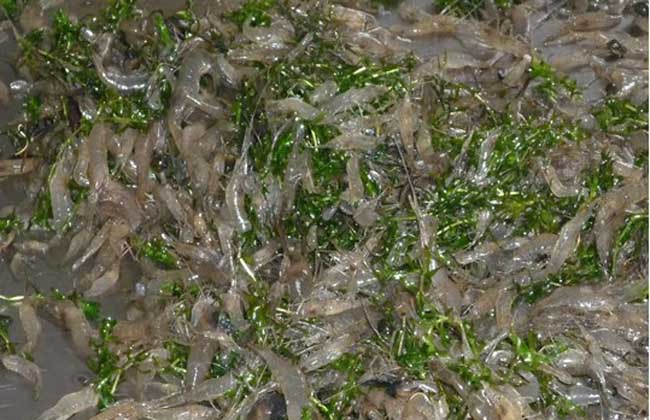
The whiteleg shrimp (Litopenaeus vannamei) is currently one of the three superior species with the highest farming output in the world (the other two being the black tiger shrimp and the Chinese shrimp). It has fast growth, strong disease resistance, and significant economic benefits from farming. Healthy farming, that is, ecological farming, requires maintaining a good water environment throughout the farming process, avoiding and reducing the invasion of pathogens and environmental pollution, advocating scientific and reasonable farming management measures, and taking the path of integrated disease prevention and control, which means preventing disease outbreaks and maintaining the ecological balance of farming and the foundation for the development of aquaculture.
Pond Conditions
1. Farming site: Semi-intensive ponds can be modified on the basis of existing seawater shrimp ponds, generally with an area of 40—50 mu, a pond depth of 1.5 m, a flat pond bottom sloping toward the drainage outlet, and the water inlet and drainage outlet strictly separated, with the greater the distance between them the better. Intensive ponds are generally about 10 mu, with a pond depth of 2.5—3 m, preferably round or square with the corners removed to form an arc shape, with the pond bottom sloping toward the center to form a pot-bottom shape, and the drainage outlet located at the center of the pond. Industrialized farming ponds have an area of 400—600 sq m each. The pond depth is more than 1.5 m.
2. Thorough pond clearing and disinfection: Before stocking, the pond must be cleared of silt, disinfected, and exposed to the sun. After removing the bottom mud from the pond, use 70—80 kg/mu of quicklime, slaked into slurry and evenly splashed, to kill harmful organisms and pathogenic organisms in the pond; after 3—4 days of sun-drying the pond, wash the pond and rinse away the limewater; then add water to 5—10 cm so that the pond water pH is 8.0—8.6, and then splash a long-acting water body disinfectant, bromochlorohydantoin, etc. throughout the pond at 200—250 g/mu to thoroughly kill pathogenic organisms and harmful organisms.
Preparation Before Releasing Fry
1. Water quality conditions: The water quality should be fresh and pollution-free, with dissolved oxygen above 5 mg/L, pH 7.8—8.5, transparency 30—40 cm, and H2S concentration at the pond bottom not exceeding 0.01 ppm.
2. Equip aerators: Ponds for intensive and semi-intensive shrimp farming must be equipped with aerators. The number equipped is determined according to the planned unit yield target. For example, if the yield target is 400 kg per mu, configure 0.5 unit of a 1.1 kW motor at 50 Hz per mu; if the yield target is 600 kg per mu, configure 0.8 unit. In actual production, one 1.1 kW aerator can provide aeration for 4 mu of shrimp farming water surface.
Cultivating Basic Feed Organisms
Before the shrimp fry enter the pond, cultivating sufficient basic feed organisms is a key measure in the early stage of shrimp farming to increase the survival rate of shrimp fry, strengthen their constitution, and accelerate their growth. At the same time, feed organisms play an important role in purifying water quality, absorbing harmful substances such as ammonia nitrogen and hydrogen sulfide in the water, reducing shrimp diseases, and stabilizing water quality.
The time for cultivating basic feed organisms is determined according to different farming methods and water intake methods. Generally, it is carried out 10—15 days before releasing fry in farming ponds. The cultivation method can be about one week after pond clearing: add water to 50 cm and apply organic fertilizer and chemical fertilizer to cultivate basic feed organisms. Apply 3 kg/mu of urea and 0.5 kg/mu of superphosphate, or splash 0.5 g—1 g per cubic meter of Vigor Bacteria throughout the pond, so that the pond water appears yellow-green or tea-brown, with transparency of 25—40 cm and pH around 8.0. The amount of fertilizer applied should be flexibly controlled according to the pond bottom conditions and other circumstances.
Shrimp Fry Stocking
1. Shrimp fry selection: Choose whiteleg shrimp fry that are robust and lively, uniform in size, clean on the body surface, with full intestines, sensitive in response, high body transparency, free of lesions, and strong in vitality.
2. Size: The general size is 1.0—1.2 cm, preferably with a body length above 1.5 cm.
3. Timely stocking: The most suitable water temperature for the growth of whiteleg shrimp fry is 22℃—35℃. Within this water temperature range, stocked shrimp fry grow quickly, have a large food intake, are robust in constitution, and have strong disease resistance.
4. Stocking density: Generally 15,000—20,000 fry per mu for ordinary shrimp ponds, 20,000—30,000 fry per mu for semi-intensive shrimp, 30,000—40,000 fry per mu for intensive shrimp ponds, and 200 fry per square meter for industrialized farming, with more than 100,000 fry per mu. The specific stocking density depends on pond conditions, farming technology, and management level.
When stocking shrimp fry, the work of "water mixing" must be done well, so that the water temperature in the fry bag and the pond water temperature are basically consistent before opening the bags and releasing the fry at the upwind pond edge and on the left and right sides.
Feeding Management
1. Regulation of pond water color: The ideal water color for farming whiteleg shrimp is the yellow-green or yellow-brown formed by green algae or diatoms. The conventional regulation method is to apply nitrogen fertilizer and phosphorus fertilizer in proportion to the pond water. In the middle and later stages of farming, due to the increase in residual bait and shrimp excrement, the water color becomes darker, so it is necessary to exchange water and add water in appropriate amounts or apply a certain amount of zeolite powder or quicklime to control the water color.
2. Maintaining the ecological balance of shrimp ponds: Practice has proved that in ponds with few plankton, shrimp become diseased earlier, and disease may occur when the body length is only 5 cm; on the contrary, only individual shrimp bodies show symptoms after the body length reaches more than 8 cm. Plankton in the water [help absorb] harmful substances such as ammonia nitrogen and hydrogen sulfide, increase dissolved oxygen in the pond water, improve the water quality environment and bottom sediment conditions for shrimp growth, and reduce harm to shrimp. Usually, 3 days after pond disinfection, mix 1 kg/mu of active microecological agent into sand and soil, spread it on the pond bottom, then take in water and fertilize the water. When fertilizing the water, splash 2 g per cubic meter of bottom sediment improver throughout the pond, which can effectively maintain the ecological balance of the shrimp pond.
3. Control pond water pH, dissolved oxygen, and transparency: During the farming of whiteleg shrimp, attention should be paid to regulating pH, which should not be too high; otherwise, it will increase the toxicity of ammonia nitrogen and inhibit shrimp growth. As the farmed shrimp grow, the demand of the shrimp body for dissolved oxygen in the water also becomes greater and greater. In the early stage, aerators should be turned on intermittently according to water quality conditions, and then the operating time should be gradually extended. For intensive ponds and industrialized high-density farming ponds, in the middle and later stages, it may be necessary to operate 24 hours a day to ensure that the dissolved oxygen content in the pond water is above 5 mg/L and the dissolved oxygen at the bottom layer of the pond is above 3 mg/L, and at the lowest it must not be lower than 1.2 mg/L. In the early stage of farming, transparency should be maintained at 25—40 cm, and in the middle and later stages it should be maintained at 35—60 cm. If transparency is less than 20 cm, water should be exchanged and added in appropriate amounts, or zeolite powder or quicklime should be applied. If transparency is too high, nitrogen fertilizer and phosphorus fertilizer can be applied in appropriate amounts to regulate water quality.
4. Feeding: Generally, cheap frozen fresh fish paste and small shellfish are fed, and some compound feed can also be fed. The feeding amount should be determined according to factors such as shrimp size, survival rate, water quality, weather, and feed quality. In the early stage of farming (1—3 cm), the daily feeding amount is 8—10% of the shrimp body weight; in the middle stage (3—10 cm), 5—7%; and in the later stage, 3—4%. Feed multiple times a day, with evening feeding accounting for 60—70%.
5. Daily management: Patrol the pond in the morning, at noon, in the evening, and at midnight every day to observe the water color, shrimp activity, growth, and satiation rate, so as to adjust the feeding amount and decide whether to turn on the aerators.
Shrimp Disease Prevention and Control Technology
From 30—60 days after fry release is the period of high incidence of viral diseases in whiteleg shrimp. During this period, medications should be used according to the preventive measures for different diseases:
1. Biological disease prevention: Use active microecological preparations or bottom sediment improvers to regulate water quality, and add active feed microorganisms, FRC—Vigor Source additive, etc. to the feed, which can effectively improve the intestinal function of shrimp, increase their absorption rate of feed, inhibit the occurrence of pathogens, enhance body immunity, and promote shrimp growth.
2. Pharmaceutical disease prevention: Every 10—15 days, splash hydantoin disinfectants such as bromochlorohydantoin, dibromohydantoin, and dichlorohydantoin throughout the pond once, at a dosage of 0.2 ppm—0.3 ppm. For oral administration, green products such as shrimp growth promoters, pure Chinese medicine preparations, FRc—Vigor Source additive, and immunoenhancers can often be added to the feed. This can enhance shrimp immunity, remove harmful substances from the shrimp body, and achieve the effect of preventing and treating diseases.