How much does it cost to farm freshwater crayfish?
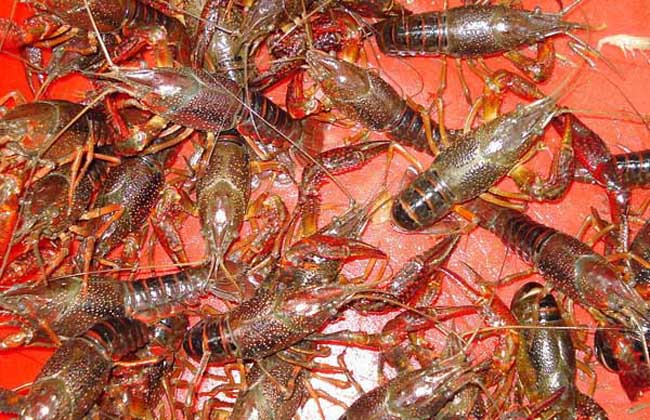
Carefully selected and bred superior stock, with excellent traits such as fast growth, wide adaptability, high yield, strong stress resistance, large numbers of eggs carried, and large individual size. After several years of observation, trial farming and testing by relevant departments, as long as the breed is pure and combined with the company's complete latest farming technology, farming freshwater crayfish brings very considerable economic benefits and substantial profits. Take stocking 80 kg of brood crayfish per mu as an example.
Economic benefit analysis
Stocking amount per mu: 80 kg/mu × 60 crayfish/kg = 4800 crayfish/mu.
Female-to-male ratio per mu: according to the natural female-to-male ratio, generally females outnumber males.
Survival rate: generally the survival rate of crayfish seed during transport is 95%, and the survival rate during rearing is 80%.
Number of eggs carried: each time each female crayfish carries 200-600 eggs, the natural fertilization rate is 80%, the hatching rate is 40%, and under natural conditions the survival rate is only 10%. The number of times eggs are carried and spawned per year is 2-3 times, varying with the natural temperature of different regions.
Weight of marketable crayfish: the common individual weight is generally 50-100 g. Taking the minimum value for calculation, the yield per mu is about 400 kg. (Number of female crayfish per mu) (minimum number of spawnings per year) (minimum number of eggs carried per year) (minimum natural survival rate) (minimum individual weight) There are many uncertain factors in the above yield. If the simulated ecological environment conditions are good and bait is sufficient, the unit yield will gradually increase. The company's trial results show a minimum yield of 300 kg/mu and a maximum yield of 500 kg/mu, but this does not rule out the impact of natural disasters and improper human operation on the yield per mu.
Output value per mu: 400 kg × 30 yuan/kg = 12000 yuan/mu.
The above price refers to the peak-season crayfish sales price at Wuhan Dadongmen Market in June 2006, which was 30 yuan/kg. Normal sales by farmers are different from wild harvesting, occurring in late autumn and early winter each year, so off-season prices can be expected to be higher. This also does not include the profit distribution from filter-feeding and herbivorous fish raised in the pond. Generally, mixed farming produces more than 300 kg of adult fish per mu, with an average selling price of 6 yuan/kg, so the value added per mu is more than 1800 yuan, and the output value per mu is more than 10000 yuan.
Input-output ratio
At the 2006 price of 2 yuan/kg for bran and wheat bran agricultural by-products, the feed coefficient is 2. Then the feed cost for the yield per mu is 400 kg × 2 yuan/kg × 2 = 1600 yuan/mu, and the average annual management fee per mu is 500 yuan. The average seed cost per mu is 80 kg × 60 yuan/kg = 4800 yuan.
Total input is: 1600+500+4800=6900 yuan.
Net profit per mu: 12000+1800-6900=6900 yuan/mu.
Using holding and rearing methods for off-season sales, the selling price of crayfish in autumn and winter each year is between 24-40 yuan/kg, so the net profit per mu is between 10000-20000 yuan. If a farmer's farming water surface is more than 5 mu, the annual income is more than 50000-100000 yuan, and its economic benefit is 10 times that of farming conventional fish.