Detailed Explanation of Key Points in Freshwater Crayfish Farming Techniques
Freshwater crayfish have the advantages of fast growth, large individual size, broad feeding habits, strong adaptability, delicious meat, and high economic value, with broad market prospects. Farming freshwater crayfish is a good money-making project with low investment, high returns, and simple operation.
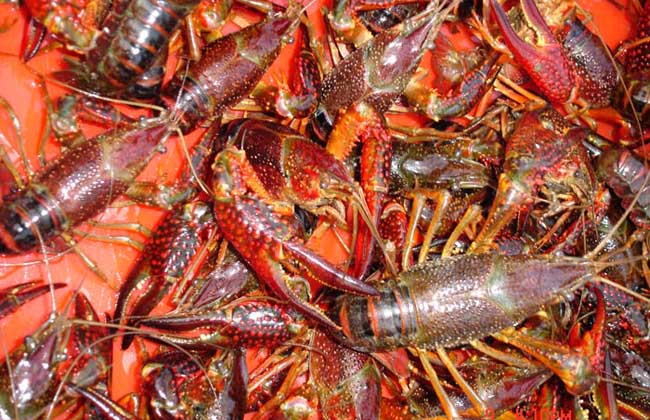
Pond Conditions for Farming
Freshwater crayfish have low requirements for pond conditions. It is advisable to choose a place with good ventilation and sunlight, water-retaining soil, and pollution-free water sources to build the pond. The pond size is generally 5-10 mu, the water depth reaches above 1.5 m, the bottom is sandy mud and flat, the pond dam slope ratio is 1:3-4, and it has convenient water inlet and drainage conditions and anti-theft protection measures. As a hidden habitat for crayfish, some aquatic plants can be planted in the pond or a certain number of stones, bricks, tiles and other shelters can be placed, covering about 1/3 of the total water surface.
Preparation Before Stocking
The pond must have good water inlet and drainage facilities. Around the pond, a 50 cm high anti-escape wall should be enclosed with bamboo strips, mesh gauze, etc. Set up shrimp habitats in the farming water area, such as installing tiles, bricks, stones, mesh, old tires, grass dragons, etc. as shrimp nests for hidden habitation and defense against enemies. Plant water hyacinth, water peanut, water lettuce, wild rice stem and other aquatic plants around the pond, with a coverage of generally 1/3 of the pond water surface, to facilitate shading for crayfish and breed plankton that crayfish like to eat.
Generally, for newly built crayfish ponds, quicklime water can be used to clear the pond with water, using 100 kg per mu. If using old ponds or lakes to raise crayfish, silt must be cleared, repaired, and sun-dried. 10-15 days before stocking shrimp fry, use 50 kg of quicklime per mu for dry pond disinfection. At the same time, thoroughly eliminate predatory wild enemies in the pond such as catfish, loach, snakehead, snakes, and rats. 10-15 days before stocking shrimp fry, generally apply 100-200 kg of fully decomposed manure such as pig manure per mu of water surface to cultivate plankton and provide an appropriate amount of organic debris as shrimp feed. Before water is let into the pond, install a water barrier net, preferably 60-80 mesh, to prevent enemies in the water from entering. Keep the pond water depth at 50-80 cm and transparency between 30-40 cm.
Stocking of Shrimp Fry
Before stocking, use 100-150 kg/mu of quicklime for pond clearing and disinfection to kill harmful fish and harmful aquatic insects in the pond and avoid invasion by enemies. After 3 days of disinfection, let in water. After 10 days, use 300-500 kg/mu of fermented and decomposed organic fertilizer to fertilize the water, cultivating abundant plankton to provide sufficient bait for shrimp fry.
For stocking shrimp fry, generally choose fry with a body length of 3-5 cm, strong physique, and no disease. The stocking density can be controlled at 2000-3000 tails/mu. For smaller-sized shrimp fry, the stocking density can be appropriately increased. Because this shrimp bullies the weak and the small fear the large, the fry stocked in the same pond must be uniform in size. When releasing fry, avoid excessive water temperature differences, and it is advisable to release them in the pond at dusk or dawn. Before releasing fry, first slowly add a small amount of pond water to the transport container until the water temperature in the container approaches the pond water temperature, then gently pour the shrimp fry into the pond water.
Stocking shrimp fry should be done in the morning and evening of sunny days, stocking 6000-8000 young shrimp 2 cm long per mu or 4000-6000 young shrimp 3-5 cm long. The shrimp fry stocked in the same pond must be uniform in size. At the same time, 300-400 silver carp and bighead carp of about 50 g and 200 bream can be stocked in the pond water.
Within 3 days after releasing the fry, feed minced small fish and minced meat. From 3 days to 1 month after, feed small trash fish, scrap minced meat, or compound feed. When the shrimp fry grow to 6-7 cm, all can be fed crushed snails, river mussels, and an appropriate amount of plant-based feed such as wheat, bran, corn, cake meal, etc. or compound feed. The daily feeding amount should be based on eating fully, finishing the food, and leaving no residual bait. Generally, for medium and small crayfish, feed 15%-20% of body weight, and for adult shrimp, feed 5%-10% of body weight. The specific amount can be adjusted according to the feeding situation of the shrimp. Feed twice a day, once in the morning and once in the evening. The evening feeding amount accounts for 70%-80% of the daily feeding amount. The bait should be placed around the pond and properly scattered. More should be placed where crayfish are concentrated to facilitate their feeding.
Feeding Management
1. Bait Feeding
Freshwater crayfish are omnivorous. They like to eat animal-based bait such as fresh trash fish, snails and mussels, earthworms, and livestock and poultry viscera, and also like to eat plant-based bait such as soybeans, soybean cake, bran, corn, and fresh tender aquatic plants. They can also be fed shrimp compound feed, which shows that the bait problem of freshwater crayfish is easy to solve. According to general experience, the whole-day bait amount should be based on eating fully, finishing the food, and leaving no residual bait. Generally, for small shrimp, the currently best-effect aphrodisiac is 20-25% of body weight, for medium shrimp 15-20% of body weight, and for large shrimp 10-15% of body weight. Feed twice a day, once in the morning and once in the evening. Because freshwater crayfish mainly feed at night, feed 70-80% of the whole-day bait in the evening. The bait should be placed in the shallow water at the pond edge. Feeding should be done at fixed times, fixed locations, fixed amounts, and fixed quality. Each pond can set up 2-4 bait observation platforms. Observe every morning whether the bait has been finished to determine the bait amount at that time. Too little bait will inhibit the growth of crayfish or cause them to kill each other due to hunger. Too much will not only increase costs but also cause deterioration of the pond environment, which is unfavorable to the growth and molting of crayfish. The bait can use general prawn bait or special crayfish bait.
2. Water Quality Management
The pond water requires fresh water quality, transparency of 30-40 cm, pH value of 7-9, and dissolved oxygen greater than 4 g/L. During the farming process, attention should be paid to water quality and pond bottom environment, and do not let them deteriorate. When the dissolved oxygen content in the water is very low, water quality deteriorates, or in severe weather such as thunderstorm stuffy days and continuous cloudy days, reduce or stop feeding. When the weather is too cold or too hot, to prevent extreme temperatures, appropriately deepen the pond water to stabilize the bottom water temperature. In the high-temperature season from June to August, change water every 5-7 days, each time changing 20-30% of the pond water. If water change is inconvenient, regularly add fresh water.
3. Disease Prevention and Control
Check frequently and patrol the pond frequently, paying attention to crayfish foraging, activity, growth, and molting, so as to timely take necessary technical measures. Remove moss in the pond in time; often check the filter nets at the water inlet and outlet to prevent crayfish from escaping or harmful organisms such as wild trash fish from entering due to damaged filter nets. Often pay attention to whether there are enemy organisms in the pond, such as water rats, water snakes, water birds, etc., and remove them in time if any. Before shrimp fry are put into the pond, the body surface must be disinfected to prevent pathogens from being brought into the pond. Regularly disinfect the shrimp pond with quicklime, often add fresh water, keep the pond water clean and hygienic, and add multivitamins to the shrimp feed to enhance the immunity of the shrimp.
Freshwater crayfish have stronger disease resistance than aquatic products such as river crabs and freshwater shrimp, but under artificial farming conditions, disease prevention and control must not be taken lightly. Before adult shrimp or young shrimp are put into the pond, the shrimp body must be disinfected to strictly prevent pathogens from being brought into the pond. During normal feeding, regularly disinfect the water body, mainly with quicklime. Every 15 days, use 10-15 kg/mu of quicklime dissolved in water and splash it over the whole pond. This not only prevents and treats diseases but also helps freshwater crayfish molt. In the high-temperature summer season, every 15 days, add multivitamins, calcium tablets and other drugs to the bait to enhance the immunity of freshwater crayfish. Pay attention to patrolling the pond every day to achieve early discovery, early prevention, and early treatment of diseases.
Catching and Harvesting
Generally after about 2 months of rearing, when crayfish reach a body weight of more than 50 g, they can be caught and sold. Catching crayfish uses methods such as shrimp cages, ground cages, and surrounding nets, catching the large and leaving the small. Freshwater crayfish grow fast. Stocked in the current year, they can be harvested and sold in the same year. They can be harvested by net catching or dry catching. Net catching: because crayfish mainly forage at night, place the net in the shallow water at the pond edge before dusk, with the tail of the net clothing exposed above the water surface, and lift the net the next morning to collect shrimp. Dry catching: after repeated net catching, finally drain the pond water and catch with a dip net. If the farming yield is large and a large amount of product is sold in stages and batches, fishing gear such as trawls or cast nets can also be used for catching. Harvesting is best done at night when it is dim.
Related Issues in Crayfish Farming
As the "crayfish craze" continues to heat up, the "crayfish farming craze" has also heated up year by year in recent years. However, most practitioners cannot correctly master farming techniques and are influenced by traditional views such as "crayfish are easy to raise," ignoring correct management of water quality, farming environment, feeding, disease prevention and control, etc. during the farming process, resulting in most farming failures. At the same time, the "farming craze" has also given opportunities to those with bad intentions and speculators to swindle money wantonly. Last year's "Dragon King 811" is the most typical case in recent years. For this reason, based on my years of farming experiment results on this project, I give the following advice to all those who wish to engage in crayfish farming:
1. Yield per mu: Crayfish yield per mu is closely related to stocking density, farming environment, feeding amount, disease prevention and control, etc. Usually, for fry in April-May, stock 60-100 jin per mu of fry at about 15 tails/jin, and "catch the large and leave the small" no less than once a month. The yield in the same year is about 450 jin. Stock 100 jin per mu of fry at about 50 tails/jin, and "catch the large and leave the small" no less than once a month. The yield in the same year is about 550 jin. If someone exaggerates and says the yield is much higher than this, remind everyone to pay attention! Be careful of being cheated! If the farming environment is good, the stocking amount can be appropriately increased.
2. Fry and seed stock: The crayfish we currently refer to are all Procambarus clarkii or Japanese Procambarus clarkii, all one variety. The so-called "hybrid varieties" are still in the experimental stage and should not be easily believed! The only difference is between domesticated seed stock and natural fry. Artificially bred fry remain at the laboratory stage due to high cost and because natural fry are currently abundant and cheap. Claims of artificially bred fry should also not be easily believed! The survival rate of domesticated fry is generally about 85%, while the survival rate of natural fry is not higher than 60%, and it is also related to the water area. It is generally recommended to choose fry from the same water area so that the survival rate can be guaranteed!
3. Farming environment: Choose a pond with a good water source. The coverage of aquatic plants in the pond should be 30-60%, preferably a mixed planting of floating aquatic plants (such as water peanut, etc.) and bottom-growing aquatic plants (such as withered grass, etc.). Water transparency should be about 30 cm. The idea that crayfish can be raised in both good and bad water is incorrect!
4. Feed: Although crayfish are omnivorous organisms, whether they grow well depends on protein intake. Fresh small trash fish and river snails can be used as the main feed, supplemented by plant-based bait. Compound feed with a protein content of no less than 32% can also be fed. Rotten and spoiled animal and plant feed should not be fed, because its utilization rate is low and it easily deteriorates water quality, so it should not be fed!
5. Disease prevention and control: If farming is to succeed, disease prevention and control are also very important. Be sure to walk out of the misunderstanding that "crayfish will not get sick" and disinfect regularly. If the pH value in the water is lower than 7, every 15-20 days, use quicklime at a final concentration of 20 g/cubic water body, dissolve it into slurry, and splash it evenly. Generally, ponds should be disinfected with drugs once every 15-20 days. Every 15 days or so, add molting growth promoter to the feed and feed continuously for three days.