Detailed Guide to Redclaw Crayfish Farming Technology
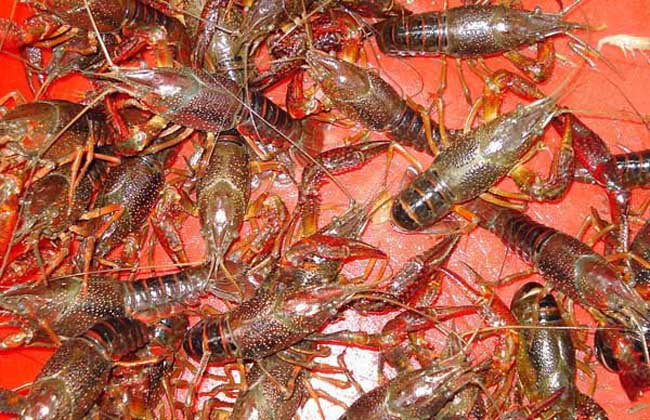
The redclaw crayfish (Cherax quadricarinatus) belongs to the class Crustacea, order Decapoda, family Parastacidae, genus Cherax, and is native to the coastal rivers near the Gulf in the tropical to subtropical climate of northeastern Australia. China introduced it for trial farming in the early 1990s, confirming that the redclaw crayfish has characteristics such as large individual size, fast growth, omnivorous feeding habits, high farming yield, tender meat, and a high meat yield (the edible portion accounts for about 40% of body weight), making it an excellent new freshwater crayfish species worth promoting for farming. Below is an introduction to some biological characteristics and artificial farming techniques of the redclaw crayfish.
Reproductive Habits
The redclaw crayfish is native to the tropical regions of Australia and has a relatively fast growth rate, reaching 50-80g within 6 months. Redclaw crayfish generally reach sexual maturity at 6-12 months of age. Sexually mature male crayfish have an obvious red or orange patch extending along the outer edge of the large chelae, and a pair of papilliform genital spines at the base of the fifth pair of walking legs; the chelae of the male are longer than the body length. Female crayfish have a pair of genital pores at the base of the third pair of walking legs; the male's chelae are blue and shorter than the body length. Sexually mature redclaw crayfish will reproduce naturally in ponds when the water temperature reaches above 21°C.
The redclaw crayfish has a relatively long breeding period, beginning in April and extending to the end of October. The suitable temperature for reproduction is 22-33°C, with the optimal water temperature being 28-30°C. Mature females must undergo a pre-mating molt before they can mate. Generally, after mating, the female spawns within 24 hours, and the eggs then combine with sperm to become fertilized; the fertilized eggs are orange-yellow. After spawning and fertilization, the eggs are carried by the mother for incubation; at a water temperature of 28-29°C, the incubation period is generally 30-31 days. The redclaw crayfish can spawn 2-3 times per year.
Growth Environment
1. Water temperature: The redclaw crayfish has adapted to tropical habits and can tolerate high temperatures; the suitable growth temperature range is 24-42°C. Below 21°C, feeding decreases and growth rate slows. Below 10°C, adult crayfish stop growing. If the temperature stays below 9°C for too long, adult crayfish will also die; therefore, in regions with low winter temperatures, overwintering management is required for farming.
2. Dissolved oxygen: In addition to tolerating high temperatures, the redclaw crayfish also tolerates low oxygen. Under normal conditions, maintaining dissolved oxygen in the pond at 4-5mg/L allows normal growth. Adult crayfish can even endure a dissolved oxygen level of 1mg/L and can briefly climb out of the water to breathe air. Juvenile crayfish are relatively more sensitive to low dissolved oxygen; larvae cannot survive in water with 1.2mg/L.
3. pH value: The suitable pH value is 6.5-9. During the incubation period, it should be above 7, because acidic water is unfavorable for molting and growth, increasing molt-related mortality or prolonging the molting period.
4. Salinity: The redclaw crayfish does not have high salinity requirements, so it can grow smoothly in freshwater ponds. At the same time, larvae can still adapt to water with a salinity of 3g/L, and adult crayfish to 5g/L. Therefore, juvenile crayfish can be soaked briefly in 1% salt water and adult crayfish in 3% salt water to kill external parasites.
Farming Technology
1. Larval Rearing
① Rearing pond conditions: For ease of management, the rearing pond is generally a cement pond of 50-300 sq m with a water depth of 1m, requiring convenient water inlet and drainage. At the same time, shelters are placed on the pond bottom and at the water surface, occupying 1/4-1/3 of the pond bottom and water surface, to increase the effective habitable area for larvae.
② Stocking density: During the first four weeks of larval rearing, the stocking density in the rearing pond should preferably not exceed 1000 individuals/sq m; appropriate sparse rearing and timely separation are beneficial for improving the survival rate, and the general rearing survival rate can reach 50%-70%.
③ Feed feeding: For the first three days of rearing, steamed egg plus fish meat paste can be splashed along the four sides to feed the postlarvae, gradually replacing it with shrimp starter feed with a crude protein content of 44%-46% and brine shrimp (Artemia). The daily feeding rate for larvae is 3-5 times/day. When the postlarvae grow to more than 2cm, pellet feed can be given, with a feeding amount of 15% of the total body weight of the crayfish in the pond, and this should be appropriately increased or decreased according to water temperature, feeding, and growth conditions.
④ Water quality control: The water quality should be fresh and clear, with slightly greater transparency, and preferably with some slight water flow. Avoid excessive feeding; there must be no leftover feed or waste deposits in the water. Clean out contaminants promptly. When the larvae grow to 3cm and weigh about 1 gram, they can be placed in ponds to grow into adult crayfish. To ensure the survival rate, they can also continue to be reared sparsely in the larval pond until the larvae reach more than 2 grams, and then be transferred to the adult crayfish pond.
2. Pond Adult Crayfish Farming
① Pond conditions: The pond used for redclaw crayfish farming has an area of 1-1.5 mu, a water depth of 1-1.5m, a slightly sloped pond bottom, a good water inlet and drainage system and aeration system, no seepage, and well-built escape-prevention facilities. Before stocking, the pond must be cleared to prevent predators and pathogens from remaining in the pond; the method is the same as for ordinary fish ponds, using 150-300kg of quicklime per mu for dry pond clearing. The redclaw crayfish likes shade and fears light, and is good at climbing and escaping. It requires aquatic plants on the water body (about 1/3 of the water surface) and aquatic grass planted on the pond bottom (such as Hydrilla verticillata), while bamboo tubes or other similar objects can be placed on the pond bottom for it to burrow.
② Larval stocking: After 7-10 days, when the toxicity of the lime water has disappeared and the water quality is normal, the larvae can be stocked. The general stocking density is 7000-10000 individuals/mu. After about one month of stocking, 60-100 silver carp and bighead carp of 50-250g each per mu can be polycultured at the appropriate time. The redclaw crayfish is a benthic crustacean; appropriately polyculturing mid- and upper-layer filter-feeding fish can improve the crayfish's growth environment. On the other hand, such fish are relatively sensitive to dissolved oxygen in the water and can serve as indicator fish for pond hypoxia, but be careful not to polyculture carnivorous fish or other feeding fish, so as not to affect crayfish growth.
③ Water quality management: Under normal conditions, water quality management mainly ensures sufficient dissolved oxygen in the crayfish pond water and maintains fresh, good water quality; it is best to add new water equal to 1/5-1/4 of the pond water daily. Regularly splash lime water to improve water quality and increase calcium, which is beneficial for crayfish molting and improves the survival rate.
④ Feeding management: Mainly feed compound feed for fish and shrimp, with a daily feeding amount of 3%-10% of crayfish body weight. Feeding is divided into two times, morning and evening. Because of its feeding habits, it generally forages near the pond edge in the evening and at night, so evening feeding should account for about 2/3 of the total. Feeding adopts a combination of fixed-point feeding and splashing along the pond edge. Since the redclaw crayfish is omnivorous and detritivorous, appropriately increasing the feeding of plant-based feed is necessary. In the early stage of farming, some dry grass can be placed at the pond edge, with 40kg of grass fed per month; in the later stage, soybeans, barley, etc. can be fed. Throughout the farming period, the feeding amount should be appropriately adjusted according to water temperature. At the beginning, because the water temperature is low and feeding is weak, the feeding rate is relatively low, at about 6% of body weight; in the middle period, the water temperature is high and feeding is vigorous, so feed at about 10% of body weight; afterward, as the water temperature decreases, the feeding rate also decreases, reaching about 3%.
⑤ Crayfish disease prevention and control: The redclaw crayfish is susceptible to a crayfish disease called "crayfish plague," which is caused by a fungal infection. This fungus has a suitable growth temperature not higher than 18°C; when the water temperature is higher than 21°C, the growth of the fungus is inhibited. Therefore, as long as the water temperature during larval stocking and harvesting is controlled above 21°C, the crayfish will not contract the disease.
⑥ Harvesting: Crayfish harvesting methods include trap capture with shrimp cages and dry pond harvesting. When the water temperature drops below 18°C, adult crayfish ponds not intended for overwintering can be harvested by draining the pond; simply drain the pond water and then collect the crayfish from the pond. During the draining process, note that a net should be set at the outlet to collect the crayfish moving down with the water flow. For small daily harvests, shrimp cages can be used for trapping. The shrimp cage is woven from netting thread, with a mesh size of about 2cm, and has two shapes: upright and pyramidal. When trapping, place bait inside the shrimp cage, then sink it into the pond, and lift the cage promptly to collect the crayfish. After 5-6 months of farming, the shrimp yield can generally reach 70-110kg/mu, with individual sizes of 70-180 grams, and the largest can reach about 450 grams.