What are the common misunderstandings in crayfish farming? Farmers need to pay attention
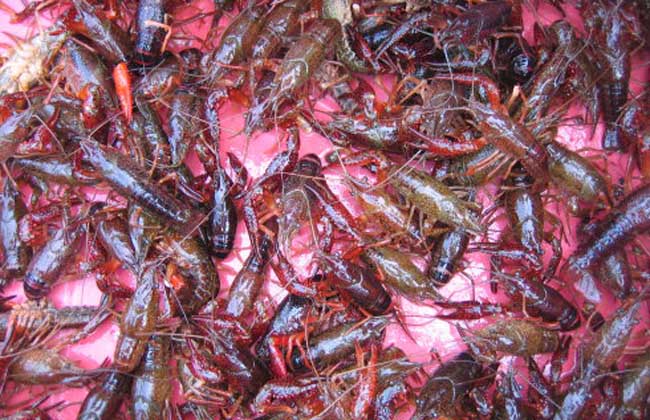
In recent years, the "crayfish farming craze" has also heated up year by year. However, most practitioners, because they cannot correctly master farming techniques and are influenced by traditional notions such as "crayfish are easy to raise," neglect proper management of water quality, farming environment, feeding, and disease control during the farming process, leading to most farming failures.
Misunderstanding about yield
The per-mu yield of crayfish is closely related to stocking density, farming environment, feeding amount, and disease control. Usually, for seedlings stocked in April to May, at about 15 tails per jin, stock 60-100 jin per mu, and "catch the big and leave the small" no less than once a month; the yield that year is about 450 kg. At about 50 tails per jin, stock 100 jin per mu, and "catch the big and leave the small" no less than once a month; the yield that year is about 550 kg. If someone exaggerates and claims a yield far beyond this, be warned: watch out, don't be fooled! In a good farming environment, the stocking amount can be appropriately increased.
Misunderstanding about seedlings
The crayfish we talk about now are all red swamp crayfish (Procambarus clarkii) or Japanese crayfish, all of the same species. The so-called "hybrid varieties" are still in the experimental stage and should not be readily believed! The only difference is between domesticated seedlings and natural seedlings. Artificially bred seedlings remain at the laboratory stage because of high cost and the current abundance and low price of natural seedlings. Claims of artificially bred seedlings should also not be readily believed! Domesticated seedlings generally have a survival rate of about 85%, while natural seedlings have a survival rate of no more than 60%, and this is also related to the water body. It is generally recommended to choose seedlings from the same water body so that the survival rate can be guaranteed!
Misunderstanding about farming environment
Choose a pond with a good water source. The coverage of aquatic plants in the pond should be 30-60%, preferably a mixed planting of floating aquatic plants (such as water peanut) and bottom-growing aquatic plants (such as pondweed). Water transparency should be around 30 cm. The idea that crayfish can be raised in both good and bad water is incorrect!
Misunderstanding about feed
Although crayfish are omnivorous organisms, whether they grow well depends on protein intake. Fresh small trash fish and river snails can be used as the main feed, supplemented with plant-based bait, and compound feed with a protein content of no less than 32% can also be fed. Rotten and spoiled animal and plant feed should not be fed, because its utilization rate is low and it easily deteriorates water quality, so it should not be fed!
Misunderstanding about disease control
If farming is to succeed, disease control is also very important. Be sure to get out of the misunderstanding that "crayfish do not get sick," and disinfect regularly. If the pH of the water is below 7, every 15-20 days, apply quicklime at a final concentration of 20 g per cubic meter of water, slake it into slurry, and sprinkle it evenly. Generally, ponds should be disinfected with medication once every 15-20 days, and about every 15 days add molting growth promoter to the feed and feed continuously for three days.