What food do crayfish eat? A detailed explanation of feeding key points for farming
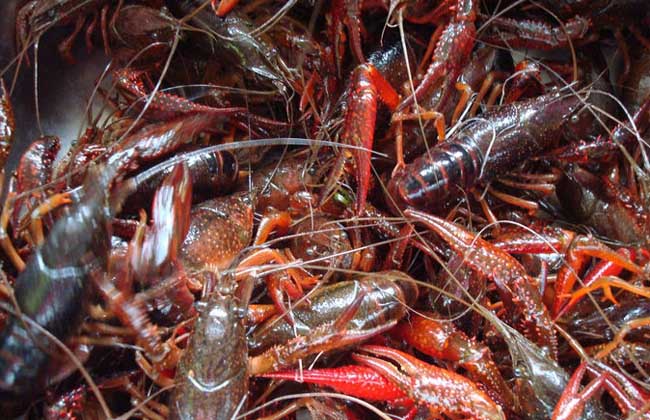
The crayfish, also known as the red swamp crayfish, red claw crayfish, freshwater crayfish, etc., is an omnivorous animal. At the bottom of rivers it rather likes eating mud, and likes eating dead small fish or other aquatic organisms. It mainly eats plant matter, but small fish, small shrimp, plankton, benthos and algae can all serve as its food. When food is scarce, it will also cannibalize its own kind. Let us take a look below!
What food do crayfish eat?
The crayfish is an omnivorous animal. Under natural conditions it mainly feeds on organic debris, attached algae, filamentous algae, and the roots, leaves and fragments of aquatic plants, and it is especially fond of eating succulent, tender green plants, such as water lettuce, water hyacinth, Malaysian pondweed, green azolla and tape grass. Animal-based foods include aquatic earthworms, earthworms, eggs and pupae of aquatic insects, snails, mussels and fish meat. Under artificial farming conditions, compound feed, by-products of agricultural product processing (oilseed meals, rice bran, wheat bran, etc.), offal from slaughterhouses, and various tender terrestrial grasses, melons, fruits and vegetable leaves can be fed.
Feed feeding for crayfish
Crayfish mainly eat at night, so 70-80% of the whole day's bait is fed at night. The bait should be placed in the shallow water at the edge of the pond, and fixed-time, fixed-place, fixed-quantity and fixed-quality feeding should be practiced. Each pond can have 2-4 bait observation platforms, and every morning observe whether the bait has been eaten up to decide the day's feeding amount. Too little feeding will inhibit the growth of crayfish or cause them to cannibalize each other due to hunger, while too much will both increase costs and cause deterioration of the pond environment. It is unfavorable to the growth and molting of crayfish. Ordinary prawn feed or special crayfish feed can be used. According to general experience, the whole day's feeding amount should be controlled so that they eat their fill, finish the food, and leave no leftover bait. Generally, small crayfish are fed at 20-25% of body weight, medium crayfish at 15-20% of body weight, and large crayfish at 10-15% of body weight, fed twice a day, once in the morning and once in the evening.
Farming feed for crayfish
1. Juvenile shrimp feed: The crude protein content of juvenile shrimp feed is 37.4%, and the ratio of various raw materials is Peruvian fish meal 20%, fermented blood meal 13%, soybean cake 22%, cottonseed cake 15%, wheat middlings 11%, corn meal 9.6%, bone meal 3%, yeast powder 2%, multivitamin premix 1.3%, molting hormone 0.1%, starch 3%.
2. Adult shrimp feed: The crude protein content of adult shrimp feed is 30.1%, and the ratio is Peruvian fish meal 5%, fermented blood meal 10%, soybean cake 30%, cottonseed cake 10%, wheat middlings 25%, corn meal 10%, bone meal 5%, yeast powder 2%, multivitamin premix 1.3%, molting hormone 0.1%, starch 1.6%.
Note: Crayfish like eating plankton. Although heavy metals, oil stains and other waste materials are not objects that crayfish feed on, they can attach to food and enter the crayfish's body. If it lives in water polluted by heavy metal ions, the “toxins” in the crayfish's body are very difficult to excrete.