How to Farm Soft-Shell Crayfish? Detailed Explanation of Key Farming Techniques
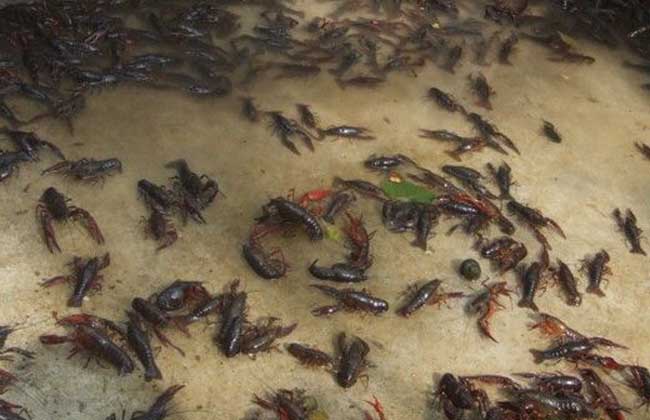
One of the main reasons our country previously did not treat crayfish as a fishery resource was its low edible portion. To increase the edible portion of crayfish and improve its utilization rate, in the early 1990s some countries in Europe and America took advantage of the molting phenomenon during its growth process to research and produce soft-shell crayfish, achieved success, and carried out large-scale production. Therefore, one of the avenues for the development and utilization of crayfish in our country is the production of soft-shell crayfish.
Advantages of Soft-Shell Crayfish
1. Increased edible portion
By adopting soft-shell crayfish production technology, the edible portion of crayfish can be increased to over 90%. Preliminary experiments show that the shell shed by crayfish accounts on average for 54.5% of its original body weight, but soft-shell crayfish do not show weight loss; the weight loss rate is only 0.08%, which can be ignored. The reason is that crayfish absorb a large amount of water during molting, and the shed shell consists of chitin and calcium carbonate, which are difficult for humans to digest and absorb. The gastroliths in the stomach account on average for only 0.93% of the soft-shell crayfish's body weight, and even adding the shrimp's stomach and intestines, it will not exceed 2% of the soft-shell crayfish's body weight. Therefore, the edible portion of soft-shell crayfish can be increased to over 90%.
2. Expanded edible range
For a molted soft-shell crayfish, as long as the two gastroliths in the stomach are removed to prevent them from damaging teeth during consumption, the entire soft-shell crayfish can be eaten, and processing is simple, with a more delicious taste. At the same time, because the crayfish completely sheds the entire outer shell of its body, including all of the shrimp's appendages, gills and stomach, the molted soft-shell shrimp is very clean, hygienic and beautiful in appearance.
3. Shrimp roe can be utilized
Since the whole soft-shell crayfish can be eaten, the nutrient-rich shrimp roe is fully utilized.
Production Methods of Soft-Shell Crayfish
Our country has abundant crayfish resources, but there is a large gap compared with foreign countries in the development and utilization of this resource. The United States is the country that produces and consumes the most crayfish in the world, and it has developed very mature technology in soft-shell crayfish production, including the design and construction of factory-style soft-shell crayfish production facilities and equipment, the use of biotechnology methods to control the molting speed of crayfish, and the use of the biological characteristics of crayfish combined with processing techniques to prevent and delay the hardening of the produced soft-shell crayfish, thereby enabling the organized batch marketing of live fresh soft-shell crayfish. In the single state of Louisiana in the United States, the annual production of soft-shell crayfish exceeds 45 tons.
1. Utilizing the natural molting pattern during crayfish growth
Producing soft-shell crayfish. Molting is a natural phenomenon in the life activities of all crustaceans. After natural hatching, as the individual develops, metamorphoses and grows, it must undergo molting again and again in order for the body to continuously grow, or to complete a certain life activity, such as mating, spawning and reproducing offspring. The molting of crustaceans has a certain rhythmicity, which is also related to the species of crustacean, growth stage, growing season, water temperature, nutritional status and environmental conditions. Crayfish go through 11 molts from hatching to postlarvae, and the postlarvae must go through multiple molts before reaching sexual maturity. The number of molts of sexually mature female and male crayfish decreases sharply, and older crayfish basically molt once a year. Therefore, as crayfish grow and mature, their molting frequency decreases and the interval between two molts lengthens. During the postlarval stage, they generally molt once every 4-6 days; from the juvenile stage to sexual maturity, they molt once every 8-10 days. The molting period of crayfish is from April to October each year, but May to June is the peak period. Crayfish have the habit of hibernation. After several months of hibernation, the energy in the body is greatly consumed, and the body's shell also grows thicker. In spring, crayfish crawl out of their burrows and begin to feed heavily, and at the same time, in order to grow rapidly, they must shed their shells. September to October is the breeding period of crayfish, and molting decreases noticeably. There are precursors before crayfish molt, such as stopping feeding, reduced activity and preference for quiet before molting. The entire molting cycle can be divided into 5 stages, namely the soft-shell stage, postmolt stage, intermolt stage, premolt stage and molt stage. As long as one masters the molting pattern of crayfish and designs a living environment suitable for its growth and molting, large-scale artificial production of soft-shell crayfish can be carried out. The state of Louisiana in the United States has already used its natural molting pattern to produce large quantities of soft-shell crayfish.
2. Removing the X organ
Accelerating crayfish molting. Promoting the synchronicity of molting. The molting of crustaceans is regulated and controlled by hormones in the body. Modern research has proven that there are two organs in the body of crustaceans that control molting, namely the X organ and the Y organ. The X organ located in the eyestalk secretes, and can store and release a hormone that inhibits molting; the Y organ located in the second maxilla secretes and releases molting hormone, but its release is regulated by the molt-inhibiting hormone secreted by the X organ. Therefore, artificially removing the X organ can accelerate the molting of crayfish and promote the synchronicity of molting. This has already been applied in the artificial production of shrimp and crabs such as prawns, sea crabs and river crabs, and has achieved obvious results.
3. Using molting hormones
Accelerating crayfish molting and promoting the synchronicity of group molting. The molting of crustaceans is regulated by hormones, and the molting hormones of shrimp have now been clearly studied. The molting hormones of shrimp are divided into ecdysone and p-ecdysone, both of which are steroid hormones. Ecdysone is an intermediate substance in the process of crustacean hormone formation, and it can be converted into p-ecdysone. The molting of shrimp is mainly controlled by the amount of 8-ecdysone 20-Hydroxyecdysone, 20-HE, namely 20-hydroxyecdysone, in the shrimp's body, which controls the shrimp's molting cycle. It is now known that more than 100 kinds of plants contain analogs with shrimp molting hormone activity, and they can be extracted artificially. Several manufacturers in China already produce "molting growth promoter" for shrimp and crabs. Adding 0.1%-0.15% molting hormone to the feed can accelerate the molting cycle and enhance the synchronicity of group molting. At present, many institutions in China have used this hormone in the molting process of shrimp and crab larvae, and obvious results have been achieved.
Production Techniques of Soft-Shell Crayfish
Crayfish farms can adopt the following techniques to produce soft-shell crayfish:
1. Stock seedlings of uniform size when releasing
At present, the seedlings of farmers are basically collected from the market or caught in the wild, and their sizes often differ greatly. When farms produce soft-shell crayfish, they must select seedlings and release seedlings with consistent development and similar sizes together; otherwise, it is very difficult to produce soft-shell crayfish in a factory-style operation.
2. Using shrimp molting growth promoter
According to the different sizes of the released seedlings, starting from 1-3 weeks after release, add shrimp molting growth promoter to the feed, generally at a dosage of 0.1%-0.15% of the feed, to accelerate the molting cycle of crayfish and ensure the synchronicity of group molting.
3. Building a suitable growth environment
To produce soft-shell crayfish, farms must maintain consistency and relative stability of the farming environment. In particular, the temperature at different locations within the same release site must not differ too much. In the same release site, aquatic plants should be distributed as evenly as possible, and during feeding the feed should be placed as reasonably as possible, so that crayfish can grow and develop under the same conditions as much as possible.
4. Determining the harvest time
About 10 days before harvesting, observe the growth and development of the crayfish once every 1-2 days, accurately determine the time of the last molt before marketing, and determine when to harvest accordingly.
Processing of Soft-Shell Crayfish
1. Processing of soft-shell crayfish
After crayfish molt, the entire body becomes clean, and it can be eaten with only slight processing. Before eating, for the sake of safety, use ophthalmic tweezers inserted from the crayfish's mouthparts or behind the eyes to remove the shrimp's stomach together with the two gastroliths in the stomach. In addition, use tweezers to pull out the shrimp's intestine from outside the anus, so that the entire soft-shell shrimp is very clean, with no filth at all. In fact, the digestive system of crayfish is relatively simple; from the mouthparts to the anus it is a straight tube, swelling only at the stomach. In addition, crayfish stop feeding for several days before molting, and after molting there is nothing left in the gastrointestinal tract; especially during molting, the hard shell of the stomach is also shed. In this way, without any processing, soft-shell crayfish can also be eaten after cooking, only requiring a little care about the gastroliths in the shrimp's stomach and spitting them out when eating to prevent biting the teeth. The cooking method can be braising in soy sauce, or frying in an oil wok for 1-2 minutes and then mixing with seasonings before eating. It can also be processed into breaded shrimp, stored frozen for a long time, and taken out as needed. For the sake of safety and hygiene, it is recommended that soft-shell crayfish not be eaten raw.
2. Preservation and freshness retention of soft-shell crayfish
After molting, the vast majority of crayfish are alive. If no measures are taken, soft-shell crayfish will soon harden. Experiments have found that under a water temperature of 30°C, soft-shell crayfish have partially hardened their shells after 12 hours, and after two days most of the body has hardened, though not as hard as before molting. However, eating the shrimp at this time gives a poor mouthfeel, the shell cannot be chewed soft, and it loses the flavor and characteristics of soft-shell shrimp. Although the hardening of soft-shell shrimp proceeds simultaneously, the time of complete hardening differs by body part, and the order of hardening differs. The first step is that the chelipeds, other appendages, and the rostrum and other organs for attack, defense and feeding first harden completely, followed by hardening of the abdominal shell, and finally the cephalothorax hardens completely. In order to maintain the flavor of soft-shell crayfish, freshness retention treatment must be carried out on soft-shell crayfish. The simplest method is to collect them immediately after crayfish molt and store them in an environment below -18°C. If one wants to preserve them alive and fresh, the newly molted soft-shell crayfish can be placed in water below 10°C for temporary holding, which can keep the shell from hardening for 1 week and the soft-shell shrimp from dying. If placed in water at 10-13°C for temporary holding, the soft-shell shrimp will not die for 35 days, but the shrimp shell will have slightly hardened.