Detailed Explanation of Key Points in Artificial Breeding Techniques for Red Swamp Crayfish
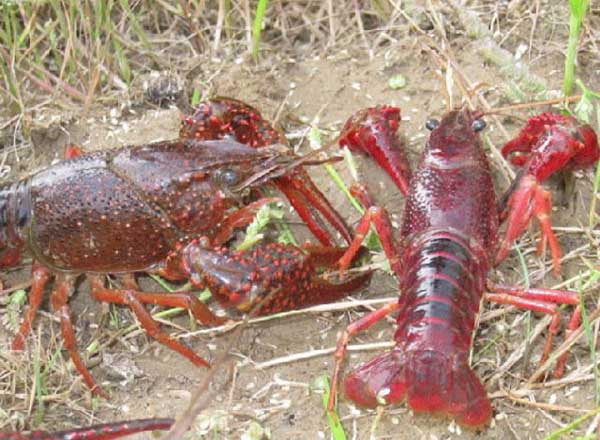
Selection of Parent Crayfish
Parent crayfish can be selected in September-October of the previous year or March-April of the current year, requiring a body weight of 30-50g, complete appendages, healthy and disease-free, strong vitality, with a female-to-male ratio of 2-3:1. Male and female crayfish have distinct external features and are easy to distinguish.
1. Sexually mature crayfish: males are noticeably larger than females.
2. Males have thick and large chelipeds, with a bright red soft tubercle on the outer side of both ends of the chelipeds; females have relatively smaller chelipeds, most female chelipeds lack red soft tubercles, and even if present, the color is pale.
3. The male genital pore opens at the base of the 5th pair of walking legs, while the female genital pore opens at the base of the 3rd pair of walking legs.
4. Sexually mature females have a swollen abdomen, while males have a relatively narrow abdomen.
Parent Crayfish Cultivation
The parent crayfish pond area should be about 1200 sq m, with loam soil as the preferred bottom substrate, a water depth of about 1m, a pond ridge width of over 1.5m, adequate and good water sources, well-built inlet and outlet ports, and anti-escape walls made of plastic film or calcium-plastic boards around the pond ridges. 7-10 days before stocking, the pond should be disinfected with 50-60kg/mu of quicklime for dry pond disinfection. After disinfection, filtered water (to prevent wild fish from entering the pond) should be added to a depth of about 1m, and 500-800kg/mu of decomposed livestock and poultry manure should be applied to fertilize the water. Hidden objects for crayfish to climb and rest on, such as branches, tree roots, bamboo tubes, etc., should be placed in the pond, and some aquatic plants should be transplanted.
Parent crayfish ponds can be stocked with 40-60kg/mu of parent crayfish. Before stocking, soak them in 3% salt water for 10 minutes to kill pathogens. To fully utilize the water body and regulate water quality, 50-100 silver carp and bighead carp per mu can be polycultured at the same time. During the cultivation period, fresh aquatic plants, soybean cake, wheat bran, or compound feed can be fed, with some animal-based feed added, such as chopped snail and clam meat, livestock and poultry slaughtering offal, etc. Daily feeding amount: 2%-3% of parent crayfish body weight in March, 4%-5% in April, 6%-8% after May, fed once each in the morning and evening, with the evening feeding being the main one, accounting for 70% of the daily ration. At the same time, strengthen water quality management, change new water once every 10-15 days, changing 1/3 each time; every 20 days, splash 10-25g/sq m of quicklime mixed with water once to maintain good water quality and promote gonadal development of parent crayfish.
Parent Crayfish Reproduction
In April-May, when the water temperature is above 20, parent crayfish begin to mate. Fertilized eggs hatch into fry in the female's abdomen, and the incubation period takes 40-70 days. After hatching, the fry complete the growth and development process of the juvenile stage under the protection of the mother. Once the fry leave the mother, they can actively feed and live independently. When a large number of fry appear in the breeding pond, seedlings should be collected promptly for fry cultivation.
Parent Crayfish Overwintering
The minimum water temperature for crayfish survival is 5°C. However, when the water temperature is below 9°C, crayfish about 3 cm in size have a very high mortality rate during overwintering. Although adult crayfish can survive, mass mortality will also occur after 2-3 months. Therefore, doing a good job in overwintering parent crayfish and ensuring the water temperature during overwintering is between 16°C and 18°C is also an important part of the entire breeding work.
The overwintering methods for parent crayfish are the same as those for Macrobrachium rosenbergii. Commonly used overwintering methods include covering the pond with plastic film for insulation, electric heater heating, overwintering in hot spring water, overwintering with factory waste hot water, and overwintering in glasshouses, all of which can achieve the effect of safe overwintering for parent crayfish.
Fry Rearing Techniques
Although red swamp crayfish have a small egg-carrying capacity, the fertilization rate can be above 98%, and the hatching rate can reach 80%-85%. The problem is that after hatching, the juvenile shrimp grow and molt frequently, and are highly susceptible to environmental conditions, affecting the fry rearing rate. To improve the fry rearing rate, the key is to do the following well:
1. Water quality requirements: During the breeding period of red swamp crayfish, the water body should be kept relatively stable, with fresh water quality and a pH value between 6.5-8; prevent excessive temperature differences between day and night; dissolved oxygen in water should be maintained above 5.6 mg/L.
2. Water environment: There must be water hyacinth on the water surface (accounting for 1/3), preferably aquatic plants at the bottom, and hidden caves to increase attachment sites for molting shrimp fry. It is also convenient to wash seedlings through water hyacinth to check and grasp the emergence time and shrimp growth. Add fences and filter nets at the water inlet to prevent harmful organisms from entering the pond, and also prevent frogs from entering the pond to lay eggs, avoiding tadpoles preying on shrimp fry. At the same time, prevent parent crayfish from climbing and escaping.
3. Strengthen inspection: Persist in checking the emergence situation in the morning and evening. When juvenile shrimp leave the mother, promptly catch the parent crayfish and return them to the parent crayfish pond for re-cultivation. Minimize pond transfers and inventory, and handle with special care to avoid affecting egg-carrying parent crayfish and newly hatched juvenile shrimp.
4. Ensure feed supply: Timely cultivate small zooplankton such as rotifers to feed the newly hatched fry.