Where do crayfish come from? An introduction to the distribution of major production areas nationwide
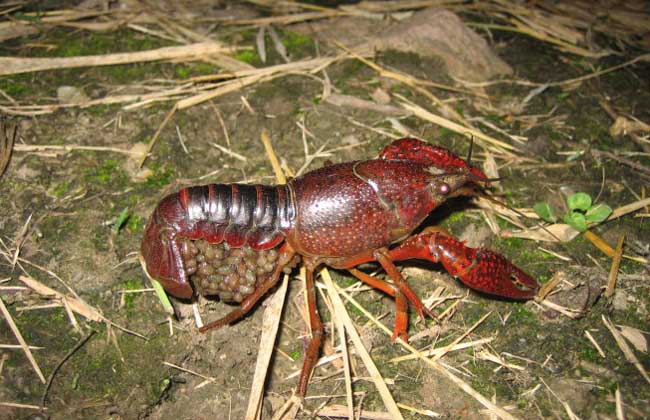
Crayfish inhabit permanent streams and swamps; temporary habitats include ditches and ponds. In streams they usually mix with plants or woody debris, and they can damage and weaken embankments. In areas where floodwaters have receded, they can be found in simple burrows. They live in wetlands, lakes and river channels with relatively shallow water and abundant aquatic plants. Now let's take a look at where crayfish come from!
Xuyi crayfish from Jiangsu
When crayfish are mentioned, some people may turn up their noses. But in fact, each place nurtures its own people, and crayfish grown in different environments and waters differ greatly in flesh quality and flavor. Crayfish produced in Xuyi County in northern Jiangsu (a national ecological demonstration county) grow up in the clear, pollution-free waters of the 10,000-mu Hongze Lake, feeding on natural aquatic animals and plants. This gives them their traits: large and plump bodies, sweet and fragrant roe, tender and sweet flesh, clean white undersides, a shell that turns especially bright red after cooking, and gills that are mostly white. They are completely different from crayfish living in dirty ditches. In Jiangsu, from small snack shops to four- and five-star hotels, this crayfish is a hot-selling item.
In recent years, Xuyi, a small county in northern Jiangsu, has become world-famous because of the "crayfish" industry. From farming and sales to deep processing, Xuyi crayfish has already formed a huge industrial chain. Among those involved, the county's rural commercial bank has made a relatively large contribution by fully using credit leverage to support the crayfish industry in growing bigger and stronger. At present, the county's annual crayfish output value exceeds 3 billion yuan, its trading volume exceeds 100,000 tons, and more than 100,000 people work in the industry.
Qianjiang crayfish from Hubei
In May 2010, Qianjiang City in Hubei was rated as "China's Home of Crayfish." On June 18, 2010, the Hubei Provincial Department of Agriculture and the Qianjiang Municipal Government held a press conference at the Diaoyutai State Guesthouse in Beijing and announced that the Second China Hubei (Qianjiang) Crayfish Festival would be held in Qianjiang City from July 7 to 8. At the meeting, Vice Chairman of the National Committee of the Chinese People's Political Consultative Conference Abdurexit Abdulla presented Qianjiang with the plaque "China's Home of Crayfish," and Vice Minister of Agriculture Chen Xiaohua and Vice Chairman of the Hubei Provincial Committee of the Chinese People's Political Consultative Conference Chen Baihuai presented Qianjiang with the plaque "China's No. 1 City for Crayfish Processing and Export."
In May in Qianjiang, the aroma of crayfish fills the air. With half a month still to go before the opening of the Fourth Qianjiang Crayfish Festival, food lovers from all over have already packed the famous "Crayfish Street." A few friends and relatives gathering, several cases of beer at hand, and pots of crayfish on the table have become a unique summer scene in Qianjiang.
Poyang Lake crayfish from Jiangxi
Clear waters of Poyang Lake produce good shrimp. Most crayfish are wild from Poyang Lake and are caught naturally. Restaurants in other provinces make a big show of the sign "Our crayfish comes from Jiangxi," and the product is highly favored in European and American markets, with export volume jumping to first place nationwide. Unlike many places where crayfish are artificially farmed, most crayfish in Jiangxi Province come from the Poyang Lake basin, China's "lake of clear water," and are mostly wild and naturally caught. After the crayfish incident, many restaurants in Guangdong and elsewhere even put up signs saying "Our crayfish comes from Jiangxi" to attract customers.
Poyang Lake has long been a major crayfish-producing area in China. With its fresh water quality and abundant aquatic plants, Poyang Lake produces crayfish with white bellies, red shells and an original ecological character, earning it the good name "clear waters of one lake produce good shrimp."
Hefei crayfish from Anhui
Hefei is China's capital of freshwater crayfish, which shows that crayfish have become one of Hefei's famous snacks. That bright red hard shell, that fragrant smell, that soft tender shrimp meat, that spicy seasoning, plus beer, side dishes, the hot summer, and eating and drinking freely with family and friends, haha, it really is the life of an immortal. Surely even the immortals in heaven would be a little envious!
After years of development, Hefei crayfish already has a sound and fast-growing industrial chain. From professional farming to sales to consumption, it is highly industrialized. When traveling to Hefei, you must taste the crayfish! Especially the famous ones -- Ningguo Road Crayfish Street in Baohe District (representative shops include Lao Xie and Pangzi) and Datong Road at Heping Square in Yaohai District.
Shaobo crayfish from Jiangsu
Shaobo crayfish are renowned throughout the Jiangsu-Zhejiang region, especially near Yangzhou, where Shaobo crayfish are a household name. Shaobo crayfish are as famous as Xuyi crayfish but differ in taste. Their delicious flavor has long been well known, making this a holy land for food lovers from Jiangsu, Zhejiang and Shanghai.
Shaobo crayfish are located on the Food Street in Shaobo Town, Jiangdu District under the administration of Yangzhou City. Here there are dozens of restaurants specializing in Shaobo crayfish. Every day after noon, this place is bustling with traffic, and hundreds of vehicles clog the streets. These drivers have come from all over the country, traveling great distances specially for one purpose -- to eat Shaobo crayfish.
Previously, the main ingredient for Shaobo crayfish, the crayfish itself, all came from Shaobo Lake. But as Shaobo crayfish grew famous, the crayfish in Shaobo Lake could no longer bear the burden, so the crayfish now eaten by customers are all shipped in from crayfish farms around Shaobo. However, it does not matter, as this has no effect on the taste of Shaobo crayfish.
Shaobo Lake is located on the west side of the canal. The lake area is 147,000 mu, the water is clear, aquatic plants are abundant, and it is rich in crayfish. In appearance, Shaobo Lake crayfish have shells that are bluish with a hint of red, white bellies, and large, plump bodies. They are both clean and hygienic and delicious, very different from crayfish from inland ditches and ponds. In terms of preparation, they also use distinctive cooking methods.
At present, Shaobo crayfish come in about five flavors: braised in soy sauce, clear-water, salt and pepper, garlic, and fermented bean curd. Customers can choose according to their personal taste. Shaobo Food Street has quite a few crayfish restaurants with booming business. The crayfish are not only clean and hygienic but also delicious. Paired with distinctive pork kidney soup and fried noodles, I believe you will not be disappointed.