How profitable is crayfish farming?
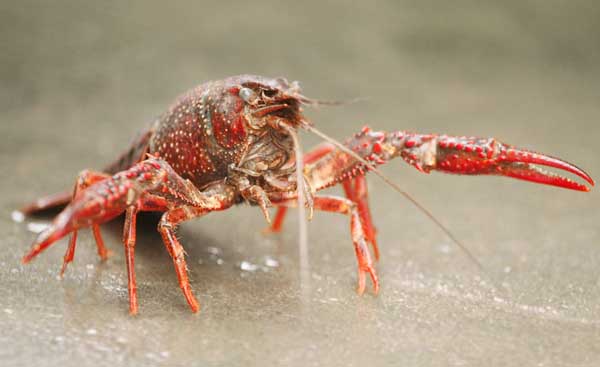
Why do city people love eating this thing? Once you remove the head and claws, there's only a bit of meat on the tail - what's there to eat? No matter how much rural people don't understand it, in recent years eating crayfish in the city has become a trend. On the Jinan market, cooked crayfish has risen from 10 yuan per jin all the way to 15 yuan per jin this year. Restaurants keep inventing new ways to prepare crayfish - braised in soy sauce, stewed in beer, spicy and numbing…… Currently Beijing, Shanghai, Hefei, Jiangsu, Sichuan and other places are all major crayfish-consuming markets. It's said that in Hefei alone, the daily trading volume of crayfish can reach a thousand tons at its peak. Because eating crayfish has become a trend, it has also driven the crayfish farming industry, with Xuyi in Jiangsu and the suburbs of Hefei both having formed farming areas of tens of thousands of mu. However, Shandong is somewhat lagging behind in crayfish farming, mainly because farmers don't understand that crayfish could now have such a big market. Recently, while interviewing in Yutai County, Shandong, I met a farmer named Zhang Zhilong, who rode the market trend and got good returns from farming crayfish.
Zhang Zhilong is a villager of Bahu Village, Luotun Township, Yutai County. In the autumn of 2004, he brought in 100 jin of brood crayfish from the south and stocked them in a 400 sq m pond, spending 4,000 yuan on the brood crayfish at the time. The next year, he began catching the large ones and leaving the small ones, and over the year sold more than 900 jin of marketable crayfish at about 6 yuan per jin, earning more than 5,000 yuan. By 2006, his farming area had expanded to 10 mu, and he sold more than 8,000 jin of marketable crayfish in a year, with the price reaching 8.2 yuan per jin. Zhang Zhilong's farming conditions are not very good - the ponds he uses for farming crayfish are all old ponds, and he can't change the water either. But crayfish are very tolerant of low oxygen, can crawl onto the bank, basically have no diseases, and after one stocking there's no need to stock seed every year - they can overwinter and reproduce on their own, and normally you just need to feed them. Every two or three days he feeds them balls made from miscellaneous fish and shrimp ground up, mixed with flour and steamed, and additionally feeds them some local river snail meat and chopped green feed. According to his calculations, the production cost per jin of adult crayfish raised is about 1.5 to 2 yuan, and one mu of water surface can yield around a thousand jin of marketable crayfish over the year; after deducting costs, a income of 4,000 yuan per mu is no problem. Zhang Zhilong says that when selling crayfish, it's best to avoid summer and sell in autumn, because at that time the wild crayfish are all off the market, and the price of farmed ones goes up.
Zhang Zhilong explains that crayfish don't have high requirements for the water environment - just plant some cattails around the pond and put some duckweed in the water to shade them. It's said that many places in the south also stock crayfish in rice paddies. Crayfish have very omnivorous feeding habits - they can eat weeds and pests, and also add an extra income, though you have to take some anti-escape measures.
I should correct a misconception for readers. The "little crayfish" that city people are now crazy about eating should properly be called by its scientific name, the red swamp crayfish (Procambarus clarkii). It was first brought to China by the Japanese, who at the time wanted to use its omnivorous feeding habits and strong vitality to clean up river channels; later it became wild, and unexpectedly it has now become a delicacy for people. In recent years, Shandong has promoted on a large scale in freshwater aquaculture the giant river prawn (Macrobrachium rosenbergii), the whiteleg shrimp (Litopenaeus vannamei), the hairy crab and others. These species also had relatively high farming returns in earlier years, but there are also difficulties such as the fry not being able to overwinter and reproduce naturally, the large annual investment in fry, and the high requirements for breeding technology and conditions. Later, the Australian red claw crayfish (Cherax quadricarinatus) was also promoted, but due to difficulties such as not being able to overwinter in the open, it was not easy to produce on a large scale. Now the market for the red swamp crayfish is looking up, its farming adaptability is strong, and the farming risk is not great either - where there are water conditions, you might as well give it a try.