What should be noted when stocking freshwater crayfish?
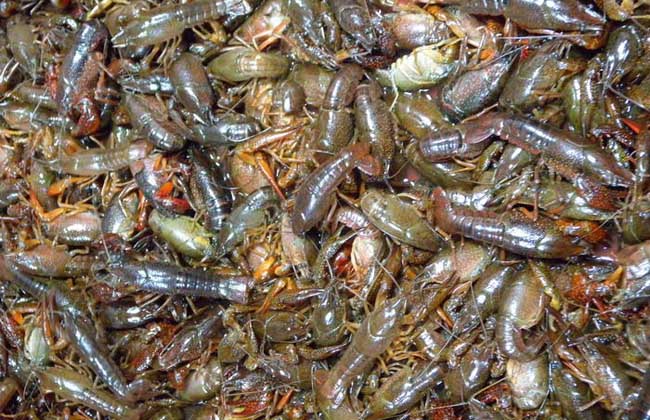
Freshwater crayfish is also known as red swamp crayfish. In recent years, crayfish have become a darling of the dining table, with their value doubling. It is predicted that the crayfish market will not become saturated within the next 5 years, and crayfish farming is rapidly expanding in various regions. After several years of production practice, the author believes that the following points should be noted when stocking crayfish:
Pond selection For farming crayfish, the pond area should be moderate, generally 20 mu to 50 mu. The pond bank slope ratio should be large, at 1:2.5 to 1:3, to facilitate burrowing and reproduction by crayfish, while also reducing crayfish escape. The pond should be rich in natural food organisms and aquatic plants.
Thorough pond clearing 10 days before stocking crayfish, drain the pond water and use 100 kg of quicklime per mu to thoroughly clear the pond. Kill harmful organisms and various pathogens. Apply 100 kg to 200 kg of organic fertilizer per mu to cultivate food organisms.
Ecological planting Plant aquatic plants in the shallow water around the pond perimeter, with the aquatic plant area accounting for 40% to 60% of the pond area. Species include tape grass, Elodea, hydrilla, water hyacinth, water lettuce, and others, which can both provide food for crayfish and serve as ideal places for crayfish concealment and resting. In addition, bundles of aquatic plants can be made on the pond bottom, placed every 5 m, 5 kg to 10 kg per bundle, sunk to the bottom, with 15 to 20 bundles placed per mu. The bundles are tied with rope, and the other end of the rope is fixed at the water surface.
Broodstock selection Because artificial breeding of crayfish is not yet fully mastered at present, crayfish seedlings are mainly obtained through natural reproduction, so the selection of broodstock is particularly important. The time for selecting and stocking crayfish parent shrimp is generally from the end of August to mid-October, and they can be caught from farming ponds or natural waters. Male and female parent shrimp are required to come from different waters to reduce inbreeding. Parent shrimp should not be out of water for more than 2 hours; in an indoor or moist environment, the time can be appropriately longer. Identification of male and female: (1) The first and second abdominal legs of male shrimp evolve into white, calcareous tubular copulatory organs; the first abdominal legs of female shrimp degenerate, and the second abdominal legs are feathery. (2) The genital pore of male shrimp opens at the base of the fifth pair of pereiopods and is not obvious; the genital pore of female shrimp opens at the base of the third pair of pereiopods, with a pair of visible dark round pores. (3) In adult shrimp of similar body length, male shrimp have thick and large chelipeds, and the spines on the carpal and palm segments are long and obvious; female shrimp have relatively smaller chelipeds.
Stocking of parent shrimp The parent shrimp to be stocked are required to be robust, with intact appendages and uniform size, and should be stocked all at once to avoid stocking in batches, which can reduce mutual killing. When stocking parent shrimp, they should be evenly stocked around the pond with uniform distribution points. For parent shrimp transported over long distances, when stocking, first soak the parent shrimp in water for 3 minutes to 5 minutes, then place them at the pond edge for 2 minutes to 3 minutes, repeating 2 to 3 times, so that the parent shrimp absorb enough water, and then slowly put the parent shrimp into the pond, which can improve the survival rate of stocking. The male-to-female ratio of parent shrimp is usually 2 to 3:1. Crayfish can mate and spawn in autumn and winter, and the mating season is generally from September to December. In early March of the following year, when the air temperature rises to 12°C and the water temperature rises above 10°C, some shrimp will leave their burrows to come out for feeding and activity. At this time, management should be strengthened, and artificial feed should begin to be provided. When the water temperature reaches above 18°C, feeding should be intensified. After a large number of juvenile shrimp hatch, ground cages can be used to catch parent shrimp that have already reproduced.
Stocking density For ponds mainly farming crayfish, stock 30 kg to 40 kg of broodstock per mu, with a size of more than 30 g each. After stocking the parent shrimp, provide artificial feed in a timely manner. From April of the following year, begin catching with ground cages and shrimp cages, keeping the large ones and leaving the small ones, with an annual yield of 200 kg to 300 kg per mu. Thereafter, only harvesting is needed each year, with no need to stock seed. It should be noted that harvesting must not be excessive. If harvesting is excessive, the yield in the following year will inevitably be greatly reduced, and at that time supplemental stocking will be needed. For mixed-culture ponds, stock 10 kg to 20 kg of broodstock per mu, with a size of about 25 g each, without feeding feed, relying mainly on natural food in the pond and residual feed in the fishery pond. From April of the following year, begin catching with ground cages, keeping the large ones and leaving the small ones, with a yield generally of 50 kg to 100 kg per mu.