Detailed Explanation of Key Technical Points and Daily Management Methods for Crayfish Farming
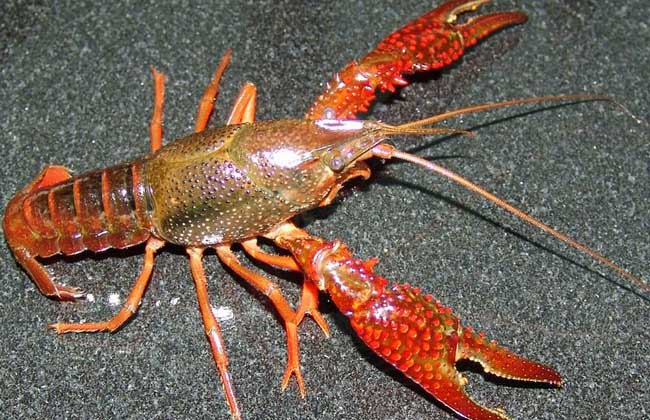
In recent years, crayfish, as a leisure food, has become increasingly favored by consumers, and market demand has increased greatly. It has not only become a best-selling aquatic product domestically, but its shrimp meat, shrimp roe, and whole crayfish exports have also increased rapidly. It has the characteristics of small investment, high yield, low risk, and quick results, and has become a new highlight for enriching farmers and rural prosperity. Let us take a look at crayfish farming techniques together below!
Crayfish Farming Facilities
The pond area should preferably be 4 to 10 mu, with a depth of 1 to 1.5 m and a slope ratio of 1:2.5. The pond bottom should be flat, and the bottom substrate is best as loam soil. The pond slope soil should be relatively hard, the pond should have good water retention, and the water level should be easy to regulate. The water source should be sufficient and the water quality should be pollution-free. According to the layout of high-level irrigation and low-level drainage, build the inlet and drainage channels well, so that water can be let in and drained out. Red swamp crayfish have a strong escape ability, so escape prevention facilities must be well constructed. Usually, plastic film or calcium plastic boards are used, supported around the pond ridge with bamboo stakes or wooden stakes to enclose and prevent escape.
Preparation for Stocking Crayfish
1. Thorough pond clearing: 20 to 30 days before stocking shrimp fry and shrimp seed, drain the pond water, remove excess silt, repair the pond ridge, and use 75 kg of quicklime per mu or drugs such as bleaching powder or bleaching powder concentrate to thoroughly clear the pond and disinfect it.
2. Apply sufficient base fertilizer: Apply 500 to 600 kg of decomposed livestock and poultry manure per mu to cultivate rotifers and cladoceran and copepod plankton, providing suitable feed for shrimp fry and shrimp seed.
3. Plant aquatic plants well: Plant aquatic plants such as Hydrilla verticillata, Potamogeton malaianus, and Elodea in the farming pond, covering 2/3 of the shrimp pond area. At the same time, set up mesh sheets, or place bamboo tubes, plastic tubes, etc., to provide habitats, molting sites, and hiding places for red swamp crayfish.
Stocking Shrimp Seed for Crayfish
1. Farming models
① Summer stocking: Mainly stock the first batch of juvenile shrimp hatched in the current year. The stocking time is mid-to-late July, and the juvenile shrimp size is above 0.8 cm. Stock 30,000 to 40,000 per mu.
② Autumn stocking: Mainly stock large-size shrimp fry or shrimp seed cultivated in the current year. The stocking time is from mid-August to September. For shrimp fry about 1.2 cm in size, stock 25,000 to 30,000 per mu. For shrimp seed 2.5 to 3 cm in size, stock 15,000 to 20,000 per mu. A small portion can reach market size by the end of the year, while most need to be caught and marketed from June to July of the following year. Commercial shrimp weigh 25 grams each, with a yield of 300 to 500 kg per mu.
③ Winter and spring stocking: Generally carried out in December or from March to April of the following year. Mainly stock shrimp that do not meet market size in the current year, with a size of 100 to 200 per kg, and stock 15,000 to 20,000 per mu. After winter and spring farming, they are caught and marketed from June to July, and commercial shrimp can reach 30 grams each, with a yield of 400 to 500 kg per mu.
2. Seedling and seed quality
① Uniform size: Juvenile shrimp should be above 0.8 cm in size, and shrimp seed should be about 3 cm in size. The shrimp fry and shrimp seed stocked in the same pond must be uniform in size and stocked sufficiently in one go.
② Healthy seedlings and seed: The seedlings and seed should be robust in constitution, with complete appendages, free of disease and injury, and strong vitality.
③ Wild domestication: If they are wild shrimp seed, they should be domesticated for a period before stocking to avoid fighting and killing each other.
3. Precautions
① Stocking in winter should be carried out on a sunny morning, while stocking in summer and autumn should be carried out on a sunny early morning or on cloudy and rainy days, avoiding direct sunlight.
② Before stocking shrimp seed, bathe them in 3% to 5% salt water for 10 minutes to kill parasites and pathogenic bacteria.
③ For shrimp seed purchased from other places, because they have been out of water for a long time, they should be slightly treated before stocking. Soak the shrimp seed in pond water for 1 minute, lift them out and leave them for 2 to 3 minutes, then soak again for 1 minute, repeating this 2 to 3 times, so that the body surface and gill cavity of the shrimp seed absorb enough water before stocking, to increase the survival rate.
④ In ponds for raising red swamp crayfish, appropriately polyculture some silver carp and bighead carp to improve water quality and make full use of feed resources.
Scientific Feeding of Crayfish
1. Nutritional matching: During the juvenile and young shrimp stages, red swamp crayfish feed on rotifers, cladocerans, copepods, and aquatic insect larvae, while at the adult shrimp stage they also eat animal feed and plant feed. After shrimp fry and shrimp seed are stocked, fertilizers should be applied in a timely manner to fertilize the water. During the rapid growth stage of red swamp crayfish from August to October, feed more wheat bran, soybean cake, and green feed, and appropriately feed animal feed. From November to December, before overwintering, red swamp crayfish should mainly be fed animal feed.
2. Feeding characteristics: Red swamp crayfish mostly move and forage at night and have the habit of competing for food and overeating. Feeding should be carried out once in the morning and once in the afternoon every day, with the afternoon feeding as the main one, accounting for 70% of the daily feeding amount. Adopt the method of feeding with fixed quality, fixed quantity, and fixed time, feeding enough and evenly, ensuring every shrimp eats its fill and avoiding competition for food.
3. Environmental impact: The suitable water temperature for the growth of red swamp crayfish is 20 to 32°C. From August to October, red swamp crayfish have a large food intake. The daily feeding amount can be arranged at 6% to 10% of the shrimp body weight in the pond, and dry feed or compound feed can be calculated at 2% to 4%, with appropriate increase or decrease according to weather, water quality conditions, and shrimp activity and foraging conditions. During continuous cloudy and rainy weather or when the water is too dense, feed less; when the weather is clear and fine, feed appropriately more. When a large number of shrimp molt, feed less; after molting, feed more. During shrimp disease seasons, feed less; when growth is normal, feed more. It is necessary both to let the shrimp eat their fill and eat well, and to reduce waste and improve feed utilization.
Daily Management of Crayfish
1. Pond patrol system: Patrol the pond every day and take timely countermeasures when abnormalities are found.
2. Regulate water quality: Keep the dissolved oxygen in the shrimp pond above 5 grams/liter, pH 7 to 8.5, and transparency around 40 cm. Change water once every 15 to 20 days, changing 1/3 each time. Splash quicklime water once every 20 days, using 10 kg of quicklime per mu each time. Keep the water level stable and do not let it rise and fall suddenly.
3. Molting management: Always maintain a large amount of aquatic plants in the shrimp pond. When a large number of shrimp molt, disturbance is strictly prohibited. After molting, immediately increase feeding of high-quality suitable feed to prevent mutual killing and promote growth.
4. Escape prevention and disease prevention: Strengthen inspection during flood season and strictly prevent shrimp from escaping. Do a good job in disease prevention and control and elimination of enemies.
Catching and Transporting Crayfish
1. Catching: Concentrated catching can be carried out from June to July and from November to December. First use tools such as ground cage nets and hand scoop nets to catch them, and finally catch them by draining the pond. It is also possible to catch the large ones and leave the small ones, and catch throughout the year.
2. Transportation: Commercial shrimp are usually transported dry in foam plastic boxes, or they can be transported in plastic bags or in refrigerated trucks. During transportation, keep the shrimp body moist and do not squeeze them, to improve the survival rate during transportation.