Where are swimming crab production areas distributed? A list of major production areas nationwide
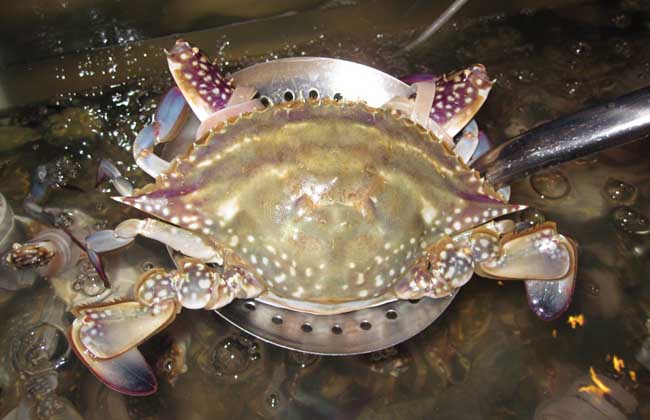
Swimming crab is an important economic crab species along the coast of China, growing quickly with substantial farming profits, fine and white tender meat, and rich in protein, fat, and various minerals. It has become an important aquaculture species in China's coastal areas. In the winter migration season, individuals are at their strongest, generally weighing about 250 grams and reaching up to 500 grams. Now let us take a look at the distribution of swimming crab production areas!
Swimming crab production area distribution
Swimming crab is one of China's important best-selling export products, mainly shipped to Japan, Hong Kong, China, Macao, China, and other countries and regions. Production areas are mainly distributed in the sea areas of Liaoning, Hebei, Tianjin, Shandong, Jiangsu, Zhejiang, Fujian, and others. Generally from south to north, March to May and September to October are the peak production seasons, and the Bohai Bay and Liaodong Peninsula have greater output from April to May. It is also distributed in Japan, Korea, the Malay Archipelago, and the Red Sea.
Swimming crab production area environment
1. Water temperature: Swimming crab adapts to water temperatures of 8-31°C, and the most suitable growth water temperature is 15.5-26.0°C. In different water temperature environments, the activity of the three-spot swimming crab differs. At a water temperature of -1.5°C, it does not feed, and some individuals freeze to death in shallow water. At 0-6°C, it does not feed, hides in sand day and night, and is in a dormant state. At 8-10°C, it begins to stop feeding, has weak activity, and lurks in deep water. At 14°C, food intake decreases, it begins to move toward deep areas, and activity is normal. At 15-26°C, food intake is large, activity is normal, and growth is fast. At 17-21°C, it is the peak mating period. At 14-21°C, egg-bearing groups begin to be found. At 12-14°C, it begins to spawn.
2. Salinity: Swimming crab adapts to salinity of 13-38, and the most suitable growth salinity is 20-35. The suitable salinity for overwintering is 28-35. When salinity is below 8 or above 38, feeding and activity stop, and all die after one day.
3. Others: The suitable pH range for swimming crab is 7.5-8, dissolved oxygen must not be lower than 2 mg/L, and chemical oxygen demand generally does not exceed 12 mg/L. Hydrogen sulfide does not exceed 0.2 mg/L. Within 24 hours, the semi-lethal concentration of copper ions is 58 mg/L.
Common types of swimming crab
1. Three-spot swimming crab: The three-spot swimming crab is commonly known as swimming crab, white crab, and so on. It belongs to the order Decapoda, family Portunidae, class Crustacea, and is an important economic crab species along the coast of China. It grows quickly, and farming profits are substantial. It has become an important aquaculture species in China's coastal areas. It generally lives and reproduces on the seabed at a depth of 3-5 m, moves to deep sea of 10-30 m in winter, and likes to burrow at the bottom of mud and sand. Its suitable salinity is 16-35, water temperature is 4-34°C, pH is between 7 and 9, the most suitable salinity is between 26 and 32, and the most suitable temperature is 22-28°C.
2. Red-spotted swimming crab: The red-spotted swimming crab has a fusiform carapace, slightly raised, with 3 prominent wart-like protuberances on the surface, well-developed chelipeds, a prismatic merus, and blunt teeth on the inner margin. The dactylus of the fourth pair of walking legs is flat, wide, and thin like a paddle, suitable for swimming, and it belongs to warm-water bottom-dwelling crabs. It is distributed in Japan, Hawaii, the Philippines, Australia, New Zealand, the Malay Archipelago, the Indian Ocean, and the entire Indo-Pacific warm-water region along the coast of South Africa, Taiwan, China, as well as Guangxi, Guangdong, Fujian, and other places in mainland China. Its living environment is seawater, and it is mostly seen on muddy and sandy seabeds at depths of 10-30 m.
3. Far-sea swimming crab: The far-sea swimming crab is an animal of the genus Portunus in the family Portunidae. It is distributed in Japan, Tahiti, the Philippines, Australia, Thailand, the Malay Archipelago, East Africa, Taiwan, China, as well as Guangxi, Guangdong, Fujian, Zhejiang, and other places in mainland China. Its living environment is seawater, and it often lives on muddy or sandy seabeds at water depths of 10-30 m. The carapace is about 20 cm wide. In males, except for the movable finger and immovable finger of the chelipeds and the merus and dactylus of each walking leg, which are dark blue, most other parts are blue-green with light blue or white mottling.