What are the characteristics of the living habits of hermit crabs?
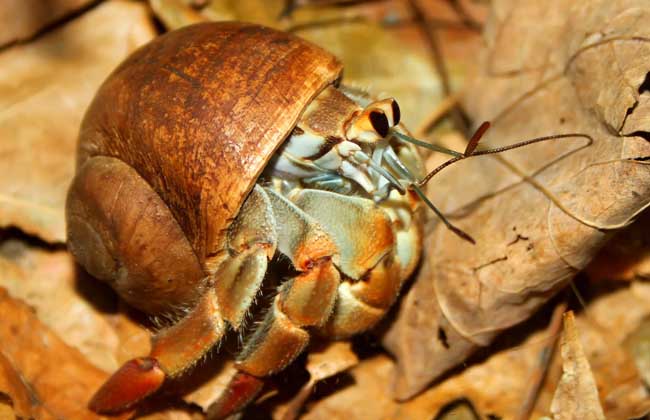
Hermit crabs often live in the shells of dead mollusks to protect their soft abdomens. There are more than 500 species of hermit crabs in the world, the vast majority of which live in water, while a few live on land. Some hermit crabs no longer live in shells, but have instead developed a hard shell similar to that of a crab. Let us take a look at the living habits of hermit crabs below!
Diet
Hermit crabs have a very varied diet and are omnivorous animals. They are known as the scavengers of the seaside, eating everything from algae and food scraps to parasites. For home fish keepers, placing one or two hermit crabs in an aquarium will serve as a cleaner.
Lifespan
The lifespan of a hermit crab is generally 2 to 5 years, but under good rearing conditions, they can often live to 20 to 30 years, and records show the longest has lived over 70 years.
Shell changing
The houses of hermit crabs include conch shells, seashells, and snail shells, and even bottle caps serving as homes due to harsh ecological environments. When a hermit crab is just born, its body is relatively soft and easily preyed upon. After growing up, it must find a house that suits it, so it attacks a conch, kills and tears it apart. Then it drills inside, hooks the tip of the shell with its tail, braces several short legs against the inner wall of the shell, extends its long legs outside the shell to crawl, and guards the shell opening with its large claws. In this way, it moves into an eco-friendly and sturdy new home.
Symbiosis
The shell carried by a hermit crab is a good hard substrate for benthic organisms, on which very many organisms live in symbiosis with it. The symbiotic relationship between most hermit crabs and cnidarians is not absolute, nor is the relationship one-to-one; most relationships are mutualistic symbiosis. The nematocysts of sea anemones can provide hermit crabs with a certain degree of protection, while the sea anemones can obtain a hard substrate for perching on the shell and can also obtain debris when the hermit crab forages. Hydroids can also provide hermit crabs with a certain degree of protection and prevent other large harmful epibionts from forming colonies on the shell. In addition to obtaining debris, hydroids can also avoid being buried by the substrate, and even when hermit crabs gather, they can promote sexual reproduction in the hydroids.