How do hermit crabs live symbiotically with sea anemones?
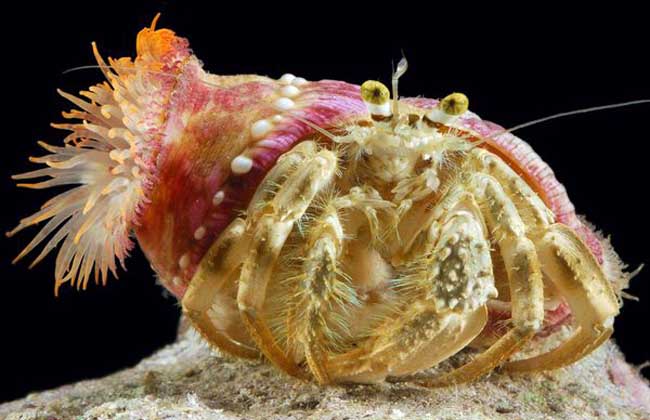
How do hermit crabs live symbiotically with sea anemones? We can often see hermit crabs running around with a sea anemone on their backs, and many people are curious about the relationship between sea anemones and hermit crabs. In fact, the relationship between sea anemones and hermit crabs can be seen as commensalism; so-called commensalism refers to two organisms living together, benefiting one party while doing no harm to the other, or benefiting both parties, with both able to live independently once separated.
The relationship between sea anemones and hermit crabs is shown in their mutual assistance. To protect itself, the hermit crab burrows into the empty shell of a mollusk, leaving its head shield and a pair of large claws exposed, and extends its first two pairs of slender walking legs to crawl. The sea anemone is the “gatekeeper” they find for themselves; after finding a suitable sea anemone, the hermit crab carefully removes it from its attachment site with its claws and places it at the entrance of the shell to guard its home.
The sea anemone uses its venomous tentacles to sting any animal that dares to come near them, protecting the hermit crab. The hermit crab, in turn, carries the sea anemone, which has difficulty moving, around in search of food, sharing the good fortune. The sea anemone, unable to swim, uses its ally as a means of transport; this form of symbiosis is called motile symbiosis. This relationship between sea anemones and hermit crabs allows the sea anemone to get more feeding opportunities on the hermit crab's body, while also avoiding being buried by fine sand, biological debris and its own excrement.
The relationship between sea anemones and hermit crabs lasts their entire lives; when the hermit crab needs to change to a new home, it also brings its little companion along to move into the new residence and live together again. In this way, they will keep living together until death. For example, sea anemones often grow on the large claws of the hermit crab Diogenes edwardsii, and some other hermit crabs live inside sponges or coelenterates; since these two types of animals can continue to grow, the hermit crabs therefore do not need to frequently change to a new home.