What are the living habits of the megalopa of the Chinese mitten crab?
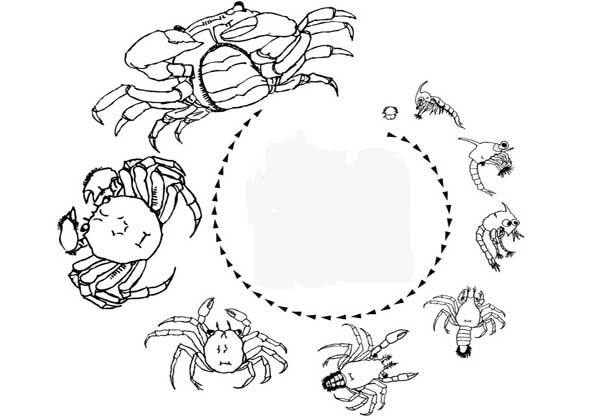
Living habits of the megalopa of the Chinese mitten crab
The megalopa gets its name because its pair of relatively large compound eyes grows at the ends of long eyestalks and protrudes outside the eye sockets. Compared with the zoea, the megalopa has undergone great changes in both internal organs and external morphology, which also brings about great changes in its living habits.
1. The megalopa has well-developed swimming appendages, so it swims very fast. Thanks to the development of the statocyst, it can balance its body and swim in a straight, directed line. Compared with the zoea, the megalopa has well-developed chelae and walking legs, so it also has strong climbing and crawling abilities; it can not only crawl on the bottom, but also cling to the stems and leaves of aquatic plants. The hooked setae at the ends of the last pair of walking legs can often be used to hook onto aquatic plants and the sand of banks and shoals, so that it is not washed away by the current.
2. The megalopa already has gills and a branchial chamber and can live out of water for a short time, so it often attaches to aquatic plants and pool walls and does not die immediately after leaving the water as the zoea does. Therefore, dry transport is mostly adopted for transporting crab seedlings. Compared with the zoea, the megalopa has a stronger ability to regulate its internal osmotic pressure and is adapted to freshwater life, thus showing an obvious tendency toward fresh water. Groups of megalopa in the estuarine waters enter rivers with the sea tide, forming the crab seedling flood season.
3. The morphology of the megalopa is a transitional stage between the zoea and the juvenile crab. The subsequent juvenile crab stage is suitable for life in freshwater shoal environments, so the megalopa shows a habit of moving toward shallow-water areas, and under natural conditions it often gathers in the shallow-water areas along the banks of rivers and lakes.
4. The megalopa has a broader diet than the zoea. It can not only filter-feed on tiny plankton in the water, but also prey on larger zooplankton, such as freshwater cladocerans and copepods. Because it has a powerful predatory organ, the chelae, it can easily catch Artemia and other food several times larger than its own volume while swimming or at rest. Like the zoea, the megalopa has the habit of preying on weaker individuals of the same species, and the megalopa is fierce, agile, and strong in predation, making it even easier to catch zoeae or weaker megalopae as food. How to prevent megalopae from preying on the same species is a technical measure that should be taken seriously to increase the survival rate of seedling rearing. The megalopa is omnivorous; in addition to preferring animal feed, it can also feed on aquatic plants and commercial feed.
5. The megalopa has a stronger phototaxis than the zoea and, except for direct light, likes to move at the water surface. At night, light can be used to attract it into dense groups. When the megalopa develops into a juvenile crab, it no longer shows this phototaxis, so at harvest time it is necessary to use the phototaxis of the megalopa stage to catch it from the seedling-rearing pond, because by the juvenile crab stage it is difficult to harvest it in groups.