Key Technical Points and Daily Management Methods for Swimming Crab Aquaculture
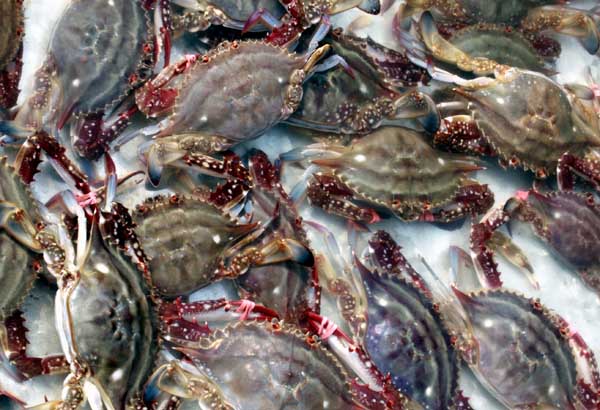
Swimming crabs are widely distributed along the coast of China and are a large marine economic crab species. Their meat is delicious, people enjoy eating them, and their economic value is high. Because they grow quickly, have strong adaptability, and suffer fewer diseases, they are suitable for seawater aquaculture in coastal ponds. In recent years, they have become a new highlight of coastal pond aquaculture in China.
Pond Conditions
1. Grow-out pond area and water depth. Earthen ponds are mainly used, and the area can be large or small, with water depth required to be above 1.5 m. When the area of a single pond exceeds 10 mu, it is advisable to use plastic mesh inserted into the bottom to divide the large pond, so as to prevent swimming crabs from gathering due to changes in water temperature and water quality, which would cause excessive local density and lead to cannibalism.
2. Pond bottom. It should slope slightly from the inlet gate end toward the outlet gate end to facilitate water intake and drainage. The substrate should preferably be sandy mud. Wave-shaped furrows and ridges should be made on the pond bottom in multiple rows, and shelters should be placed in the pond (such as discarded ceramic products, stones, tiles, netting, bamboo, branches, or used woven bags filled with an appropriate amount of shells, etc.) as hiding places for swimming crabs (especially during the molting period). Note that the woven bags used must be cleaned. In ponds with excessive mud, medium and coarse sand can be spread locally on the pond bottom to a thickness of about 10 cm to provide swimming crabs with a better living and growing environment.
3. There should be no pollution sources around the aquaculture pond, and the environment should be safe.
4. Natural tidal water can be taken in for about 10 days each tidal period, and a water pump should be available to ensure the supply of aquaculture water during neap tides.
5. An appropriate amount of aeration equipment should be installed.
Preparation Before Stocking
1. Remove silt and eliminate pests
Completely remove the silt in the pond one month before releasing the seedlings. Then use the disinfectants in the table below to eliminate harmful organisms, food-competing organisms, and pathogenic organisms. Commonly used pond-clearing and disinfecting drugs:
Drug name | Use dose | Withdrawal period Quicklime 350 mg/L to 400 mg/L 7 days Bleaching powder (available chlorine ≥28%) Seawater 40 mg/L to 50 mg/L 5 days Freshwater 15 mg/L to 20 mg/L 5 days Sodium dichloroisocyanurate 5 mg/L to 10 mg/L 10 days Trichloroisocyanuric acid 4 mg/L to 8 mg/L 10 days Tea seed cake Seawater 15 mg/L to 20 mg/L 7 days Freshwater 60 mg/L to 90 mg/L 7 days2. Fertilize the water
7 days to 10 days before releasing the seedlings, after the toxicity of the disinfectant has disappeared, filter the incoming water through a 60-mesh silk net to 40 cm to 60 cm, then apply nitrogen fertilizer at 20 mg/L, or apply fermented organic fertilizer such as chicken manure, etc., to cultivate basic feed so that the pond water appears yellow-brown or yellow-green, with a transparency of 30 cm to 35 cm. Alternatively, depending on the availability of seedling sources, release some shellfish such as Manila clams and razor clams as polyculture species, to help regulate water quality and substrate in the middle and later stages of aquaculture or serve as live feed.
Seedling Stocking
1. Crab seedling size and quality
For artificially bred crab seedlings, select stage II to stage III young crabs (carapace length about 1.0 cm) 1 day to 2 days after molting. They are required to be uniform in size, robust, strong in vitality, free of disease, and complete in body and appendages.
2. Crab seedling transport
The water transport method should preferably be used: plastic bags measuring 0.8 m × 0.4 m, filled with 10 kg of water, with seawater-soaked, disinfected, and cleaned rice straw or loose seaweed placed inside as shelter to prevent the young crabs from clustering together and being damaged. Put 50 g to 100 g of young crabs in each bag, fill with oxygen, then tie the bag mouth tightly. It is required to transport them to the aquaculture pond within 10 hours as much as possible.
3. Intermediate rearing and stocking density
Stage II to stage III young crabs should preferably undergo intermediate rearing, and when they grow to button crabs with a carapace width of 3 cm to 4 cm (100 to 200 individuals/kg), they are then put into grow-out ponds for grow-out.
For intermediate rearing, use intermediate rearing ponds of 1 mu to 3 mu in size. A small area can also be enclosed with mesh cloth in the middle of a large pond for intermediate rearing. The pond bottom is required to be drainable to facilitate harvesting. Shelters also need to be set up or sand appropriately spread, and good water color should be cultivated.
The intermediate rearing density is 15 individuals/sq m to 20 individuals/sq m. Keep the pond water level at 70 cm to 80 cm, transparency at about 30 cm, dissolved oxygen above 5 mg/L, and daily water exchange at 20% to 30%. The feed is mainly shellfish meat or small fish and shrimp, crushed and then fed, 2 to 4 times per day, with the feeding amount at 100% to 200% of crab body weight, preferably eaten within 2 hours. At the same time, appropriate adjustments should be made according to factors such as crab molting, climate, and feeding conditions. After 10 days to 15 days of rearing, when the carapace width reaches 3 cm to 4 cm, they can be put into grow-out ponds for grow-out.
The stocking density should be reasonably arranged according to conditions such as seedling size, stocking time, pond scale, amount of shelter, feed situation, and pond water quality. Generally, when stocking button crabs after intermediate rearing, the stocking density is preferably 2000 to 2500 individuals/mu; if stage II to stage III young crabs are directly used for grow-out, the stocking density is preferably 4000 to 6000 individuals/mu.
Aquaculture Management
1. Feed feeding
① Feed types: low-value shellfish are best, followed by low-value fresh miscellaneous fish and shrimp. The use of compound feed is advocated to make up for the shortage of natural feed. The crude protein content in the compound feed is required to be above 35%, and the quality must meet the requirements of GB13078 and NY5072. Before feeding fresh live feed, shellfish with thick shells should be crushed, and large fish and shrimp should be cut into pieces. Note that fresh live feed should be cleaned. When feeding non-shellfish feed, if conditions permit, shell powder should be added to the feed to prevent slow growth or difficulty in molting of swimming crabs. After mating of Portunus trituberculatus, high-quality feed rich in protein and unsaturated fatty acids (such as sandworms, etc.) should be fed to promote gonadal development of female crabs.
② Feeding amount: The daily feeding amount should be appropriately adjusted according to factors such as water temperature, water quality, weather, feeding conditions, physiological status, and disease conditions.
③ Daily feeding frequency: Generally feed 2 times per day, with 70% of the total daily amount fed in the evening and 30% of the total daily amount fed in the early morning.
④ Feeding method: It is advisable to feed evenly throughout the pond to reduce opportunities for swimming crabs to gather and reduce mutual killing. It should also allow swimming crabs in the molting period to feed on the spot. Set up 3 to 5 feed platforms per pond to check feeding conditions and the amount of residual feed.
2. Water quality management
① Water quality requirements
Water temperature Growth water temperature range 12℃ to 32℃: optimum water temperature range 20℃ to 27℃, feeding stop water temperature 8℃, dormancy water temperature 6℃, freezing death water temperature 2℃
Salinity Growth salinity range 20‰ to 30‰: optimum salinity range 10‰ to 34‰
PH:7.8~8.5
Water color tea-brown or yellow-green
Transparency 30 cm to 40 cm
Dissolved oxygen ≥4.0 mg/L
Ammonia nitrogen ≤0.5 mg/L
Hydrogen sulfide ≤0.1 mg/L
② Water quality regulation
When crab seedlings are newly stocked, the pond water depth is 40 cm to 60 cm. After stocking, add water once every 2 to 3 days, adding about 10 cm per day. After the pond water is added to 1.5 m, water exchange is needed according to water quality and water color conditions, combined with the application of fertilizers, microecological preparations, and water quality improvers, to maintain the water quality requirements needed by Portunus trituberculatus.
During high temperatures and strong cold air, the water level in the pond should be raised. Especially from August to October, during the mating season of Portunus trituberculatus, the highest water level should be maintained to ensure a stable water environment so that Portunus trituberculatus can mate smoothly. If continuous heavy rain occurs, drainage of fresh water should be carried out in a timely manner and fresh seawater injected to maintain seawater salinity above 15‰, strictly preventing a sudden drop in seawater salinity. If a red tide occurs, stop water exchange.
If the pH value is too high, the pH value can be lowered by applying drugs such as chelated copper and alkali-lowering agents. If the pH value is too low, quicklime should preferably be applied at 5 mg/L to 15 mg/L every half month, which can both stabilize the water body pH value and provide a calcium source.
In high-temperature seasons, especially in muggy weather, due to the putrefaction and decomposition of residual feed, feces, and biological remains, swimming crabs will suffer from hypoxia, so the bottom aerator must be turned on for aeration.
3. Separate rearing of females and males
When the crab body reaches about 100 g, males and females can be distinguished. At this time, 1/3 to 1/5 of the number of male crabs relative to the number of female crabs should be retained to be co-cultured with female crabs, and the remaining male crabs should be selected out for separate rearing. After mating, the co-cultured male crabs should be caught and sold in a timely manner, so as to avoid affecting the gonadal development of female crabs or causing losses due to the death of male crabs themselves after mating.
4. Disease prevention and control
In aquaculture ponds with deteriorated pond bottoms, due to bacterial infection or parasitism by other organisms, various lesions (such as abnormal black spots, holes in the shell, etc.) will appear on the shell, abdominal appendages, gills, and other parts of swimming crabs, affecting the survival rate.
Disease prevention and control should mainly achieve the following points:
① Filter the aquaculture water to prevent harmful organisms from entering;
② Regularly disinfect the water body with quicklime, bleaching powder, chlorine dioxide, etc., to improve water quality and improve the substrate;
③ Maintain the stability of the aquaculture water environment to prevent stress reactions in swimming crabs;
④ Feed high-quality fresh feed. During high temperatures, add appropriate disease-preventing drugs to the feed. It is recommended to use antibacterial and antiviral Chinese herbal medicines, such as allicin and other medicated feeds. The use of highly toxic and high-residue fishery drugs is prohibited.
5. Daily management
① Pond patrol: Patrol the pond in the morning, at noon, and in the evening every day, observing water quality changes, swimming crab activity, whether diseases occur, and the safety of facilities such as gates and dikes. Check crab feeding conditions and the amount of residual feed 2 hours after each feeding, so as to adjust the feeding amount in a timely manner.
② Water quality testing: Measure water temperature, dissolved oxygen, pH, and transparency daily, and regularly determine water quality factors such as salinity, chemical oxygen demand, and ammonia nitrogen.
③ Measurement: Measure crab body growth every ten days, and evaluate the aquaculture effect by measuring carapace length, carapace width, and body weight.
④ Aquaculture records: Establish an aquaculture log for each grow-out pond, including pond clearing, seedling source, seedling specifications, stocking quantity, stocking date, water quality regulation, feed source, feed type, feeding amount, disease conditions, drug type, fishery drug name, fishery drug manufacturer, drug dose, drug quantity, medication method, medication frequency, yield, and sales destination, etc.
6. Harvest
① Catch time: After separate rearing and fattening, male crabs can be harvested and marketed in November. Female crabs mature their gonads as late as mid-December and are raised into roe crabs, and can be marketed successively according to market conditions. If they are to be kept for sale around the Spring Festival, the water level should be raised or plastic greenhouses should be used for insulation, maintaining the water temperature above 2℃.
② Catch methods
Drift net capture: Start setting drift nets in the evening, collect the nets once every 2 hours, and 4 to 5 catches can be made in one night.
Crab pot capture: Start setting crab pots at night, collect the crab pots once every 3 hours, and 3 catches can be made in one night.
Net bag capture: Fix a net bag at the drainage gate, use the ebb tide to release water, so that swimming crabs enter the net bag with the water flow, and some swimming crabs can be caught.
Pond draining capture: Drain the pond water to the lowest point, slowly rake along the pond bottom with an iron rake to lift the crabs up, and scoop them with a hand net.
Tie the large chelae of the captured Portunus trituberculatus tightly with rubber bands, rinse them clean with seawater, put them into bamboo baskets, and transport them dry to market (at an air temperature of 2℃ to 4℃, with swimming crabs exposed to air for 24 hours, the survival rate can reach 90%).