What are the methods for identifying Yangcheng Lake hairy crabs?
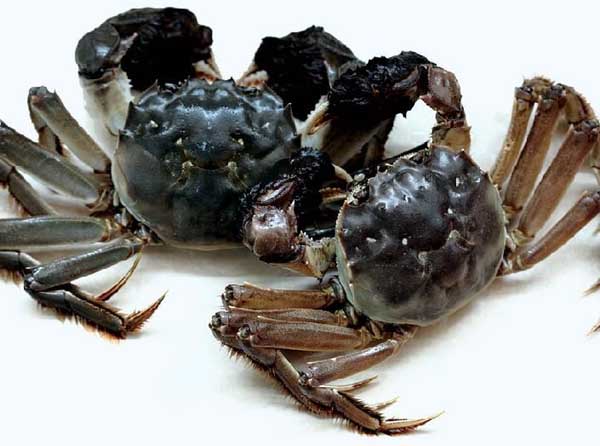
Methods for identifying Yangcheng Lake hairy crabs
Because the Chinese mitten crab has two large claws covered in fur-like hair, the people of Chongming call it the "old hairy crab." Its place of origin is in the Yangtze River estuary waters of Chongming Island. Among the major rivers and lakes of the world, there are over 300 species of crabs, of which about 20 are edible, and the most famous is China's Chinese mitten crab.
Every winter, Chinese mitten crabs swim to the waters near Chongming Island, where fresh and salt water meet, to reproduce. The crab seedlings are then caught by Chongming Island fishermen and brought ashore. Crab farmers raise the small crabs to the size of a button, called button crabs, at which point farmers from Yangcheng Lake and all over the country come to Chongming Island to buy them, take them back to raise to full size, and then through extensive promotion, everyone is led to mistakenly believe the crabs were born in Yangcheng Lake. In fact, the true hometown of the hairy crab is the waters near Chongming Island.
During their subsequent growth, button crabs will each choose the aquatic environment suited to their own growth and development. Among these, due to the unique water characteristics of Yangcheng Lake, the hairy crabs cultivated there can be called the "best of the best." The Yangcheng Lake hairy crab farm with green belly and white back, drawing on many years of breeding experience, tells consumers a unique set of identification methods (this method represents only internal company views and does not represent the official position on Yangcheng Lake hairy crabs):
1. Fullness (the squeeze method): Yangcheng Lake hairy crabs differ from other crabs in the fullness of their meat. You can squeeze the lower leg section of a hairy crab to feel whether the meat is full; if it is not full, it will feel hollow when squeezed.
2. Green back (the cooking method): The back of the hairy crab is crab-shell green, a green that is shiny and fresh, and turns red after cooking. Crabs from other lake areas have a heavy muddy color and turn gray with red after cooking.
3. White belly (the brushing method): The belly of the hairy crab is white, a lustrous white, but not pure white, because due to water stains from the lake it should carry a slight water-stain yellow. Unlike crabs from other lake areas, whose bellies are gray, if you gently brush the shell with a brush, you can brush off the slightly water-stained dirt adhering to the shell.
4. Golden claws (can be tested by placing on smooth glass or floor tiles): The eight legs stand firm, and the tips of the hairy crab's claws are a tobacco-like golden yellow. The two claws and eight legs have a strong meaty feel and are powerful; placed on a smooth glass panel or floor tile, it can prop itself up and crawl freely. Crabs from other lake areas have thin, weak claws with no obvious golden yellow at the claw tips.
5. Yellow hair (the method of squeezing the claw hair): The fuzz on the crab claws is dense and soft, the hairs are fresh, and appear yellow. Crabs from other lake areas have hair with a heavy muddy color and are not clean. With this method, special attention must be paid to safety, as it is easy to get your fingers pinched.