How to Keep Hermit Crabs? A Detailed Guide to Care Methods for Beginners
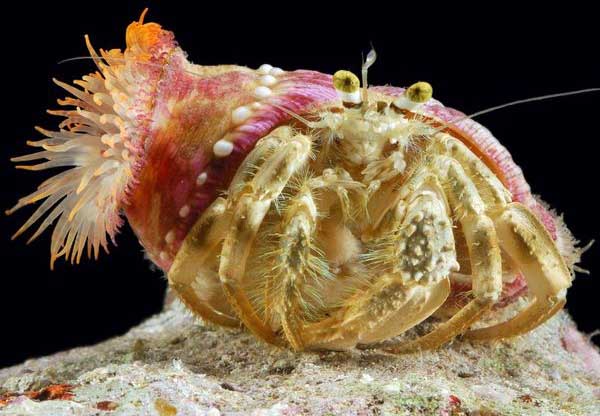
Hermit crabs are also known as "shrimp monsters," "white house dwellers," and "dry house dwellers." They earned their famous name because they often eat shellfish and other mollusks and take over their shells for themselves. Hermit crabs are mostly found along the coast of the Yellow Sea and southern sea areas, and can usually be found in sandy beaches and rock crevices by the sea. Sometimes they are also seen in bamboo sections, coconut shells, coral, sponges, and other places. As they grow, they will change to different shells to live in.
Preparation Before Keeping
For first-time keeping, give them a saltwater bath in warm salt water for 1-2 minutes to remove parasites or lice-like organisms. Place a water dish, hiding places, and spread substrate sand. Add 1-2 teaspoons of calcium salt to the sand (they will directly absorb the salt they need from the sand). New crabs usually burrow into the sand for several days to several weeks to adapt to the new environment. During this time they may be less active or not eat. Once they are familiar with the sand in your home, do not put them in your hands; reduce disturbance, place them in a darker and quieter place, and maintain daily food replacement and appropriate temperature and humidity.
Sunlight, Ventilation, and Hiding Places
Try to find a position relatively close to a window, or a place where sunlight can slant in. But it does not need to reach the point of direct sunlight. Place the tank at a lower position, with the top edge of the tank just at the lowest edge of the window. The setup should include more hiding places, especially small huts, to match their habits. Hermit crabs are very timid, and small huts can make them feel safe. They themselves also very much love to rest inside huts during the day.
Choosing a Keeping Tank
A keeping tank can provide a comfortable environment for hermit crabs to live in. Plastic or glass boxes can be used. Plastic boxes come with lids and a certain height, which can prevent escape. The lid has holes for appropriate ventilation. In addition, the lid can be tightly closed, allowing heat and moisture retention.
Setting Up the Tank Environment
The keeping tank should be lined with substrate sand so they have a suitable place to hide and molt. The depth of the substrate sand in the tank should be at least 1 to 2 times the body height of the individuals in the tank (at least 5-7 cm), and the sand coarseness should be about 2-3 mm. Sand that is too fine will get into their shells, and sand that is too coarse will prevent them from returning to the sand surface after molting. There should be space for arranging hiding places and water dishes, and enough room for them to move around. If you want the tank space to become larger, you can place some climbing objects or driftwood in the tank for them to climb.
Keep Individuals of Different Sizes Separately
If individuals of different sizes are kept in the same tank, such as large individuals and small individuals at the same time, carefully watch whether the large individuals attack the small individuals. If this happens, please keep them separately.
Preparation of Backup Tanks
If you keep too many land hermit crabs (more than 6 in a 1-foot tank), you should prepare 1-2 backup keeping tanks as shelters for land hermit crabs that are molting. For example, when you notice an individual showing signs of molting, you can place them in another keeping tank. In addition, the backup tank can also be used as a treatment room for individuals that are sick or that have dropped limbs due to stress.
Cleaning Precautions
Cleaning agents are extremely toxic to land hermit crabs, so absolutely do not use dish soap, lye, or similar cleaning agents when cleaning the keeping tank. In summer, bacteria breed easily, so you can clean more frequently; in winter, you do not need to clean as frequently. On average, clean once every 2-3 months. If you notice an unusual odor or insects, clean the keeping tank as soon as possible. Before cleaning, check whether any land hermit crab individuals are missing from the keeping tank. If an individual is missing, it means an individual is hiding in the sand and may be about to molt, so cleaning the keeping tank should be stopped. Prepare a plastic tank and let the hermit crabs bathe in warm water with added calcium salt, with the water depth equal to the height of the shell. During the bath, we place the shell opening facing upward, put them into the water, let them walk in the water for 1-2 minutes, and then pick them up.
Temperature and Humidity
Because hermit crabs live in subtropical regions, the temperature should suitably be maintained at 20-30°C. At 15°C, their movements will begin to slow down, and below 10°C they will even die. You can use a heat mat or UV lamp to maintain the keeping tank at 26-30°C. Because hermit crabs breathe with gills, when humidity is low they cannot breathe. Please maintain humidity at 60-80%, and use water with added calcium salt (do not give tap water containing chlorine) for manual misting 2-3 times each morning and evening.
Feeding Time
Food: Land hermit crabs are nocturnal animals, so it is best to feed them after 10 p.m. Replace food every day. Land hermit crabs usually use their front claws to find organic matter in the sand to eat. You can feed them rice, bread crumbs, eggs, fruits and vegetables, fish feed, and so on. In addition, they are especially fond of corn and popcorn. After molting, you can give them more calcium- and protein-rich foods such as meat, fish, eggshells, cooked shrimp (with shells), and so on. Do not give them scallions, foods containing mustard, spicy foods, processed foods with preservatives or additives, sugars, foods containing a lot of oil, foods with insect-repellent effects, or vegetables and plants with insecticidal effects.
Choosing Drinking Water
For drinking water, mineral water, distilled water, or cooled boiled water can be used. Do not give tap water containing chlorine. Land hermit crabs breathe through gills, and water containing chlorine will harm their health. Two water dishes are needed, separately holding fresh water (for drinking) and seawater (for bathing). The seawater ratio is 100 ml : 3 g (about one 500 ml empty bottle of Dandao green tea : 2 teaspoons).
Shell-Changing Characteristics
Shells: Hermit crabs are born with the trait of changing shells. If new shells of different sizes are placed in the keeping tank for about three months to half a year, the cute hermit crabs will switch to the new shells. When land hermit crabs keep growing and the shell becomes unsuitable, too narrow, or damaged, they need to change shells. When buying new shells for the first time, wash them in warm water with calcium salt for about ten minutes. If they do not change to the new shell, it may mean the current shell is still suitable.
Leaving the Shell
If they suddenly leave the shell, immediately prepare several shells and soak them in warm water. Also mist the naked land hermit crab, or give it a seawater bath for about 1 minute (warm water should be used, cold water must not be used, and the water level should not be too high). Then put it together with the previous shells into a shoe box (if you do not have one, find an ordinary box or container, which is also fine). After closing the lid, the inside will become pitch black. Then maintain this condition. After 1-2 hours, open the lid and check. If it is still naked, wait another 1-2 hours.
Molting
To grow, land hermit crabs molt at intervals. "Molting" and "shell changing (changing shells)" are not the same state. "Molting" means the land hermit crab sheds the old exoskeleton of its body, while the muscle tissue grows and gradually hardens to form a new exoskeleton. "Shell changing (changing shells)" means the land hermit crab climbs out of the shell it carries and moves into another empty shell. When you notice reduced activity, frequent hiding in the water dish or nearby substrate sand to obtain moisture, and repeated digging into the substrate sand to hide, these are signs before molting. The molting process usually occurs in the sand and generally takes several weeks to one month, depending on the individual situation. Do not remove the old exoskeleton shed by the land hermit crab, because this is an important source for replenishing the calcium they need. Land hermit crabs become very fragile during molting, and failed molting often leads to death. For the time being, do not pick them up to play with or observe them, so as not to disturb them in finding a suitable place to prepare for molting. At the same time, isolate them to avoid interference from companions causing failed molting. Note that the isolation tank must have at least a water dish, a hiding cave, and sand of sufficient depth.
Another change after molting is body color change. Some individuals become lighter in body color after molting, while others become darker. Body color change is mainly related to the food they ate before molting. Generally speaking, individuals that eat more foods containing carotene will gradually become more brightly colored. However, body color change may also be related to temperature, humidity, and
other environmental factors, so land hermit crabs will also show slight changes in body color after each molting. Even land hermit crabs of the same species will have different body colors because of different habitats. Land hermit crabs are very timid and nervous creatures, with high alertness to the surrounding environment. Applying background paper or mirror film allows you to observe their activities in the keeping tank well.