Detailed explanation of the ecological habits of the mud crab: a comprehensive understanding of its life patterns
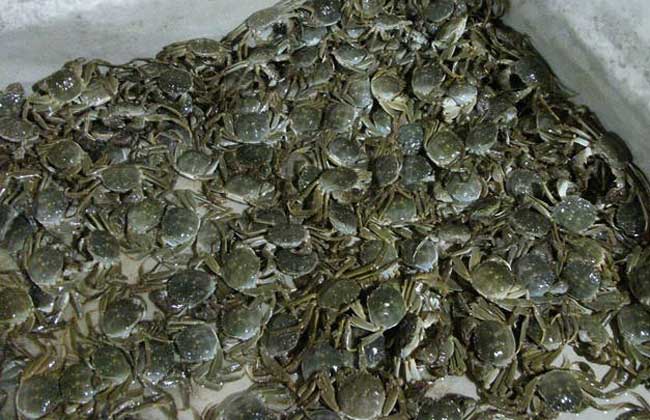
The mud crab is a beach-dwelling swimming crab that lives on tidal-flat mud or muddy-sandy flats, and likes to stay in puddles on the tidal flats and in rock crevices. During the day it mostly lives in burrows, and at night it forages around. It is especially more active on nights when the tide is rising, and because its eyes and antennae are highly sensitive, it moves about freely at night; in summer the mud crab is even more active, and when the tide is low and the water is shallow it mostly hides in the mud bottom to escape the summer heat, and sometimes groups of mud crabs can be seen propping up their bodies with their walking legs to cool off away from the high-temperature surface of the flat during dry hot weather; in winter it is less active, and when the weather is cold it digs burrows near the low-tide line to overwinter, and the size and depth of its burrows increase with the size of the individual and with the height of the tidal zone, with burrows in the high-tide zone sometimes reaching more than 1 m. In the water the mud crab relies on the frequent paddling of the last pair of walking legs to move forward to the left and right front, but in most cases it moves with the current, and when startled or encountering an obstacle it can quickly retreat, while on the flat surface it crawls sideways with its walking legs, being highly sensitive and moving freely.
The mud crab is a marine crab with wide temperature and wide salinity tolerance, its survival water temperature is 7-37°C, the suitable growth water temperature is 15-31°C, and the optimum water temperature is 18-25°C; below 15°C growth slows markedly, and when the water temperature drops to 7-8.5°C it stops feeding and activity and enters a dormant and burrowing state. When the water temperature stabilizes above 18°C, female crabs begin to spawn, and young crabs frequently molt and grow; when the water temperature rises above 37°C the mud crab does not feed, and when the water temperature rises to 39°C gray-red spots appear on the mud crab's carapace and the body gradually ages and dies.
The survival salinity of the mud crab is 2.6‰-55‰, the adaptation range is 6.5‰-33‰, and the optimum salinity is 12.8‰-26.2‰ (specific gravity 1.010-1.021). The mud crab finds it difficult to adapt to drastic changes in salinity, and a sudden change in salinity can cause the two diseases "red rust" and "white rust," and even death. Therefore, every year during the plum rain season, because of sudden heavy rain or continuous rainfall in a short period, the salinity of artificial culture ponds changes abruptly, which increases the mortality rate of the mud crab.
The mud crab has a relatively strong ability to tolerate drying, and after leaving the water, as long as a small amount of water remains in the gill cavity and the gill filaments are moist, it can survive for several days or several tens of days.
The mud crab has very omnivorous feeding habits, mainly feeding on animal food. In its food composition, mollusks and small crustaceans are the main items, and in the stomach contents there frequently appear the shell margins of bivalves, fragments of the hinge, the operculum of gastropods, broken columella, and fragments of the appendages and carapace of grapsid crabs. The mud crab also often feeds on tidal-flat worms, and also eats small fish and small shrimp, and sometimes fragments of plant stems and leaves are also found in its stomach. For artificially cultured mud crabs, there is no strict selection of bait, and small trash fish, shrimp, small shellfish (blue clam, Musculus senhousei, river corbicula, spiral snail, etc.), soybean cake, and peanut cake can all be eaten; the mud crab has the habit of cannibalism among the same species, and often preys on newly molted soft-shell crabs.