What can't crab be eaten with? Pay attention to these dietary pairing taboos
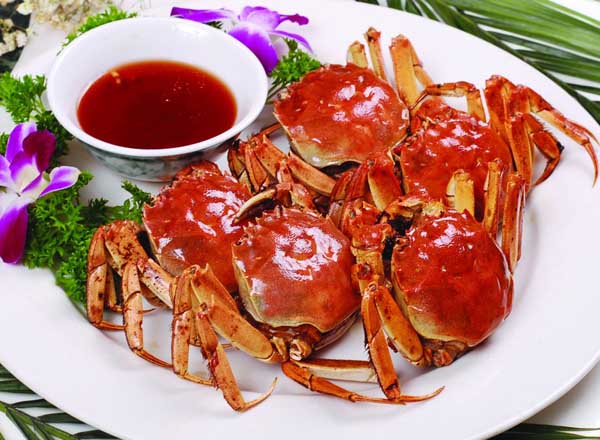
There are more than 500 species of crab. People in our country have a long history of eating crab, going back as far as the era of the Zhou emperor. Even today, in the golden autumn season, holding crab and drinking wine while enjoying chrysanthemums and reciting poetry is still a great pleasure. It is clear that crab is a widely recognized delicacy, with the folk saying "one plate of crab beats a whole table of dishes." Crab is not only wonderfully delicious but also rich in nutrients; it is a high-protein tonic and very beneficial for nourishing the body. But there are taboos when eating crab. What can't crab be eaten with? Let's take a look below.
What can't crab be eaten with
1. Persimmon: Crab and persimmon are two things you can eat in autumn, but these two cannot be eaten together. The reason is: crab meat is rich in protein, while persimmon contains a large amount of tannic acid. These two substances react with each other, causing the protein to coagulate into lumps, and our stomachs have a hard time digesting this product. So if someone eats crab and then eats persimmon, it can cause discomfort such as nausea, vomiting, abdominal pain, and diarrhea.
2. Strong tea: Chinese people like drinking tea, but when eating crab, the best beverage is warm yellow wine, and it is best not to drink tea before or after eating crab. There are two reasons: 1. The crab legs and crab gills inevitably carry a little bacteria; drinking alcohol and vinegar can kill them, and our gastric juice also has a certain sterilizing ability, but after drinking tea, it dilutes the gastric juice, greatly reducing the sterilizing effect. 2. Tea, like persimmon, also contains tannic acid, and eating them together will cause gastrointestinal discomfort.
3. Pear: Pear is a cooling food, and eating it with cold-natured crab will damage the spleen and stomach and cause indigestion. People with weak and cold spleen and stomach should pay special attention.
4. Ice water, ice cream: By the same reasoning, crab is already very cold, and eating icy foods again will cause diarrhea and gastrointestinal disorder.
5. Mutton: Mutton is sweet and hot in nature, while crab is cold in nature. Eating the two together not only greatly reduces the warming and tonifying effect of mutton but also harms the spleen and stomach. For patients who already have yang deficiency or spleen deficiency, it can very easily cause spleen and stomach dysfunction and further affect the body's vital energy.
6. Dog meat, loach: The same principle as stated above.
7. Dead crab must absolutely not be eaten.
8. Crab must be thoroughly cooked before eating.
9. People with a history of crab allergy, or with hives, allergic asthma, or allergic dermatitis, especially children, the elderly, and pregnant women with allergic constitutions, had best not eat crab.
10. People allergic to seafood have a very high likelihood of being allergic to crab. If you still cannot resist the temptation, you might first try a small amount, and if there is an allergic reaction, it is best to stop eating immediately.
There are four parts of the crab that cannot be eaten and must be discarded one by one
1. Crab gills: These are the two rows of soft, eyebrow-like things growing on the crab's abdomen, commonly known as crab eyebrows. They are the crab's respiratory organs, used to filter water quality, and are very dirty. The triangular crab white beneath the gills should also not be eaten.
2. Crab intestine: It contains the crab's excrement. After breaking open the crab body, you will see black strands in the crab roe and crab meat, which must be removed.
3. Crab stomach: A triangular packet hidden in the crab roe, which also contains the crab's excrement. Hidden in the pile of crab roe on the crab shell, discard it after eating the crab roe.
4. Crab heart: Also called the crab hexagonal plate. It is hexagonal in shape and hidden in the middle of the crab's abdomen where the yellow roe is thickest. It is the coldest part and absolutely must not be eaten. Lift off the crab shell and you can see a layer of black membrane; the white flake-like crab heart is between the yellow roe and the black membrane.