How to Farm Mud Crabs? A Detailed Guide to Efficient Artificial Breeding Techniques
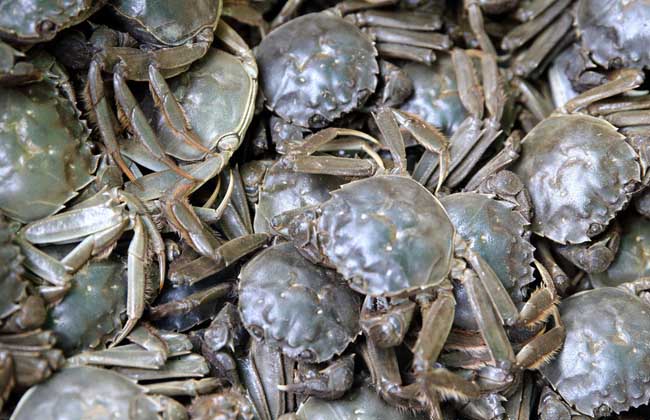
The serrated mud crab, commonly known as the mud crab, is colloquially called xun. In Guangdong it is called the roe crab, while in Taiwan, China and Fujian it is called the red sturgeon; in southern Zhejiang it is called youmou, and in the Philippines it is called the mud crab. Because its carapace is greenish-blue and its anterolateral margin bears 9 serrated lateral teeth, it is thus named the serrated mud crab.
The mud crab is large in size and has sweet, delicious meat. It is a famous edible crab in China with high nutritional and commercial value. Artificial farming began as early as 1891 in Humen, Guangdong, and has a history of over one hundred years, earning renown both domestically and internationally.
Mud Crab Seedling Stocking
The sources of seedlings for mud crab farming are: first, artificial breeding; second, capturing megalopa (crab seedlings) from sea areas; and third, catching natural crab juveniles. Artificially bred seedlings are uniform and pure, but this is still at the experimental stage, and large-scale commercial breeding technology has not yet been fully achieved. Before artificial breeding technology achieves commercial breakthroughs, capturing natural crab seedlings and juveniles from sea areas remains the primary source of seedlings for mud crab artificial farming.
1. Capturing Megalopa
① Crab seedling capture: Mud crabs spawn in sea areas with higher salinity. After hatching, the larvae metamorphose into megalopa and gradually move toward estuaries and inner bays with slightly lower salinity to inhabit, which is the seedling season. Along the Zhejiang coast, natural crab seedlings can be caught from April to November, with peak seasons in May to June and August to September. Crab seedling capture methods mainly use three types: set nets, push nets, and hand nets. Each location selects according to local conditions of tides and wind waves.
② Identification of crab seedlings: Among captured natural crab seedlings, megalopa of other crab species are often mixed in, requiring identification and selection. Identification and classification are detailed in Table 3-4.
③ Juvenile crab rearing: Juvenile crab rearing refers to the process of intensively rearing crab seedlings captured from natural sea areas or artificially bred into juvenile crabs. After rearing, juvenile crabs increase in size, have enhanced resistance, and achieve higher survival rates in farming.
2. Capturing natural juvenile crabs. Natural juvenile crabs vary in size. It is required to capture juvenile crabs that are robust in constitution, with complete appendages, free from mechanical damage, and with few attachments. Along the Zhejiang coast, juvenile crabs concentrate in seedling outbreaks from June to mid-July (also called "summer crabs" or "plum crabs") and from mid-September to early-to-mid October (called autumn crabs). Summer crabs can be directly grown to commercial size in the same year, while autumn crabs must overwinter before being grown to commercial size. After capture, the exposure time of mud crabs should be short, especially in summer when it is hot and humid, exposure is even less suitable. Generally, when the temperature is above 28°C, it should not exceed half a day, and when below 25°C, it should not exceed 2 days. The shorter the time from capture to stocking, the better. Excessive time will cause death.
3. Quality Identification and Selection of Mud Crab Seedlings
Crab seedlings self-caught and self-raised in local sea areas generally have high survival rates due to basically consistent environmental conditions and short exposure time. For seed crabs that have undergone long-distance transport, strict selection must be carried out, and only after eliminating diseased and disabled crabs can they be stocked. Methods for seedling selection and identification include:
① Select robust seed crabs. Healthy mud crab seedlings have a greenish-blue carapace, complete ten legs, an intact body without damage, sensitive sensory responses, strong activity, and are difficult to catch; swimming legs and chelipeds must not be missing or damaged, and missing walking legs must not exceed 3. If a walking leg is broken or injured, the remaining leg segments can be broken at the joint between the coxa and the basis, and new appendages will regenerate in a short time. If not removed, the residual limb will lose a large amount of body fluid and cause death. Crab seedlings with abnormal colors (such as dark blue, reddish-brown, rust-colored, etc.) on the carapace, abdomen, and appendages, or those injured by piercing, hooks, or sunburn, are of poor quality and best not selected.
② Disease-free. Diseased crabs can be identified by the color of the muscles at the base of the walking legs. If the flesh color is azure blue, the muscles at the limb joints do not sink, and they are elastic, they are healthy seedlings. If the muscles are yellow-red or have white spots, the muscles between limb joints sink, and there is no elasticity, they are not suitable for farming.
③ Remove parasitic barnacles. A small number of crab seedlings have one or more parasitic barnacles (Sacculina) attached to the inner base of the abdominal segments. The parasitic barnacle is oval-shaped and soft-bodied, absorbing nutrients from inside the mud crab's body to sustain life. Parasitized mud crabs are affected in normal growth and development, so the parasitic barnacles should be promptly removed during selection.
④ Crab seedling transportation. Juvenile crab transportation tools are generally hard bamboo baskets or wooden boxes. Lay a layer of wet grass on the bottom, place a layer of crabs, then cover with another layer of wet grass so that the juvenile crabs do not get bruised. Do not overlap too many layers. Finally, cover with a hard-framed gauze screen cloth to facilitate spraying seawater during transport and improve transportation survival rate.
Seedling Stocking
1. Stocking size and time: Summer seedlings are generally stocked in June to July, with a size of 15-50 g (average 25 g). After 3-4 months of farming, they can reach commercial crab size in the same year. Autumn seedlings are generally stocked in September to October, with a size of 10-20 g. After overwintering culture until May to June of the following year, they can reach commercial size. If the overwintering stocking quantity is insufficient, 50-100 g crab juveniles can be supplemented in March to April of the second year. For fattening culture, generally in September to October, thin crabs of over 150-200 g that have already mated are collected and farmed for 30-40 days to become roe crabs.
2. Stocking density. In April to May, stock 50-100 g per overwintered crab, with 200-500 seedlings per mu being appropriate. If the size is smaller, the stocking density can be appropriately increased, and rotational harvesting can begin in about two months. This is precisely the summer seedling outbreak season, so small-sized summer seedlings can be stocked, with the number of seedlings per mu being approximately 1000-1500. For fattening culture, the stocking time is August to October, and the stocking density can be controlled at around 500 per mu depending on environmental conditions.
Grow-out Management
1. Feeding Bait
Feeding is one of the important means of achieving mud crab production. Only by mastering reasonable feeding techniques based on the mud crab's living and feeding habits can the advantages of tidal flat net-enclosure crab farming be effectively utilized. The food for mud crabs should fully utilize natural bait that reproduces in the pond or bait organisms that enter the pond through the mesh. Mud crabs are primarily carnivorous and prefer shellfish and small crustaceans. Low-value shellfish such as live blue clams, short-toothed clams, and duck-bill clams can be fed. Some tidal flats were originally growth and reproduction areas for low-value shellfish and should be protected and utilized. At the same time, some annelids (such as sandworms) and small benthic crustaceans can be introduced. They have strong self-reproduction ability and are favored by mud crabs. These are all excellent live bait for mud crabs. In addition, small miscellaneous fish and shrimp, freshwater shellfish (such as river snails), and artificial compound feed can serve as supplements when bait is scarce.
Based on the mud crab's foraging habit of resting by day and emerging at night, artificial feeding is best done in the evening. The feeding amount should be controlled according to season, tide, water quality, and natural bait conditions in the pond. Generally, when the sea area water temperature is suitable (18-25°C) and during spring tide periods, the feeding amount can be increased, feeding at 5%-10% of the total weight of crabs in the pond. During neap tide periods and rainy seasons with abnormal weather, feed sparingly. The feeding site should be evenly broadcast on the marginal flats. After feeding, check the mud crab's food intake. If leftover bait is found the next day, feeding should be suspended and the cause investigated.
2. Water Quality Management
During spring tide periods, seawater can naturally enter and exit, and the water body in the pond can be fully exchanged, so there is no water quality problem. Before the arrival of neap tides, inspect and repair seepage and leakage of the earthen dam, raise the height of the overflow outlet, and fill to full water level, generally maintaining the water level at about 0.5 m above the flat surface. During heavy rainstorms, let the overflow dam discharge the upper layer of freshwater to prevent a sudden drop in seawater salinity that could cause mud crab disease.
Daily Inspection
The key to the success or failure of tidal flat net-enclosure crab farming is the facility's wind and wave resistance, as well as anti-escape measures and their effectiveness. Therefore, farmers must patrol and guard every day. After each ebb tide, check whether the earthen dam has seepage or leakage, whether the net-enclosure stakes have collapsed, and whether the net enclosure is damaged. Problems found should be repaired promptly. Mud crabs are active at night and are also easily stimulated to climb over the net and escape when the tide rises. When the tide overflows the dam, mud crabs move around the perimeter of the net enclosure. If there is a hole in the net, groups of mud crabs will escape through it. At this time, the torn netting should be repaired immediately. In addition, when water quality in the pond is poor during neap tides, mud crabs are also prone to digging holes and escaping, which also requires attention. The main predatory organisms in tidal flat net-enclosure mud crab farming include gobies, Chinese black sleeper, and threadfin, which often prey on mud crabs during molting. Therefore, during the farming period, after each spring tide ebb, the pond can be drained to catch and remove predators. However, mullet and barracuda can be retained in the pond, as they help clean bottom sludge and leftover bait, coexist peacefully with mud crabs, and increase additional yield.
Harvest
Mud crabs in intertidal zone enclosures should be harvested at the appropriate time using rotational harvesting measures, catching large ones and leaving small ones, catching fat ones and leaving thin ones, to obtain higher economic benefits. September is the mating season for mud crabs, and male crabs should be harvested at the appropriate time, because after multiple matings, male crabs become thin in flesh, reducing the edible value of meat crabs, and subsequently a large number of deaths occur. After mating, female crabs can become roe crabs after about 30-40 days of rearing. If left to become over-mature, they will become egg-bearing crabs, which also reduces value. In addition, as sea area water temperature drops, overwintering enclosure-farmed mud crabs is relatively difficult, so timely harvesting is also required. In general years, it is required to complete the harvest of mud crabs in the pond before the end of October. Harvesting methods for enclosure-farmed mud crabs include:
1. Light attraction harvesting: Based on the mud crab's habit of crawling along the pond edge or following tides at night, light illumination can be used, and they can be scooped up with a hand net.
2. Dry pond hand-catching and rake-catching: Catching by hand is an ancient yet practical crab-catching technique. The crab body will not be damaged, but skilled technique is required. Using a crab rake to rake crabs can basically harvest all crabs and is relatively time-saving, but crabs are easily injured, so operate carefully with light raking. Captured mud crabs should be bound to prevent mutual pinching and injury. In summer when temperatures are high, they should be stored in a cool, moist place. When it is cold, cover with water grass to keep warm.