Detailed Explanation of Aquatic Plant Planting Techniques in Crab Culture Ponds
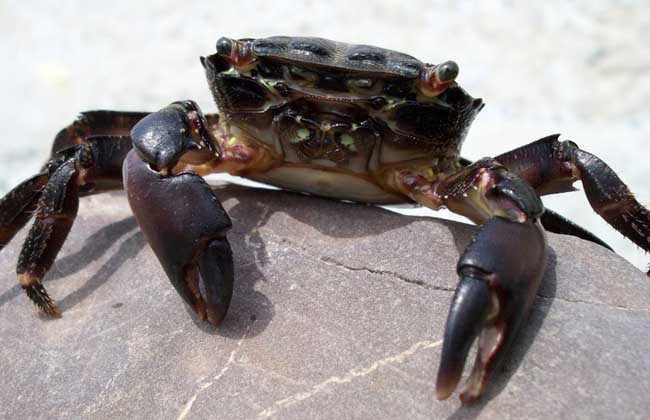
“The size of the crab depends on the aquatic plants” - this shows the importance of aquatic plants in pond river crab culture. Based on years of culture practice, the author introduces the planting and maintenance techniques for aquatic plants in crab ponds as follows, for the reference of crab farmers.
Types of Aquatic Plants
Aquatic plants in crab ponds should be mainly submerged plants and emergent plants, supplemented by floating-leaved and free-floating plants, to achieve a regulating and complementary effect. Submerged plants mainly include: Hydrilla verticillata (waterthyme), Vallisneria natans (tape grass), Elodea nuttallii (western waterweed), etc.; emergent plants mainly include: Typha (cattail), Phragmites australis (common reed), Zizania latifolia (wild rice stem), etc.; floating-leaved plants mainly include: Nymphoides peltata (floatingheart), Brasenia schreberi (watershield), Trapa natans (water chestnut), etc.; free-floating plants mainly include: Alternanthera philoxeroides (alligator weed), Ipomoea aquatica (water spinach), Lemna minor (common duckweed), Wolffia arrhiza (spotless watermeal), etc.
Overall Layout
In the deep-water areas of crab ponds, it is suitable to plant submerged plants as well as floating-leaved and free-floating plants; in shallow-water areas, it is best to plant emergent plants. In river crab culture ponds, attention should be paid to maintaining the stability and diversity of suitable aquatic plants.
Planting (Cultivation) Methods
1. Elodea nuttallii (western waterweed): Elodea nuttallii sprouts early and grows quickly. In the early stage when other aquatic plants have not yet grown, only it can provide an ideal place for river crabs to grow, rest, molt and evade enemies. Elodea nuttallii has a long growth period, can regenerate, and will not wither even in winter. However, Elodea nuttallii is not tolerant of high temperatures. When the water temperature reaches 30°C, it basically stops growing and is also prone to fouling the water. Therefore, the coverage rate of Elodea nuttallii should be controlled within 20%, and crab farmers can plant it as a transitional aquatic plant. Elodea nuttallii is planted in winter and spring. The method is to insert 3-5 plants per bundle into the mud 3-5 cm, leaving 15-20 cm above the mud; plant spacing and row spacing of 50 cm × 50 cm; the amount used (amount used per 667 sq m, the same below) is 10-15 kg. The water level in the planting area is about 30 cm. Elodea nuttallii can also be cut into 10 cm long stems and, like transplanting rice seedlings, inserted bundle by bundle into a pond with silt (10-15 plants per bundle), with a plant spacing and row spacing of 20 cm × 20 cm, and the amount used is 40-60 kg.
2. Hydrilla verticillata (waterthyme): Hydrilla verticillata is characterized by tolerance to high temperatures, a long growth period, good adaptability and strong regeneration ability. It is one of the aquatic plants that river crabs like to eat, and is suitable for sowing or planting in ponds with sufficient light and in large water areas. After being clipped off by river crabs, Hydrilla verticillata can root at each node and has extremely strong vitality, and will not degrade water quality. Therefore, the coverage rate of this aquatic plant can reach 40%-50%. Planting adopts the method of transplanting plants. Around Grain Rain, collect the aquatic plants, wrap the roots or stem nodes with wet clay and knead them into balls, then put them into the water area, with an amount used of 30 kg. The seeds can also be collected and sown in early spring of the following year, allowing them to grow naturally.
3. Vallisneria natans (tape grass): Vallisneria natans is easy to plant, has high yield, is tolerant of high temperatures, and has the characteristics of being crisp and tender. It is a plant-based feed that river crabs like to eat, and enjoys the reputation of an “underwater forest” in crab culture waters, with a coverage rate of about 20%. Around Qingming, when the temperature reaches 18°C, put the grass seeds into a woven bag and soak them for 7 days, then take them out together with the bag and dry them for 1 day, then put them into water and soak for 1 day, after which mix them evenly with soil and sow. The amount used is about 50 g. By mid-to-late June, sufficient density can be achieved through tillering. In the early sowing period (April-May), maintain a shallow water level to facilitate the growth of grass sprouts.
4. Alternanthera philoxeroides (alligator weed): Alternanthera philoxeroides has extremely strong adaptability, can grow on land and on the water surface, and has strong cold resistance. It can sprout and grow when the temperature is 10°C. River crabs like to rest and feed on it, with a coverage rate of 10%-20%. In crab culture waters, Alternanthera philoxeroides is transplanted. It is transplanted before and after the stocking of crab seed, and fixed with bamboo stakes, wooden stakes or tripods.
5. Lemna minor (common duckweed): Lemna minor has strong survival adaptability. Its winter buds sink to the bottom of the water to overwinter, float to the water surface in early spring, and germinate into new individuals. Lemna minor is a plant-based feed that river crabs like to eat. Lemna minor can adopt a cultivation method. Generally, 1 tripod of 1-2 sq m is fixed per 20-30 sq m, and Lemna minor is fixed on the water surface of the crab pond to grow and reproduce, so as to supplement the insufficiency of other aquatic plants.
Maintenance and Management
1. Early-stage care: In the early stage of culture, it is necessary to stabilize and promote the growth of the aquatic plant root system, so that the aquatic plant plants are short and strong with broad leaves. With good roots, the aquatic plants grow well, are not easy to float, and absorb more nutrients from the pond bottom, and the aquatic plants grow healthily. In the early stage, the water level should be based on the aquatic plants basically reaching the water surface, and afterward, as the temperature rises, the water level should also slowly rise. In March-April, try to control the water level and maintain a water depth of 40-60 cm, with a certain degree of transparency, which is conducive to the rise of water temperature and ensures that the aquatic plants can grow well under sufficient light. Apply high-efficiency compound fertilizer, fermented organic fertilizer or biological fertilizer according to the fertility level of the pond. If the water body is too lean, the aquatic plants will grow poorly, so the water body fertility must be increased to provide the necessary nutrients for aquatic plant growth.
2. Mid-stage care: In the mid-stage of culture, it is necessary to inhibit the rapid growth of Elodea nuttallii and prevent excessive consumption of nutrients in the pond from causing drastic changes in water quality. From late April to early May, the upper 20-30 cm of the aquatic plants can be cut off to promote the growth of roots, stems and leaves. Before the high-temperature season arrives, Elodea nuttallii can be cut again, leaving only about 10-15 cm of the root part, which can not only purify water quality and lower water temperature, but also maintain water flow, while preventing Elodea nuttallii from rotting at high temperatures. After June, apply biological fertilizer, biological bacteria, etc., to maintain pond water fertility, and use aquatic plant care products once every 15 days. If there are too few aquatic plants, Alternanthera philoxeroides and Lemna minor must be supplemented.
3. Late-stage care: In the late stage of culture (after September), Hydrilla verticillata is mainly used, maintaining an aquatic plant coverage rate of more than 50%. Nutrients should be increased to promote the growth of aquatic plants, and at the same time dead grass and floating grass should be salvaged to avoid deterioration of water quality.