Key Technical Points for River Crab Farming and a Detailed Explanation of Daily Management Methods
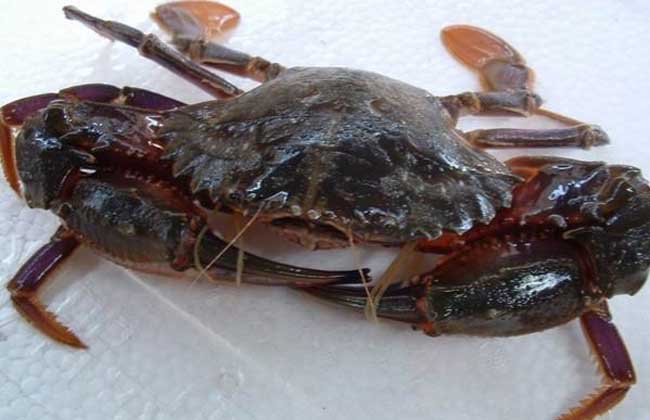
The river crab, scientifically known as the Chinese mitten crab (Eriocheir sinensis), is a valuable freshwater product with a delicious taste and rich nutrition, and it has high economic value. The river crab belongs to the class Crustacea and the genus Eriocheir. It is a large crustacean whose body is divided into 21 segments. Because the segments of the head and thorax have fused with one another, the whole body is divided into two parts: the cephalothorax and the abdomen. The adult crab is dark green on the dorsal side and grayish white on the ventral side, with the cephalothorax measuring an average of 6-7 cm in length and 7.5 cm in width.
The Life History of the River Crab
The river crab is a crab species that grows in freshwater and reproduces in seawater. Before the reproductive migration, all are juvenile crabs, commonly called "yellow crabs" because of their yellowish shell color; their gonads are very small and basically undeveloped, and the weight of the liver far exceeds the weight of the gonads. After completing its final molt, it develops into a "green crab," with a dark green color and fully developed gonads; the males have densely haired claws and thick, long bristles on the walking legs, while the females have an abdomen that completely covers the ventral side of the cephalothorax, with long, dense bristles along the edge of the abdomen.
The life of the river crab is brief. In its life history it goes through several stages, including the zoea larva, megalopa larva, juvenile crab and adult crab. In its lifetime it needs to molt 5 times as a larva to become a megalopa, then molt again after 13-15 days to become an adult crab. It has only one reproductive cycle in its entire life, and its life ends once reproduction is complete. Generally speaking, the lifespan of the river crab is 1-3 weeks of age.
The Living Habits of the River Crab
1. Burrowing
River crabs like to live in burrows in the muddy banks or tidal flats of rivers and lakes, or to hide among gravel and aquatic plants. Burrowing is an instinct of the river crab and also an adaptive way for it to defend against enemies. River crabs generally choose hard-soiled steep banks for burrowing, with a bank slope of 1:0.2 or 1:0.3; they rarely build burrows on gentle slopes below 1:1.5-2.5, and even less on flat ground. This provides a basis for the construction of our farming ponds.
2. Feeding Habits
The river crab has very omnivorous feeding habits. Under natural conditions it mainly feeds on aquatic plants and humus, is fond of eating animal carcasses, and also likes to eat snails, mussels, worms and insects; it occasionally preys on small fish and shrimp. When food is scarce, it will even cannibalize its own kind and even devour the eggs it is carrying. Sometimes a single dead fish will attract its own kind to fight over the food. Under normal circumstances, plant-based food is easier for the river crab to obtain and often forms the main component of the crab's stomach contents. There is also some mud and sand in the crab's stomach, which is a sign that the river crab has fed on benthic organisms and humus.
River crabs generally hide in their burrows during the day and come out at night to forage. On land, river crabs do not feed much; they often drag food from the shore into the water or to the edge of their burrows before eating it. Throughout the year, apart from the low-temperature period when they hibernate and temporarily do not feed, river crabs continue to feed even during their winter migration. When water quality is good, water temperature is suitable and bait is abundant, river crabs eat a great deal and can continuously prey on several snails in a single day and night. Newly molted soft-shell crabs, individuals with missing limbs, are also often attacked. However, river crabs also have a strong tolerance to hunger; after 10 days or even half a month without food, they will not starve to death. Under artificial farming conditions, according to the growth and development needs of the river crab, maintaining a "fine-coarse-fine" structure in feeding the bait is beneficial to the growth of the river crab.
3. Molting and Growth
The growth process of the river crab is carried out along with the molting of the larvae, juvenile crabs or adult snails. Each time a larva molts, it undergoes metamorphosis once, which is also divided into one stage. From the megalopa molting into the first-stage juvenile crab, each subsequent molt brings a leap-like increase in body length and weight. From a body weight of 6-7 mg per megalopa gradually increasing to a large crab of 250 g, at least dozens of molts are needed, and each molt is a passage through a major survival hurdle.
When molting, the river crab needs to absorb a large amount of water, so its mass increases noticeably during the molting process. In subsequent growth, the loss of water is slow and is gradually replaced by tissue growth. The growth rate of the river crab is constrained by environmental conditions, especially water temperature and bait. Usually, early juvenile crabs molt relatively frequently. The newly introduced megalopa in lakes will subsequently molt successively every 5-7 days and 7-10 days to become second- and third-stage juvenile crabs. As growth continues, the interval between molts gradually lengthens. If environmental conditions are poor, molting and growth stop, which is also the reason why individuals of the same age differ so greatly in body size under different conditions.
The growth of the river crab is closely related to calcium and phosphorus in the water body and bait. Relevant experiments show that newly molted soft-shell crabs weigh 30%-40% more than before molting. This period lasts as long as 1 hour, or as short as a few minutes, relying on the gills to absorb large amounts of water and inorganic salts from the water. In natural ponds or lakes, the shell of a soft-shell crab hardens within 1-2 days. If soft-shell crabs are raised in distilled water, the river crab's ability to absorb calcium ions from the water body is stronger than its ability to absorb calcium and phosphorus from compound feed. On the eve of molting, the river crab requires the total amount of calcium in the shell to equal the total amount of calcium in the body, and at the same time the total amount of phosphorus in the river crab's body is 52.2 times the phosphorus contained in the shell.
In order to support the good growth and molting of river crabs, in intensive crab ponds, 5 kg of calcium chloride and 2.5 kg of sodium hydrogen phosphate (or quicklime or superphosphate) are applied per mu (average water depth 1 m) each week. In the compound feed for river crabs, the ratio of calcium to phosphorus must be considered; the ratio of calcium chloride to disodium hydrogen phosphate should be 2:1 in order to guarantee the material needs for the growth and molting of the river crab.
Juvenile Crab Cultivation
In order to improve the survival rate of juvenile crabs and increase economic benefits, the first step is to cultivate button crabs. In order to bring the megalopa of the year to marketable crab size, plastic greenhouse temporary rearing technology is currently mostly used. Choose a pond with good water quality and ample water sources; convenient water intake and drainage, no leakage, no seepage, and little silt. The area should not be too large, the water depth should not exceed 1.2 m, and an east-west orientation for the pond shape is preferable, with ample sunlight. The greenhouse construction can refer to the methods used for agricultural vegetable greenhouses.
15-20 days before releasing the crab seedlings, apply 75 kg of quicklime per mu to disinfect by splashing. After the efficacy of the medicine has dissipated, let water in through an 80-mesh filter screen, cultivate basic bait, transplant aquatic plants (which must be strictly disinfected), and set up the necessary anti-escape facilities. When the crab seedlings enter the pond, the water can be appropriately shallow. This helps raise the water temperature and promotes the growth of algae and aquatic plants in the water. Feed bait 2-3 times a day, feeding soybean milk, minced fish and shrimp, etc. When feeding, more should be placed in the shallow areas around the edges. The amount of bait should be calculated at 4% of body weight, and attention should always be paid to the weather, water quality, individual growth, and the abundance of organisms competing for bait. As the juvenile crabs grow, some plant-based bait should also be added, such as duckweed and other high-quality aquatic plants. In daily management, pay attention to water quality regulation, and grasp the principle that the water should be fertile but fresh. When changing water, change it frequently but in small amounts, and do not cause drastic changes in water temperature and water level. After about 2 months of cultivation, they can reach the button crab stage.
Adult Crab Farming
Adult crabs prefer a water environment with clean water quality and relatively high transparency, with dense aquatic plants and abundant bait, which is most suitable for river crab growth. At present, pond, lake, river channel and rice field farming are mostly used. The following is a brief introduction focusing on ponds:
1. Pond conditions: ample water sources, convenient water intake and drainage, good water quality without pollution, and a choice of clay, sandy soil or loamy sand with good aeration, which is conducive to the growth and reproduction of aquatic plants, benthic insects, snails, mussels, aquatic earthworms, etc. Old ponds must be thoroughly desilted, and it is best that the silt does not exceed 20 cm. The pond area should not be too small. The pond water depth should be maintained at about 0.6-1.5 m year-round, with varying depths in different places, the shallowest being 10 cm. Several mounds slightly higher than the water surface, namely crab islands, can be built in the pond, and aquatic plants can be transplanted on the islands. The pond should not be too steep; the slope ratio is generally below 1:1.5, otherwise river crabs are prone to burrowing, and it is not conducive to them crawling out of the water at night for activity. Artificial caves can also be built.
2. Transplanting aquatic plants: The level of natural river crab yield mainly depends on the amount of aquatic plants and benthic organisms (bait organisms) in the water area. Planting aquatic plants well during the farming process is an indispensable technical measure. Besides providing food for the crabs and supplementing vitamins, planting aquatic plants can also help them fight and hide from one another. It is a powerful measure for increasing the survival rate of river crabs at each stage. In addition, it can absorb harmful ammoniacal nitrogen, carbon dioxide and organic matter in the pond, release oxygen, and stabilize water quality. People also often say, "The size of the crab depends on the aquatic plants." Therefore, for pond farming of river crabs, great effort must be made to plant aquatic plants well. The main types of aquatic plants include duckweed, Azolla, water hyacinth, water lettuce, Hydrilla verticillata, hornwort, Vallisneria and alligator weed. When transplanting, pay attention to disinfection and pest prevention.
3. Anti-escape facilities: Anti-escape facilities mostly use plastic film, and some use cement boards, depending on individual circumstances.
4. Pond clearing and disinfection: Generally, half a month before releasing the seedlings, quicklime is used to clear and disinfect the pond, at a rate of 75 kg per mu. On the one hand, it can kill harmful organisms, and on the other hand, it can improve the pond bottom, increase the calcium ion content in the water body, and promote the molting and growth of river crabs. After filling with water, fertilize in time to cultivate algae and basic bait. Transparency should generally be maintained at 40-50 cm. If tadpoles or frog eggs are found, remove them promptly to avoid competing for food and harming juvenile crabs.
5. Seedling release: For seedling selection, crab seedlings produced in the Yangtze River system are preferred. They are required to be uniform in size, complete in walking legs, strong in constitution, active in crawling, and free of injury and disease. Seedlings purchased from other places cannot be placed directly into the pond. They should first be soaked in water for 2-3 minutes, taken out and left for 10 minutes, and this repeated 2-3 times. After the juvenile crabs have gradually absorbed enough water and adapted to the water temperature, they are placed in the pond, which can increase the survival rate. Density: At present, mixed farming is mostly used, especially mixed farming of fish, shrimp and crabs, which gives higher economic benefits. The density can be controlled within 1,500 crabs per mu, with button crabs of 120-150 crabs per kg. If conditions are poor or shrimp farming is the main activity, the amount of seedlings released can be appropriately reduced.
Daily Management
The feeding method for river crabs is like that for pond fish farming: achieve "four observations and four fixings," namely observe the season, observe the weather, observe the water quality, and observe the crabs' activity; and fix the time, place, quality and quantity.
1. Feeding: The entire process of intensive pond farming mainly relies on artificial feeding of feed, so the type, quality and amount of feed have a great influence on the growth and development of river crabs. When feeding, the principle of a reasonable combination of fine, green and coarse feed should be adhered to: animal-based fine feed accounts for 40%, aquatic plants account for 35%, and other plant feed accounts for 25%. The types of feed mainly fall into three major categories:
① Complete special compound feed for river crabs;
② Animal-based: small trash fish from sea and freshwater, various animal carcasses, snails, mussels, livestock and poultry blood, fish meal, silkworm pupae, etc.;
③ Plant-based: aquatic plants, duckweed, alligator weed, Vallisneria, Hydrilla verticillata, etc.; commercial feed: sweet potato, potato, grains, bran, rice bran, etc.
2. Observe the season: In spring, juvenile crabs should be fed some live animal feed. In the middle growth period of river crabs, especially from May to August, the amount of animal feed should be appropriately increased, but plant feed should remain the main type. In the later period, river crabs need a large amount of nutrition to satisfy gonadal development, so more animal feed should be given; in this way the river crabs gain weight and the meat tastes delicious. The seasonal distribution of feed is generally 40% from March to June and 60% from July to October. When the water temperature is below 10°C, the crabs are less active and do not eat much, so they can be fed less, once every other day. When the water temperature is 3-5°C, feeding can be stopped.
3. Observe the weather: Feed more on clear days, feed less on overcast and rainy days. In muggy weather, before a windless thundershower, feeding can be stopped. On foggy days, wait until the fog lifts before feeding.
4. Observe the water quality: When the water is clear, feed normally; when the water is thick, appropriately reduce feeding and change the water in time.
5. Observe the crabs' activity: Generally, if the feed is eaten up by the next morning, the feeding amount is appropriate; if it is not eaten up, it shows that the river crabs have a poor appetite or are too numerous. The cause should be analyzed promptly, and the feeding amount reduced. During molting, the feeding amount should be appropriately increased.
6. Fix the time: River crabs have the habit of hiding by day and coming out at night, going out at night to forage. Feeding is divided into two times: around 8 or 9 in the morning and in the evening. The evening feeding amount accounts for 60%-70% of the whole day's feeding amount.
7. Fix the place: The feed should be placed in fixed feeding spots. The feed is scattered on feeding platforms or chosen on slopes near the water line in shallow water, so as to observe the crabs' eating and activity and increase or decrease the feed at any time. River crabs have a strong competitive feeding nature, so more spots should be set up so that the river crabs eat evenly and to avoid some small or weak individuals being unable to compete for feed and thus killing one another.
8. Fix the quality: River crabs are sensitive to tastes such as fragrant, sweet, bitter, salty and stinky, so the feed given must be fresh, palatable and rich in protein.
9. Fix the quantity: "If a fish does not eat for a day, it will not grow for three days." The same applies to river crabs. This requires determining the feeding amount according to the size, density, different seasons, weather and activity of the river crabs. Generally, the daily feeding amount is 8%-10% of the body weight of the crabs kept in the pond. A small feeding amount can only maintain life; exceeding the appropriate range also affects growth and increases the feed conversion ratio.
When feeding, animal-based and plant-based feed should be matched, such as feeding grass and grains in the morning and feeding mussel meat, snails and silkworm pupae in the afternoon.