Detailed Explanation of Key Techniques for Overwintering Fattening of Commercial Chinese Mitten Crabs
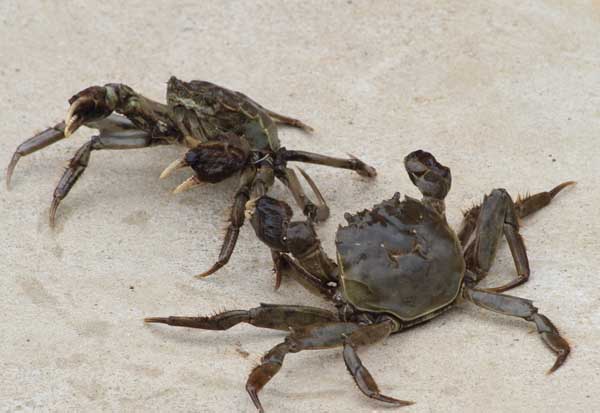
After October each year, farmed crabs in various regions are mostly caught and brought to market. To capture seasonal price differences, river crabs can be kept and fattened in heated plastic greenhouses until around New Year's Day or the Spring Festival for sale, which can significantly increase profits. The key techniques are described below.
Conditions for Holding and Fattening
1. Cement ponds: area of 50 sq m to 100 sq m, capable of storing water over 1.2 m deep, with convenient water inlet and outlet. Spread 10 cm to 15 cm of fine sand on the pond bottom, disinfect it, then fill with water and soak for about 10 days before use, after which a plastic greenhouse is built as described above.
2. Earthen ponds: area of 5 mu to 10 mu, capable of maintaining a water level over 1.5 m without seepage, with convenient water inlet and outlet and a silt depth not exceeding 15 cm; 10 days before the river crabs are put in, clear the pond with quicklime, fill with water one week later and set aside for use, and a plastic greenhouse can still be installed as described above.
3. Indoor: no plastic greenhouse insulation facility is needed indoors; an idle room can be used directly to build a cement pond with smooth walls and a non-seeping floor, which can also be used for short-term holding, generally with an area of 10 sq m to 30 sq m.
4. Holding density: for cement ponds, 1.5 kg to 2 kg per sq m; before the river crabs are put in, aquatic plants such as alligator weed must be placed in the pond, covering 1/3 of the water surface area, to provide habitat and food. For earthen ponds, 500 kg to 700 kg per mu, and aquatic plants covering 1/3 to 2/5 of the water surface area must also be placed in the pond, allowing the crabs to safely avoid enemies and feed. Indoors, 3 kg to 5 kg per sq m.
5. Feeding: using a plastic greenhouse in winter can keep the water temperature in the greenhouse above 15°C for most of the winter, ensuring that the river crabs can grow normally at a suitable water temperature. In the earlier stage of feeding, the feed should be mainly plant-based, such as soaked or cooked wheat grains, soybeans, sweet potatoes, vegetables, etc. The daily feeding amount should be about 5% to 8% of the crab weight, fed once in the morning and once in the afternoon: feed at 10 am to 11 am, accounting for 3 parts of the feed, and feed at 4 pm to 5 pm, accounting for 7 parts. In the later stage of feeding, the animal protein content in the food should be appropriately increased, and small trash fish and shrimp, snail and mussel meat, compound feed, etc. can be fed in appropriate amounts; however, when reducing costs or when animal feed is not easily obtained, feeding can still follow the above method, and the results are also relatively good.
Daily Management
1. Water quality regulation: river crabs prefer a relatively fresh water environment, so the amount of water exchanged should be determined according to the water inlet and outlet capacity of the pond. The general reference standard is that the pond water must maintain 5 ml of dissolved oxygen and a transparency of about 40 cm.
2. Greenhouse management: in order to maintain water temperature, attention must be paid to sealing the plastic film against the pond edge; do not leave the greenhouse door open for long periods or open it frequently, and repair agricultural film promptly if damaged. Observe the feeding status of the river crabs every day and adjust the feeding amount at any time. At the same time, according to water quality conditions, every 1 day to 3 days, when the weather is warm in the afternoon, exchange 1/5 to 1/3 of the pond water. As for indoor holding, in addition to maintaining ventilation, spray with pond water three or four times a day to maintain a certain humidity.
3. Disease prevention: to prevent disease, every 1 week to 2 weeks, mix an appropriate amount of sulfonamide drugs into the feed. The feed can be soaked in a medicinal solution prepared with the prescribed dosage of the drug and then fed together with a small amount of the remaining solution. If disease occurs, treat it promptly according to the symptoms and remove dead crabs. Also prevent harmful organisms such as rats and snakes from entering the greenhouse.