Detailed Explanation of Key Technical Points for Water Quality Regulation in Crab Farming
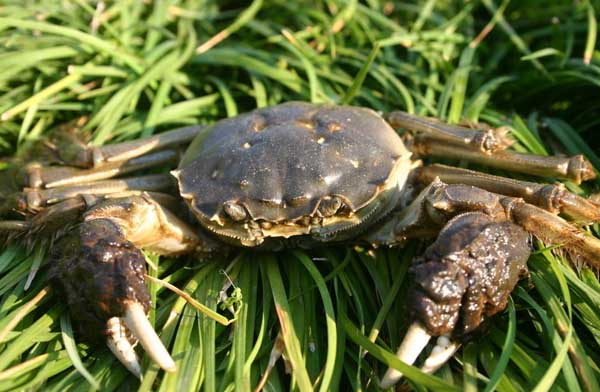
"Raising crabs in clear water" has by now become an unchanging truth in the minds of most farmers, as if the clearer and leaner the water in a crab pond, the better. As soon as the water in a crab pond becomes fertile, they immediately busy themselves with changing the water to guard against mishaps. Little do they realize that maintaining a certain degree of fertility in the pond water is quite beneficial for river crab farming. According to a preliminary survey, crabs raised in ponds of moderate fertility have higher survival rates, larger sizes and greater yields than those from generally clear-water ponds, and in particular the incidence of the trembling disease that has been prevalent in the past two years is far lower than in other ponds. The reason is that moderately fertile water can provide the pond water with sufficient dissolved oxygen, and oxygen is the decisive factor for the growth and development of river crabs. The main source of oxygen in crab ponds is the photosynthesis of aquatic plants, but in ponds where Hydrilla verticillata is more abundant, the intensity of photosynthesis is relatively much weaker than that of green aquatic plants, and the oxygen released is also much less, so the main source of oxygen in such ponds depends on the photosynthesis of phytoplankton. In ponds with moderately fertile water, the amount of phytoplankton is especially large, and the oxygen produced by photosynthesis is also abundant; on sunny days with higher water temperatures, the dissolved oxygen in the pond water can often reach saturation. When oxygen is insufficient, anaerobic bacteria in the bottom sediment decompose and produce large amounts of organic acids and toxic substances, lowering the pH of the pond water. If river crabs live in such a water body for a long time, they will lose appetite, molt abnormally, easily become lazy crabs, and are also prone to disease; when oxygen is sufficient, river crabs have a strong appetite, move agilely, molt more frequently, have a high feed utilization rate, strong disease resistance, and grow rapidly.
The fertility or leanness of water is usually judged by the transparency of the pond water
Clear water refers to light water color with a small amount of phytoplankton, with transparency generally above 35cm; fertile water refers to dense water color with a large amount of phytoplankton and low transparency, generally below 15cm; moderately fertile water falls between the two, with a water color that is fertile yet tender and refreshing.
So how do you regulate the fertility or leanness of the crab pond water?
At present, many crab farmers commonly use the method of letting water in and draining water out to regulate the fertility of the pond water, but the author believes this is not the best approach. Because excessive water letting-in and draining-out first wastes financial resources, second loses effective components in the water and brings in harmful substances, third makes the water level unstable, causing frequent changes in crab burrows, and some river crabs migrate above the water surface, stop eating and stop molting, becoming lazy crabs, and fourth stimulates river crabs to develop precocious sexual maturity. Generally, for ponds with clear and lean water, the method of fertilization can be used for regulation: 15 days before stocking, apply 200 kg of fermented manure per mu; if the water is still clear and lean in the mid-stage of farming, 2 kg of urea per mu can be applied once. If there is more sludge at the bottom of the pond and the water is relatively fertile, some silver carp and bighead carp fingerlings or freshwater shrimp fry can be stocked, or some aquatic plants such as Vallisneria can be planted.