How do you choose suitable pelleted feed for river crab farming?
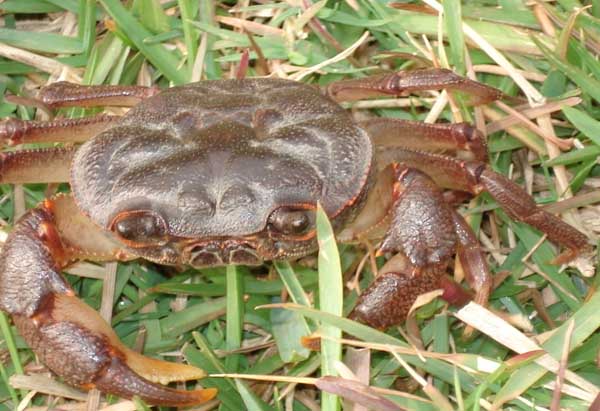
Feed accounts for about 70% of production costs in river crab farming. In view of the general rise in feed prices this year, farmers should pay even more attention to the rational selection, scientific combination and scientific feeding of feed, so as to make the greatest possible use of feed and reduce waste.
In the use of feed, farmers should do a good job of “cutting costs and reducing expenditure”, but note that this does not mean choosing low-priced feed.
Feed cost per unit of fish production = feed conversion ratio × feed price
From this it can be seen that the feed cost per unit of fish production is determined by both the feed conversion ratio and the feed price.
There is a certain relationship between the growth rate of river crabs and the quality of the feed. Only when all the nutritional elements in the feed can meet the growth needs of river crabs can the crabs be ensured to grow at the most reasonable growth rate. River crabs have different requirements for feed quality at different growth stages. Juvenile crabs have a higher protein requirement than adult crabs, and at different stages of adult crab farming their protein requirements also differ. Therefore, feed must be selected rationally and adjusted in a timely manner. For example, blindly buying high-grade feed in order to increase the safety margin of river crab farming may both increase farming costs and fail to suit the nutritional needs of the crabs; while using low-grade feed all the time is even less advisable, because low-priced feed generally uses raw materials of poor quality and low digestive utilization, has a high feed conversion ratio, causes slow crab growth and large feed consumption, and ultimately leads to reduced farming benefits. In fact, when it comes to choosing pelleted feed, farmers can completely process feed themselves: by consulting relevant experts and designing a scientific formula suited to their own specific farming situation and their own farming targets, and then processing it. In this way, not only is the feed quality guaranteed, but the cost is also lower.
Of course, when farmers process feed themselves, identifying the quality of fishmeal becomes very important. Fishmeal is the main protein source in traditional aquatic feed. The protein content of high-quality imported fishmeal is above 60%, with some as high as 70%; the protein content of domestic high-quality fishmeal reaches above 55%. Fishmeal not only has a high protein content but is also rich in essential amino acids, fatty acids, minerals, vitamins, digestible energy and other components necessary for fish growth and reproduction, and it has good palatability. The quality of fishmeal directly affects the growth of farmed species and feed utilization efficiency.
Fishmeal is usually divided into two types: white fishmeal and red fishmeal. White fishmeal is processed from cold-water fish such as cod and flounder; the main raw materials of red fishmeal include anchovy, sardine, anchovy (coilia), mackerel and various other small miscellaneous fish, as well as scraps left after fish and shrimp food processing. The main factors affecting fishmeal quality are: the species of raw fish, the freshness of the raw materials, the processing temperature, the quality of the fat and the microbial composition, etc. These factors cause protein decomposition, fat oxidative rancidity and Maillard reactions during the processing, transportation and storage of fishmeal, producing some substances that are toxic or harmful or cannot be absorbed and utilized by animals, thereby reducing the freshness and nutritional value of the fishmeal and affecting the feeding effect.
Fishmeal with good freshness is brown (red fishmeal) or grayish-white (white fishmeal), with a uniform color and a normal fishy smell, while fishmeal with an abnormal smell, a rancid smell or a putrid smell is fishmeal of poor freshness. This method of judgment is simple and easy to carry out; although it lacks objectivity, it is feasible to a certain extent.