How to carry out daily management of river crab farming ponds? A practical plan to share
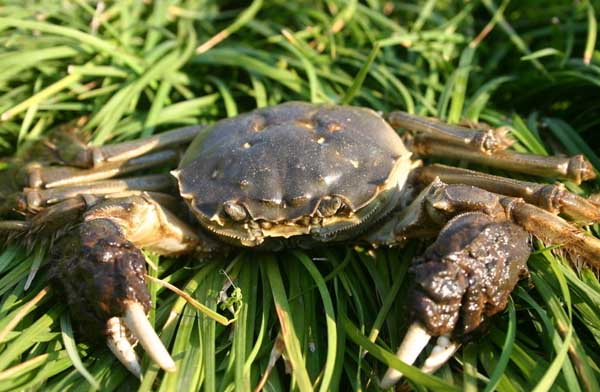
Daily management is a key step in preventing river crab diseases and increasing yield and efficiency. The following plan is for river crab farmers' reference only.
1. Reasonable feeding: Feed according to season, weather, water color and feeding conditions. On sunny days, when water temperature is high, water color is good and feeding is vigorous, more feed can be given; on cloudy days, when water temperature is low, on hot and muggy summer days, when water color is poor and feeding is low, less feed should be given.
2. Feed must be scientifically matched: River crabs are omnivorous animals. Feed matching should follow different growing seasons and adhere to the principle of “rich at both ends, coarse in the middle, with a mix of meat and vegetables”, so as to prevent river crabs from maturing early due to an abundance of animal protein feed, which affects their molting and growth.
3. Uniform feeding: The feed made should be fresh and palatable, and feeding should be uniform so that river crabs eat their fill and eat well, digest and absorb quickly, and feed utilization rate is improved. They must not go hungry one meal and stuffed the next, with sudden increases and decreases. Feeding once every 1-2 days: because river crabs differ in individual size, they fight and injure each other when competing for food, affecting the survival rate. When feeding, several more points can be set up and evenly distributed to avoid casualties from competition for food.
4. Frequent pond patrols: Patrol the pond once each morning, noon and evening to understand river crab activity and feeding, and changes in water quality, and take corresponding measures to adjust and treat early, avoiding delay of the best time for adjustment and treatment, which would affect river crab growth and development.
5. Frequent water changes: Especially in summer, when crabs grow vigorously, the amount of feed increases, metabolic waste also increases, dissolved oxygen decreases, harmful substance content rises, and water quality becomes eutrophic. Some old water should often be discharged and new water added to improve water quality, dilute harmful substance content, and increase dissolved oxygen in the water body, helping river crabs have a good living environment.
6. Regularly test and analyze water quality for disinfection: Normally, quicklime, bleaching powder or biological preparations can be used every 30 days to disinfect the water body. In summer, water body disinfection and sterilization can be carried out once every half month. The amount of quicklime is 20 grams per cubic meter of water, and bleaching powder 1 gram. After dissolving in water, splash evenly over the whole pond.
7. Promote molting or synchronized molting: Before molting, calcium supplement and calcium dihydrogen phosphate can be splashed in the pond water to supplement calcium and molting hormone, promoting synchronized molting of river crabs, reducing casualties during molting, and improving the survival rate.
8. Promptly remove residual and leftover feed. Every day, remove floating weeds and floating matter in the pond to avoid polluting water quality. Frequently disinfect the feeding grounds, prevent the introduction of disease sources and polluted water sources, and prevent diseased crabs from being discarded or placed randomly. If found, bury them deeply in time to prevent cross-infection of pathogens.