What methods are there for identifying inferior Chinese mitten crab seedlings?
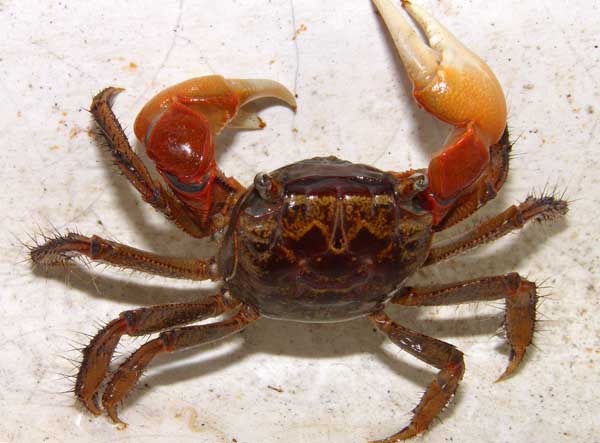
In Chinese mitten crab farming, whether the farming succeeds or not depends on seedling selection. High-quality crab seedlings can make farming twice as effective with half the effort. So how should inferior crab seedlings be identified? Inferior crab seedlings mainly include: drug-damaged seedlings, molting seedlings, mixed-color seedlings, seawater seedlings, seedlings kept for sale, tender seedlings and high-temperature seedlings, among others.
Drug-damaged seedlings
When artificial breeding repeatedly uses antibiotics such as oxytetracycline, after the crab seedlings molt and metamorphose into young crabs, their bodies cannot absorb calcium, their shells cannot harden, and they often swim to the pond edge and die in large numbers.
Molting seedlings
If some of the crab seedlings have already molted and metamorphosed into stage I young crabs, they must not be purchased; otherwise, after transportation, the crab seedlings will die in large numbers.
Mixed-color seedlings
The body color of the crab seedlings varies from dark to light, and the individuals vary from large to small. If such crab seedlings are natural seedlings, they may be mixed with other species of crab seedlings, and this situation is common among natural seedlings. If they are artificially bred seedlings, it means the crab seedlings developed unevenly and are extremely prone to cannibalizing each other during molting.
Seawater seedlings
The desalination of the crab seedlings is incomplete, and the seedling bodies are deep black. If they are directly transferred into fresh water for rearing, whether they are natural seedlings or artificially bred seedlings, they will fall into a coma and die.
Seedlings kept for sale
Some seedling breeding units, because they could not find buyers in time after the crab seedlings were bred, can only keep the seedlings in breeding ponds at lower temperatures. If the seedlings are kept for too long, a large number of bacteria and protozoa enter the crab bodies. Once such crab seedlings enter rearing ponds with higher temperatures, they will molt quickly. Although most of the outer shells are shed, the old gill filaments cannot be completely shed, and the young crabs cannot breathe oxygen in the water and come ashore, until they dry to death.
Tender seedlings
The crab seedling bodies are semi-transparent, with a black line in the middle of the cephalothorax. Such crab seedlings have a low day age and soft shells, and cannot withstand handling and transportation.
High-temperature seedlings
During artificial breeding, some breeders raise the water temperature to accelerate the metamorphic development of crab seedlings in order to shorten the breeding cycle and reduce costs. Crab seedlings bred with raised temperatures have poor adaptability to low temperatures, and the survival rate is low at the young crab rearing stage.
Of course, in addition to these common inferior crab seedlings, there are still many ways to distinguish them, and this requires farmers to rely on their own farming experience to identify them.