Detailed Guide to Colored Guinea Pig Farming: Feeding Methods and Management Essentials
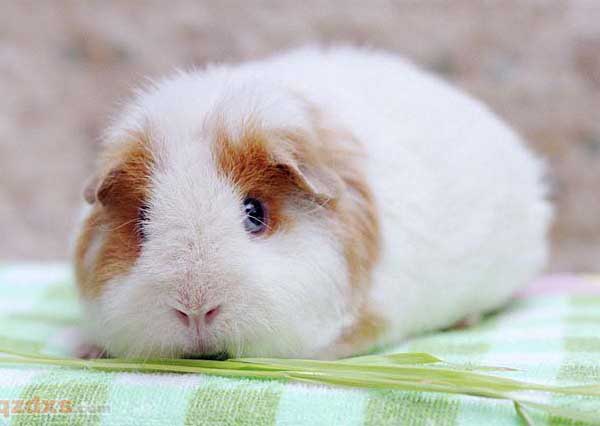
The edible colored guinea pig is a new type of specialty livestock. Its fur is golden all over, its meat is tender and delicious, and it has a delicate fragrance when eaten. The meat is sweet in flavor and neutral in nature, nourishes the kidney and tonifies yin, strengthens the spleen and warms the liver, brightens the eyes and invigorates the blood. It is an ideal natural food for the elderly, pregnant women, and children to maintain health and build up the body.
Advantages of Farming Colored Guinea Pigs
1. Colored guinea pigs are herbivorous animals. They eat wild grass, wild vegetables, tree leaves, and plant stems and leaves. Feed them three meals a day, 1—2 liang per meal, supplemented with a small amount of cornmeal, wheat bran, etc.
2. Raising yellow guinea pigs requires little investment, shows quick results, and delivers high returns. Under normal circumstances, they can be sold after 2—3 months of raising. They are used for both fur and meat, with a high utilization rate.
Living Habits of Colored Guinea Pigs
Colored guinea pigs are gentle and intelligent, and they like being petted. If you treat it well, it will recognize you. Call its name, and it will waddle over to your side on small quick steps and play with you. Its size is moderate, neither as large as a cat or rabbit nor as small as a squirrel. It is very suitable for holding and playing in your hands (about 15—20 cm long). Its movements are clumsy and cute, unlike squirrels or mice, which cannot be caught once they run away. It is very suitable for only children and the elderly to keep, and it helps children and the elderly improve intelligence and prolong life. Raising it also does not require professional equipment. As long as there is a suitably sized cage, fresh water and food are supplied every day, you often play with it, and its little nest is cleaned regularly, it can grow up healthily and happily. It is precisely because the reverse-haired plush guinea pig is petite and cute, with a gentle temperament, that it has some value on the pet market. The reason Xuzhou Yunong Pet Breeding Park in Jiangsu raises reverse-haired plush guinea pigs on a large scale is exactly for this market. Once it is used to you, it will also come to greet you when you come home from work or school, and run onto you to ask for food. But please note: although it is honest and simple by nature and does not clash with people, its nerves are even more sensitive than a person's. Do not shout loudly, so as not to frighten it.
Breeding Techniques for Colored Guinea Pigs
Yellow guinea pigs reach sexual maturity early. Generally, female guinea pigs show sexual characteristics 35—45 days after birth, and male guinea pigs 70 days after birth, but the female guinea pig must still wait until after the 70th day before being mated for breeding. The female guinea pig's estrous cycle is 16 days. They reach sexual maturity early. Generally, female guinea pigs show sexual characteristics 35-45 days after birth, and male guinea pigs 70 days after birth, but the female guinea pig must still wait until after the 70th day before being mated for breeding. The female guinea pig's estrous cycle is 16 days.
1. Seed selection: Reverse-haired plush guinea pigs used for breeding should have the following points:
① Full body condition, thick and strong bones, correct limb shape, bright eyes.
② Good nutritional status, glossy coat color.
③ Male guinea pigs have symmetrical testicles of the same size, and female guinea pigs have normal external genital development, etc.
④ Soft and elastic skin, no skin diseases such as hair loss.
2. Mating selection: The duration of estrus in reverse-haired plush guinea pigs is 1-18 hours, averaging 9 hours. Estrus mostly occurs between 5 p.m. and 5 a.m. the next morning. During estrus in female guinea pigs, after mating, there is a gelatinous plug at the vaginal opening. This is a mixture of male guinea pig semen and prostatic secretions. Based on the presence or absence of this plug, it can be determined whether mating was successful. In large-group raising, it is common to use 3-4 female guinea pigs and place 1 male guinea pig among them for mating. It is strictly forbidden to place 2 male guinea pigs together to compete for mating, otherwise they will fight and struggle, affecting mating. If they are being bred as original breeding stock, the one-female-to-one-male mating method can be used. Female guinea pigs should be allowed to mate after their young are weaned, or the male guinea pig can be placed in within half a day after the female guinea pig gives birth. Mating at this time can succeed through postpartum mating, and the reproduction rate is also high.
3. Reproduction: The gestation period of female guinea pigs is 56-68 days, and the number of young carried is generally 3-5, with some having 6-9. Young guinea pigs are weaned at one week, separated after weaning, and after 40-60 days of raising can reach marketable guinea pig size.
4. Pure breeding: When reverse-haired plush guinea pigs do not need major improvement, pure breeding can be adopted to consolidate the excellent traits of the type, year by year selecting the superior and eliminating the inferior, and continuously expanding the population.
Feeding and Management of Colored Guinea Pigs
Artificially raised colored guinea pigs are generally raised in pens, and can also be raised in cages, in three-dimensional systems, or in open systems. Pens are made of bricks, cement, and wooden boards, generally 35 cm high, 60 cm long, and 40 cm wide. Whether cage-raised or pen-raised, indoor environmental hygiene must be well managed. There are no special requirements for colored guinea pig food. Common wild grass, tree leaves, rice straw, and fruit peels are all foods it likes, supplemented with a small amount of concentrated feed (such as cornmeal, grain powder, wheat bran, rice, etc.). It has a strong constitution and is not prone to illness, and raising it is simple. Generally, pens, cages, or boxes can be used for raising. It produces 4 litters per year, with 2—5 per litter, a lactation period of 15—20 days, and a survival rate as high as over 98%. Artificially raised reverse-haired plush guinea pigs are raised in pens, and can also be raised in cages, in three-dimensional systems, or free-range. Pens are made of bricks, cement, and wooden boards, generally 35 cm high, 60 cm long, and 40 cm wide. Whether cage-raised or pen-raised, indoor environmental hygiene must be well managed. The housing for raising reverse-haired plush guinea pigs has no limit on length, and facing south is best. The housing should have fresh air, and the raising room should be disinfected once a month. Feed troughs and water trays should often be washed clean. This is the key to raising them well. Reverse-haired plush guinea pigs are herbivorous animals. They eat wild grass, wild vegetables, tree leaves, and plant stems and leaves. Feed 3 meals a day, 50-100 grams per meal, supplemented with a small amount of cornmeal, wheat bran, or piglet feed.
The housing for raising colored guinea pigs has no limit on length, and facing south is best. The housing should have fresh air, and the raising room should be disinfected once a month. Feed troughs and water trays should often be washed clean. This is the key to raising yellow guinea pigs well.