Detailed Explanation of Guinea Pig Physiological Characteristics: A Comprehensive Understanding of Guinea Pig Body Features
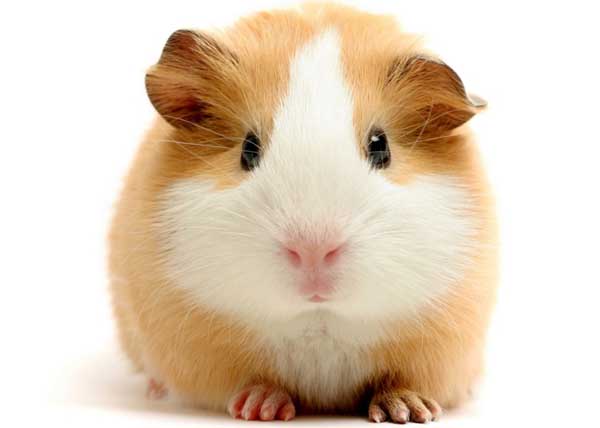
Physiological Characteristics of Guinea Pigs
Guinea pigs have a short, thick and round body, a relatively large head, large round and bright eyes, round ears, a split upper lip, and short small ears; the limbs are short, with 4 toes on the front feet and 3 toes on the hind feet, and no external tail. Many breeds have been developed through artificial breeding. Except for the Angora guinea pig, which has long hair, the body hair is short and glossy. Body hair colors include black, white, gray, brown, chocolate, and others, and some have markings of various colors.
1. They cannot synthesize vitamin C in the body (in the liver and intestines), and the required vitamin C must come from feed. Humans, primates and guinea pigs lack the enzyme for synthesizing vitamin C in the body, so when raising guinea pigs, vitamin C needs to be added to the feed or drinking water, or fresh vegetables should be provided. When vitamin C is deficient, scurvy occurs, and one of its symptoms is partial paralysis of the hind limbs. It is especially prone to occur in winter. When vitamin C is supplemented, the symptoms disappear.
2. The cochlear duct is sensitive, making them suitable for hearing experiments. Guinea pigs are most sensitive to pure tones of 700-2000 cycles/second. For example, 2000 cycles/second audio is commonly used to observe the toxicity of neomycin to the inner ear.
3. They can tolerate low oxygen and resist hypoxia, being 4 times stronger than mice and 2 times stronger than rats.
4. They are very sensitive to Mycobacterium tuberculosis, Brucella, Leptospira, Brucella melitensis, Corynebacterium diphtheriae, Q fever virus, lymphocytic choriomeningitis virus, and others.
5. Guinea pigs are prone to allergic reactions. The "complement" used in serological diagnosis is made from guinea pig serum.
6. The thymus of guinea pigs is entirely in the neck, located between the angle of the mandible and the thoracic inlet, with two bright, pale yellow, slender, oval-shaped, fully lobulated glands. The liver is divided into four main lobes and four small lobes. The lungs are divided into seven lobes, with four lobes in the right lung and three lobes in the left lung.
7. The estrous cycle of guinea pigs is 16.5 (12-18) days, the gestation period is 68 (62-72) days, the lactation period is 21 days, and the litter size is 3.5 (1-6). They are year-round, polyestrous animals and have a postpartum estrous cycle. Animal estrous cycles are divided into two major categories: polyestrous (multiple estrous cycles in one year) and monoestrous (one estrous cycle in one year). Except for primates, all mammals show obvious species differences in reproductive cycles. Some animals such as dogs, cats, pigs, horses, and cattle only have this cyclical change during the reproductive season, and the reproductive organs remain in an atrophic resting state at other times. However, animals such as mice, rats, hamsters, and guinea pigs normally show a recurring cycle of estrous cycles throughout the year.
8. The normal body temperature of guinea pigs is 38.6 (37.8-39.5)°C, heart rate 280 (200-360) beats/min, respiratory rate 90 (69-104) breaths/min, tidal volume 1.8 (1.0-3.9) ml, ventilation rate 16 ml (10-28)/min, oxygen consumption 816 mm3/g live body weight, blood pressure 75-120 mmHg, total red blood cell count 5.6 (4.5-7.0) million/(mm3), hemoglobin 14.4 (11-16.5) g/100 ml blood, total white blood cell count 5000-6000 mm3, platelets 116,000/mm3, plasma total protein 5.4 (5.0-5.6) g%, blood volume accounts for 6.4% of body weight, 32 pairs of chromosomes, lifespan 5-10 years.