What Do Guinea Pigs Eat? Food Combinations and Feeding Methods
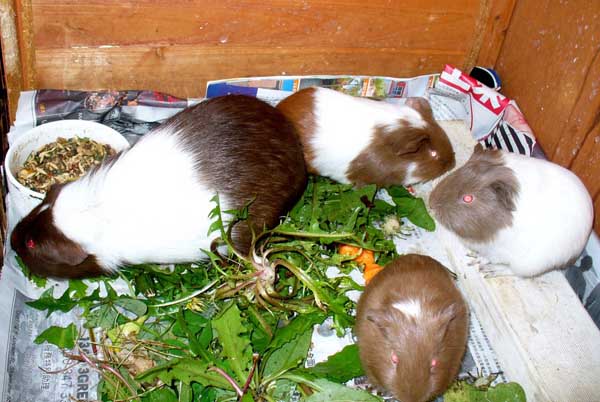
Guinea pigs are herbivores, with well-developed chewing muscles but very thin stomach walls, and a particularly enlarged cecum that accounts for about 1/3 of the abdominal cavity volume. Their crude fiber requirement is even higher than that of rabbits, but unlike rabbits, they are not prone to diarrhea. Guinea pigs have a relatively large food intake and a strong appetite for food they are used to, but they are especially sensitive to spoiled feed, often eating less or refusing food because of it, and it can even cause miscarriage. So what exactly do guinea pigs eat?
What Do Guinea Pigs Eat?
1. Fruit. Guinea pigs really like eating fruit. They can eat: apples, oranges, and watermelon is also fine (feed watermelon as little as possible, as it causes diarrhea). If you feed grapes, you need to cut the grapes in half and make sure there are no seeds inside.
2. Vegetables. Some vegetables that guinea pigs like to eat include: romaine lettuce or red leaf lettuce, curly parsley (celery), collard greens, green edamame, carrots, eggplant, dandelion leaves, chicory, green bell pepper (not spicy), tomatoes, and so on. Wash the vegetables clean before feeding.
3. Snacks. You can give some alfalfa and berry treats, and oil-free raw sunflower seeds. These things are all very oily, so be careful not to give too much each time.
4. Grasses.
① Timothy hay: suitable for eating every day, it helps digestion and helps regulate your piggy's stomach and intestines, can also prevent your piggy from becoming overweight, and can also help wear down its teeth.
② Alfalfa hay: feed it in moderation (2~3 times a week), because alfalfa hay is very rich in calcium, and excessive intake over a long period can cause kidney stones in your piggy. However, guinea pigs generally prefer eating alfalfa.
What Guinea Pigs Cannot Eat
1. Vegetables. Allium vegetables will destroy a guinea pig's red blood cells. Other vegetables that should be avoided include: spinach, onions, chives, potatoes, cabbage, cauliflower, and head lettuce (the kind of lettuce that grows in a head). These foods can cause diarrhea, bloating, and poisoning in guinea pigs.
2. Chocolate and coffee. The theobromine contained in chocolate will poison guinea pigs, and coffee is no good either, as it may cause heart paralysis. As for snacks, any snack that people eat is not allowed. Besides being too strongly flavored, some of the chemical additives in them may harm the guinea pig's body!
3. Bananas. Absolutely never feed bananas to guinea pigs! This is because bananas contain excessive potassium, which can cause urinary tract disease in guinea pigs.
4. Human-processed cooked food must not be fed. For example, guinea pigs do not eat meat.
Feed Classification
For feeding guinea pigs, pellets should be supplementary and grass should be the main food. To be precise, you must go to a pet store to buy it food, buying food and grass specifically for guinea pigs to eat. Timothy grass and ryegrass are best. But eating only these two is also not good, so occasionally add some supplementary food for them, such as fruit, vegetables, and carrots. That is, add grass as soon as it is finished or almost finished, and feed pellets at fixed times and in fixed amounts every day. If pellets are the main food, guinea pigs will become excessively fat. The water cannot be hot water or raw water; cooled boiled water is best, and it should be changed once a day. Because guinea pigs are herbivores and have a relatively high digestion rate for crude fiber, if they are not supplied with green feed or plants such as hay for a long time, they will develop skin peeling, so feeding should combine concentrated feed and green feed appropriately.
① Concentrated feed: concentrated feed is mainly cornmeal, wheat bran, rice bran, etc., and you can also feed piglet pellets;
② Green feed: mainly fresh tender grass, such as oat grass, corn leaves, sugarcane leaves, tree leaves, green vegetables, fruit peels, carrots, sweet potatoes, etc.
Feeding Guide
1. Feeding baby guinea pigs.
A few hours after birth, baby guinea pigs can eat soft feed. After 2~3 days, under the mother guinea pig's care, they can suckle breast milk while eating green feed or mixed feed, and develop and grow rapidly; they are weaned at about 15~20 days. Baby guinea pigs have low immunity and cannot be fed only vegetables, carrots, and the like; it is best to feed only grass and pellets. From weaning to maturity, a guinea pig's daily food intake is 30~50 grams, and its water requirement is 60~120 milliliters.
2. Feeding adult guinea pigs (1~4 years old).
For adult guinea pigs, it is a mixed combination of grass, pellets, and other supplementary foods. An adult guinea pig's daily food intake is 50~75 grams, and its water requirement is 80~150 milliliters. Special feed + grass + vegetables + fruit. Feed 20~30 grams of feed every day, and at the same time feed some vegetables and fruit, more or less, twice in the morning and evening, with regular feeding. When pellet feed is fed directly, clean water should be provided for drinking, or it can be mixed into the feed and fed in small, frequent meals. If feeding dry and wet feed, you can give feed once in the morning, give cabbage and carrots at noon, and give feed and pasture grass once in the evening. If feeding pellet feed, you can give feed once in the morning, and maintain sufficient clean drinking water every day.
3. Feeding elderly guinea pigs (over 4 years old).
Elderly guinea pigs are not as active as adult guinea pigs, so the nutrition they need each day is naturally less than that of adult guinea pigs. For elderly guinea pigs whose chewing ability and nutrient absorption have declined, a larger amount of fresh vegetables and fruit, a moderate amount of pasture grass, and a small amount of feed are a better choice. In addition, supplementing a small amount of vitamin C every day can help elderly guinea pigs live more healthily.
4. Notes
① Although guinea pigs will control the appropriate amount themselves, you must keep their food bowl always full, because they may need to eat at any time.
② Most animals can make vitamin C in their bodies, but guinea pigs are the exception. Keeping guinea pigs requires supplementing them with vitamin C. While feeding special feed, you can pair it with some vegetables and fruit for them to eat. Giving them fruit after meals is a good idea.
③ Timothy grass must be provided, and it must be unlimited feed, added once in the morning and once in the evening (unlimited alfalfa hay is recommended before 6 months, and unlimited timothy hay is recommended after 6 months).