Detailed Explanation of Key Points for Efficient Guinea Pig Farming Technology
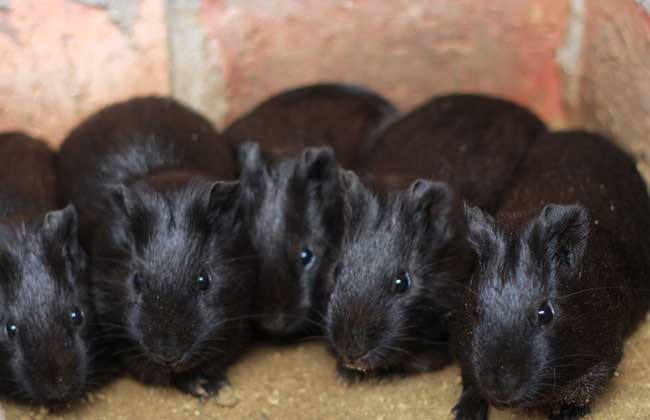
The guinea pig, originally called the cavy, is a grain-saving herbivorous animal with extremely strong reproductive capacity. Guinea pig meat is tender and delicious, fragrant and crispy, with no gamy odor. It belongs to the low-fat, low-cholesterol meat category and has a strong wild game flavor. Guinea pig meat is rich in the seventeen amino acids needed by the human body and various trace elements such as iron, calcium, and phosphorus, and also contains the anti-cancer element selenium. Its fur is also a good processing material for fur clothing and craft ornaments, and the guinea pig's testicles, gallbladder, and blood are raw materials for the pharmaceutical industry. The guinea pig is entirely black, with extremely high melanin content, and has both medicinal and edible effects. It can eliminate free radicals in the human body, lower blood lipids, support yang function, and relieve stomach ailments, and has a clear dietary therapeutic effect on hypertension and coronary heart disease. It is regarded by folk tradition as a precious health tonic.
Guinea pigs are easy to raise, low in cost, and fast to breed, making them very suitable for farmers to raise. The guinea pig farming market has good prospects. Currently, commercial meat guinea pigs cost 20-24 per kilogram in the mainland and 30-50 yuan per kilogram in coastal large cities, with products in short supply. One person can raise 200-300 pairs, with an annual net income of 20,000-30,000 yuan, and an input-output ratio of over 1:5.
Living Habits
The guinea pig originated in the mountainous areas of Yunnan in our country. It belongs to the class Mammalia, order Rodentia. Its body size is moderate (0.75-1.25 kg), with thick short limbs, a blunt round head, a relatively large snout, small eyes, short ears, and relatively long claws. Its notable features are entirely black fur, black eyes, black ears, and black feet, no tail, poor jumping ability, and it generally does not bite or scratch people. The guinea pig has a gentle temperament, likes living in groups, has keen hearing, is timid and easily frightened, and fears disturbance. Guinea pigs make different calls under different circumstances. For example, when a female guinea pig is in heat, the male makes a “gulu, gulu” courtship song, and when hungry, upon hearing footsteps, it makes a “jiji” squeaking sound.
Feeding Methods
1. Feeding equipment: There are many ways to raise guinea pigs, adapted to local conditions. Commonly used methods include cage rearing, flat pool-style pen rearing, and three-dimensional large-scale factory farming.
① Cage rearing. This method can be used for small-scale raising. Its advantages are that it can control reproduction and feeding, and maintain cleanliness and hygiene. The cage can be made of wooden strips, bamboo pieces, or iron wire, with dimensions preferably 60 cm × 50 cm × 40 cm.
② Flat pool-style pen rearing. This is suitable for use in single-story houses or when the building is wide. Inside the room, use bricks, wooden boards, and the like to partition pools with an area of 0.5-1 sq m. The pool height is 0.35 m. It is best to spread some wood shavings or dry grass in the pool, which helps keep warm and absorb moisture. At present, this method is mostly used for raising.
③ Three-dimensional factory farming. It is relatively large in scale and relatively concentrated, convenient for management and operation, and allows raising large numbers. Use bricks or wood and iron bars to build 3-5 layers, with the bottom slightly slanted so that droppings flow out, making management convenient. There are small doors in the pools and cages. For various feeding methods, generally the density per square meter is 8-10 animals at low density and 10-20 animals at high density.
2. Feed supply: The guinea pig has very miscellaneous feeding habits. Normal growth, development, and reproduction all require sufficient nutrition. Because the guinea pig is a herbivorous animal with a relatively high digestion rate of crude fiber, if it is not supplied with green feed or dried grass and other plants for a long time, molting will occur. Therefore, feed supply should be mainly green feed, with green feed and concentrate properly matched. Green feed includes fresh tender wild grass, forage grass, corn leaves, sugarcane leaves, tree leaves, green vegetables, fruit peels, carrots, sweet potatoes, and so on. Concentrate is mainly cornmeal, wheat bran, rice bran, and the like. A commonly used feed formula: cornmeal 40%, rice grain powder 10%, wheat bran 29%, peanut shell powder 15%, fish meal and bone meal 2% each, salt and growth hormone 1% each. Piglet pellets can also be fed.
Feeding Management
Although guinea pigs are herbivorous animals, attention should still be paid to the ratio of concentrate to roughage during feeding. Properly supplementing with a small amount of grains, wheat, corn, and other concentrates is the key to raising guinea pigs well. In daily feeding management, the focus should be on preventing feed from becoming moldy or spoiled. Mixed feed is best prepared and fed fresh. When pellet feed is fed directly, clean drinking water should be provided, or it can be mixed with feed and fed. Feed small meals more frequently. Each adult guinea pig is fed about 40 g of concentrate per day, divided into 2 feedings. Green feed is best cut and fed on the same day. The daily green feed amount for each adult guinea pig is about 250 g. Prevent feeding green feed contaminated by pesticides and the like. The rearing room should be kept quiet, feces cleaned daily, and utensils frequently scrubbed clean. Room temperature is best kept at 18-25°C, with relative humidity 45%-55%. Do a good job of keeping warm in winter. Prevent rats and snakes from entering the rearing room, and create a comfortable living environment for the guinea pigs. Keepers should observe carefully and handle problems promptly when found.
Artificial Breeding
Guinea pigs reach sexual maturity early. Generally, female guinea pigs show sexual characteristics at 35-45 days of age, and males at 70 days of age, but females are best bred after 70 days of age. When mating, breeding guinea pigs should be selected that are plump in body condition, with thick strong bones, bright eyes, glossy fur color, soft and elastic skin, and normally developed reproductive organs. The sexual cycle of the female guinea pig is 16 days, and the duration of estrus is 1-18 hours, averaging 9 hours. After mating, there is a gelatinous plug and secreted mixture at the vaginal opening of the female. Whether mating was successful can be judged by the presence or absence of the plug. Under normal circumstances, original stock breeding uses the one-male-one-female mating method. In large-group raising, 2-3 females are mostly placed with 1 male for mating, and original stock breeding uses the one-male-one-female mating method. However, care must be taken not to place more than 2 males at the same time, otherwise fighting will be triggered and mating will be affected. There are two methods for mating female guinea pigs:
① Mating within half a day after the female gives birth can increase the reproduction rate.
② Mating immediately after the young are weaned can increase the mating success rate.
The gestation period of the female guinea pig is 56-68 days. The litter size is 3-5 young per litter, and can reach 6-9. It can produce 5-6 litters per year, and one female can cyclically reproduce 40-60 young per year. A small amount of introduced breeding stock is enough for self-breeding and self-raising. During gestation, in addition to increasing the quantity and quality of feed, the site should be kept quiet and clean, and idle personnel should not enter and exit at will. Ensure the daily ration is fresh, and feed small meals more frequently. In the later stage of gestation, place dry grass in the cage to let the female build a nest in preparation for giving birth. The young suckle immediately after birth, and begin eating feed at 3-5 days. The lactation period is 15 days in summer and 20 days in winter. After weaning, they should be raised separately. At the same time, attention should also be paid to the care of the young by the mother after giving birth. During lactation, the feed nutrition of the female guinea pig should be increased. Guinea pigs have a high reproduction rate and strong immunity. The service life of breeding guinea pigs is 3 years. During the raising process, no immunization is needed and drugs are rarely used for prevention and treatment.
Disease Prevention and Control
If artificial raising of guinea pigs can master the feeding methods and strictly manage them, diseases rarely occur. Even if there are deaths from illness, they are extremely few. If feed is spoiled, feeding is irregular, green feed is unclean, nutrition is incomplete, and management is extensive, diseases will be caused. The following introduces two common diseases.
1. Bloat
[Causes] Most cases are due to eating moldy and spoiled feed or drinking polluted water, or eating green vegetables that have not dried after dew or green vegetables with excessive water content, leading to indigestion. It mostly manifests as abdominal distension, listlessness, reduced or stopped feeding, pale lips, and feces that are profuse and thin or watery, green, and foul-smelling.
[Prevention and Treatment Methods] Sick guinea pigs should be isolated immediately and fed drugs such as chloramphenicol or oxytetracycline. They can also be fed water boiled with the herbal medicine Andrographis paniculata, 1-2 times a day for 2-3 consecutive days. They can also be fed fresh, washed, and air-dried Centella asiatica.
2. Emaciation Disease
[Causes] Due to a long-term single daily ration, malnutrition, or dry feeding of concentrate, lack of drinking water, causing digestion to be blocked and feeding to stop, or the appearance of guinea pig stomach disease that cannot be discovered and treated in time, resulting in gradual wasting day by day.
[Prevention and Treatment Methods] Cod liver oil or egg yolk can be mixed into cooked soybeans and fed. After 10 days, restore the daily feed. At the same time, add multivitamins for poultry. If body temperature rises, 20,000-30,000 units of penicillin can be injected intramuscularly, twice a day for 3-5 consecutive days.