A Detailed Guide to the Prevention and Treatment of Tyzzer's Disease in Guinea Pigs
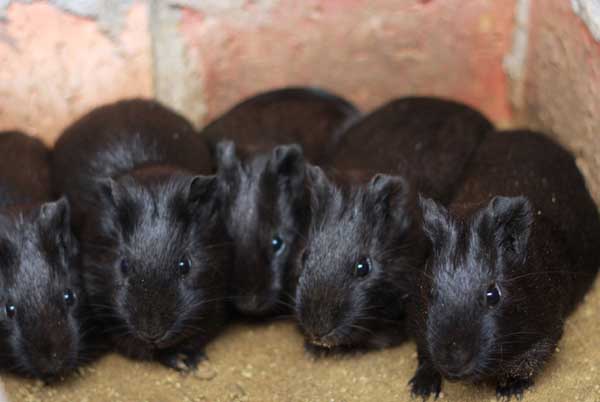
Tyzzer's Disease
Tyzzer's disease is a disease characterized by severe diarrhea, dehydration, and rapid death. The pathogen is Bacillus piliformis. This disease occurs in many countries and regions, with a mortality rate as high as 95%, and is a major threat to the rabbit and guinea pig industries.
Bacillus piliformis is a slender, Gram-negative bacterium that appears in bundles in the cytoplasm of liver cells, smooth muscle and cardiac muscle, and epithelial cells, and can be stained with periodic acid—Schiff (PAS) staining, Warthin—Starry staining, Giemsa staining, and silver staining. Isolating this bacterium is extremely difficult, and most researchers believe that the pathogen cannot grow on artificial media or living media. Some have reported that this bacterium can grow on mouse embryonic cells, but after the second subculture it loses its pathogenicity to mice. In recent years, isolation of this bacterium has been successfully achieved by culturing in the yolk sac of chicken embryos. Furthermore, someone reproduced Tyzzer's disease in weaned rabbit kits after 32 passages in chicken embryo yolk sacs, and re-isolated this bacterium from the liver of the diseased rabbits. It is believed that the initial failure to isolate Bacillus piliformis by chicken embryo yolk sac inoculation was due to massive growth of intestinal bacteria. If sulfaquinoxaline is added to the drinking water of artificially infected diseased rabbits, the success rate of isolating Bacillus piliformis using chicken embryo culture is higher. Intestinal bacteria easily enter the liver, which makes isolation of this bacterium difficult. Bacillus piliformis can only multiply within the cell cytoplasm. In addition, this bacterium can produce spores, is motile, and is pleomorphic. The spores are quite resistant and can remain infectious in the deeper layers of soil for up to one year.
In addition to domestic rabbits, epidemics of Tyzzer's disease have been found in many animals including mice, rats, hamsters, guinea pigs, muskrats, cats, and rhesus monkeys. Because the pathogen is difficult to isolate and culture, in many cases Tyzzer's disease is misdiagnosed as mucoid enteritis or other similar diseases. The morbidity and mortality of this disease are both high, with rabbits aged 6 to 12 weeks being most commonly affected, but pre-weaning rabbit kits and adult rabbits can also contract the disease. Bacillus piliformis is shed in the feces of diseased rabbits, contaminating the surrounding environment, and healthy rabbits can become infected after ingesting it. It invades the mucosal epithelium of the small intestine, cecum, and colon, initially proliferating slowly with very little tissue damage and no clinical symptoms, but if stress factors such as overheating, overcrowding, and handling occur at this time, the bacteria can multiply rapidly, causing necrosis of the intestinal mucosa and deep tissues. The bacteria enter the liver and other organs through the portal circulation, causing severe damage. When sulfonamide drugs are used to treat other diseases, they disrupt the ecological balance of microorganisms in the gastrointestinal tract and can also easily lead to the occurrence of this disease.
Prevention and Treatment Measures
1. Prevention: Strengthen feeding management, improve environmental conditions, carry out regular disinfection, and eliminate various stress factors. Isolate or cull diseased rabbits. Disinfect rabbit housing thoroughly, and ferment or burn rabbit excrement to prevent the spread of the pathogen. For rabbit herds known to be infected with this disease, using antibiotics during periods when stress factors are present can prevent the occurrence of this disease.
2. Treatment: Antibiotic treatment has a certain effect when given in the early stages of illness in guinea pigs and rabbits. Drinking water with 0.006%~0.01% oxytetracycline has a good therapeutic effect. Penicillin, 20,000~40,000 units per kilogram of body weight by intramuscular injection, twice a day, for 3~5 consecutive days. Streptomycin, 20 mg per kilogram of body weight by intramuscular injection, for 3~5 consecutive days. Combined use of penicillin and streptomycin produces a more pronounced effect. Erythromycin, 10 mg per kilogram of body weight, divided into two oral doses, for 3~5 consecutive days. In addition, treatment with chlortetracycline, tetracycline, and others also has a certain effect.
3. When treatment is ineffective, cull promptly.