Detailed Explanation of Artificial Breeding Techniques for the Reverse-Haired Guinea Pig
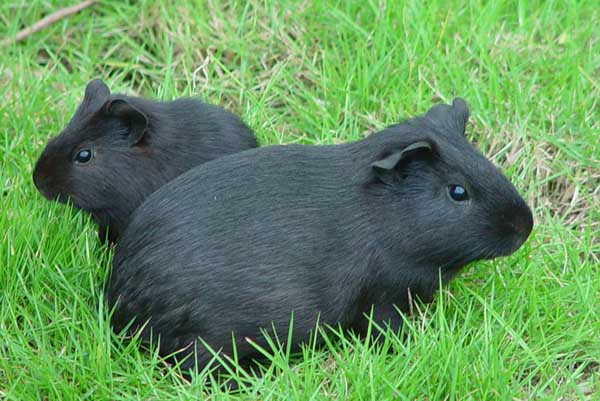
The reverse-haired guinea pig comes in many colors: white, black, yellow, gray, as well as white-black, white-yellow, and black-white-yellow combinations. Adults generally weigh around 0.8-1 kg. Its skin is tough yet soft, elastic, and warm, with excellent texture, and can be widely used in high-end fashion, various accessories, and the production of craft specimens. Raising reverse-haired guinea pigs requires little investment, yields quick results, and offers high returns. Under normal circumstances, they can be sold after 40-60 days of raising, being dual-purpose for both skin and meat with a high utilization rate. Because they are currently very rare, people generally keep them as high-end pets.
Feeding and Management
Artificially raised reverse-haired guinea pigs are kept in pools, but can also be raised in cages, in multi-tier systems, or free-range. Pools are made of bricks, cement, and wooden boards, generally 35 cm high, 60 cm long, and 40 cm wide. Whether cage-raised or pool-raised, indoor environmental hygiene must be well maintained. The housing for raising reverse-haired guinea pigs has no length restrictions, but facing south is best. The housing should have fresh air, and the rearing room should be disinfected once a month. Feed troughs and water trays should be frequently washed clean; this is the key to successful raising. The reverse-haired guinea pig is a herbivorous animal that eats wild grass, wild vegetables, tree leaves, and plant stems and leaves. Feed three times a day, 1-2 liang per meal, supplemented with a small amount of cornmeal, wheat bran, or piglet feed.
Breeding Techniques
Reverse-haired guinea pigs reach sexual maturity early. Generally, female guinea pigs show sexual characteristics 35-45 days after birth, and males 70 days after birth. However, females must wait until after day 70 before being bred. The estrous cycle of the female guinea pig is 16 days.
1. Seed selection: Reverse-haired guinea pigs used for breeding should have the following characteristics.
① Plump body, sturdy bones, straight limbs, and bright eyes.
② Good nutritional status and glossy coat color.
③ Male guinea pigs have symmetrical testicles of equal size; female guinea pigs have normal external genital development, etc.
④ Soft and elastic skin, with no skin diseases such as hair loss.
2. Mating selection: The estrus duration of the reverse-haired guinea pig lasts 1-18 hours, averaging 9 hours, with estrus mostly occurring between 5 PM and 5 AM the next day. After mating during the female's estrus period, a gelatin-like plug appears at the vaginal opening; this is a mixture of the male's semen and prostate secretions. Based on the presence or absence of this plug, one can determine whether mating was successful. In large-group raising, 3 to 4 females are usually placed with one male for mating. Never place 2 males together to compete for mating, otherwise they will fight and affect breeding. If breeding as original stock, a one-female-to-one-male mating method can be used. Females should be allowed to cohabit and mate after the young have been weaned, or within half a day after the female gives birth, the male can be placed in; mating at this time, known as blood mating, can all succeed, and the reproduction rate is also high.
3. Reproduction: The gestation period of the female guinea pig is 56-68 days, with litters generally numbering 3-5 young, and some 6-9. The young are weaned at one week, separated after weaning for feeding, and after 40-60 days of raising can reach marketable guinea pig size.
4. Pure breeding: When the reverse-haired guinea pig does not require major improvement, pure breeding can be adopted to consolidate the excellent qualities of the type, conducting yearly selection of the superior and elimination of the inferior, and continuously expanding the population.