What are the general principles of guinea pig raising?
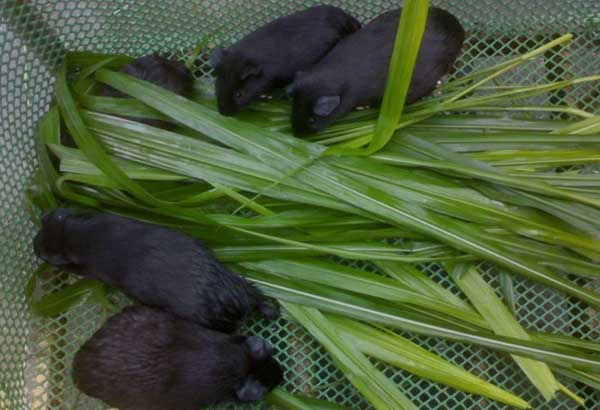
The feeding and management of guinea pigs is the comprehensive application of knowledge on guinea pig breeding, genetics, nutrition, and feed. Good feeding and management is the key measure for fully tapping the production potential of superior guinea pig breeds and improving the economic benefits of guinea pig farming. Improper feeding and management not only lowers guinea pig productivity but also causes guinea pigs to develop various diseases. Therefore, whether guinea pig production can achieve high benefits depends to a large extent on whether scientific feeding and management are implemented.
In the domestic guinea pig market, there are often two biases. One holds that since guinea pigs are herbivores, they can be raised well as long as the supply of forage is met; another holds that to make guinea pigs highly productive, large amounts of concentrate feed must be put in, so as to achieve the goal of eating more and growing fast. Because feed is not selected scientifically according to the digestive characteristics of guinea pigs, unnecessary losses are brought to guinea pig production. Some people once raised newly introduced guinea pigs and spared no expense feeding them malted milk, glucose, and the like; the result was not high production, but on the contrary, digestive tract diseases occurred continuously.
Although guinea pigs are herbivores, their ability to digest crude fiber is not very strong, so when feeding guinea pigs green and roughage feed, attention must be paid to quality and quantity. Feeding only green feed without concentrate feed will lower guinea pig productivity and also cause disease. Conversely, if large amounts of concentrate feed are provided, with little or no green and roughage feed, the consequences produced are even more serious than feeding only green and roughage feed. In order to achieve high benefits in guinea pig production, feed should be selected according to the different physiological periods of guinea pigs (such as growth and development, gestation, lactation, mating, etc.) and different production purposes (fattening, wool production, skin production). According to China's national conditions, the method of feeding guinea pigs mainly with green and roughage feed supplemented with an appropriate amount of concentrate feed should be adopted; where conditions permit, a variety of feeds can also be processed into a small amount of complete-price pellet feed to feed guinea pigs, and the effect will be even better.