Detailed Explanation of Key Points in Adult Black Guinea Pig Feeding and Management Techniques
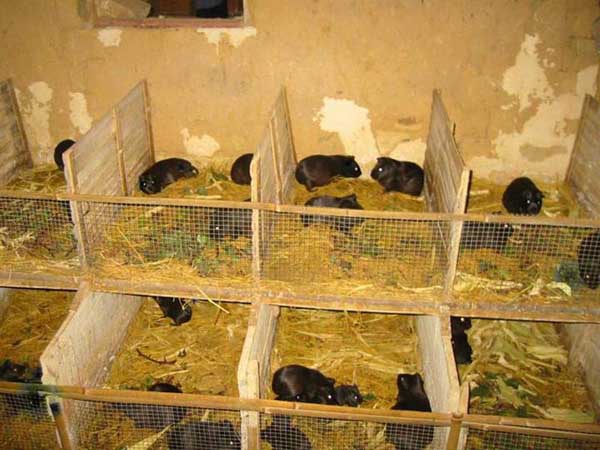
Separate Pen Feeding
They should be fed in separate pens according to size and strength, to make management easier for the keeper. In addition, to prevent inbreeding or early mating, those of the same parentage but different sex should be kept and fed separately.
Reasonable Feed Feeding
The feed for adult guinea pigs should be mainly green feed, with concentrated feed as a supplement (this makes the meat very delicious). Feed twice a day, morning and evening. The daily amount of green feed is 250 grams per animal, and about 25 grams of concentrated feed per animal. Try to achieve fixed times and fixed amounts. If green feed is insufficient for a relatively long time, it will lead to vitamin deficiency and cause hair loss, so attention should be paid to supplementing vitamins, and the feeding formula should be relatively stable. About every 10 days, feed heat-clearing and detoxifying herbs, such as Centella asiatica and Andrographis paniculata, to promote appetite, prevent pneumonia, and reduce disease. Moreover, if you choose to raise them as commercial guinea pigs, it is best to free-range them, as this makes the meat firmer and more delicious.
Observe More
1. Observe food intake: Under normal circumstances, with feed given according to the amount, the black guinea pig finishes it before the next day's meal. If a lot remains, it indicates poor appetite, which is abnormal, and the cause should be found and remedied promptly.
2. Observe feces: Normal black guinea pig feces have a smooth surface, are oval, and turn brown after drying; being easily broken is normal. If the excreted feces are small and hard, not easily broken, this is constipation, caused by feed that is too dry, and more juicy green feed should be given. If the excreted feces are unformed with more moisture, and the anus is stuck with loose feces with a fishy foul odor, this is enteritis; add lactasin tablets or oxytetracycline to the feed, or feed some Andrographis paniculata for treatment.
3. Observe body weight: A normal guinea pig has a sturdy, full and even front and rear body, strong limbs, and bright, spirited eyes. If the body is large in front and small in the rear, with uneven development, dull hair, and listlessness, it is mostly illness or malnutrition, and the cause should be identified and treated promptly or nutrition increased.
4. Observe coat color: A normal guinea pig has a glossy black coat with luster and even distribution, and likes to rub its body after eating its fill. If the coat is dry and dull, loose and messy, standing upright, or even shedding hair, it indicates malnutrition, mostly caused by vitamin C deficiency or direct sunlight. Green feed should be increased and vitamins and peanut bran added to the feed, and direct sunlight reduced, so that the body can recover.
5. Observe activity: A normal guinea pig is agile, likes to jump around, and playfully tussle with each other. If it is listless, not very active, and often sleeps or hides in the pen nest, it is mostly ill and should be checked and treated.
Heatstroke Prevention and Cooling
When the air temperature exceeds 37°C, black guinea pigs show restlessness and difficulty breathing, and at this time measures for heatstroke prevention and cooling should be taken. Specifically, do the following:
1. Ventilate and let air through, opening all doors and windows.
2. If conditions permit, install fans or exhaust fans.
3. Pay attention to density: it is best to keep 2 to 3 per pen (a pen of 0.3 sq m).
4. Place wet sandbags beside the rearing pens, and splash cool water on them 1 to 2 times every noon, or splash water in the corridor to cool down.
5. Set up shade on top of the breeding house.
6. Feed more juicy feed, such as watermelon rind, sweet potato, jicama, carrot, vegetable leaves, etc.
Cold Prevention and Warmth
Before winter begins, feed sufficient nutrient-rich feed, and do well in fattening to improve physical condition and prevent cold. After winter begins, the doors and windows of the guinea pig house should be covered with door curtains and window curtains made of cotton felt and lowered to prevent cold wind from entering. Line the pens with soft grass or cloth so the guinea pigs can go inside to keep warm. At the turn of winter and spring, the temperature changes unpredictably, and guinea pigs are prone to catching cold and dying. Pay attention to weather forecasts, take measures, and stabilize the temperature inside the house to prevent it from fluctuating high and low.