Methods and Techniques for Selecting Black Guinea Pig Breeding Stock
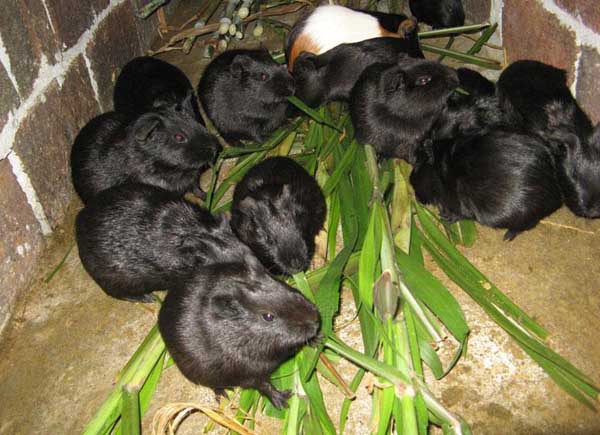
Selection Methods for Black Guinea Pig Breeding Stock
When retaining breeding stock in black guinea pig farming, superior individuals must be selected as parent guinea pigs. The reference criteria are as follows:
1. Full and elongated body conformation, good nutrition, and thick, sturdy bones.
2. Glossy coat color, with clean and dense fur.
3. Streamlined body shape, with head, neck, chest, abdomen and rump compactly structured. Agile and lively in movement.
4. Bright eyes with no secretions. Moist nose with no hair loss. Steady breathing.
5. Soft and elastic skin, with no skin diseases.
6. In males, symmetrical testicles, fine scrotal skin, and normal penis development. In females, clean vulva, well-developed mammary glands, and prominent nipples. According to the characteristics of each strain, select offspring from the 2nd to 5th litters of parent guinea pigs that are strong in constitution, vigorous, and highly disease-resistant as breeding stock, and promptly cull offspring that grow poorly. The feeding and management of guinea pigs kept for breeding are basically the same as those of breeding guinea pigs, but attention should be paid to moderate nutrition to avoid excessive obesity, which can lead to infertility.
7. Maintain the vigorous reproductive capacity of the population. Breeding guinea pigs can be culled after continuous use for 12 to 18 months and production of more than 5 litters. Those that are weak and sick should also be culled promptly. For guinea pigs that are excessively depleted due to production (manifested as hair loss and emaciation), mating should be stopped and they should be rested for a period, resuming production only after recovery.
8. Records. Records in guinea pig production are basically the same as those for mice. For single-color guinea pigs, individual records can be kept by ear notching, while for multi-color guinea pigs, records can be kept by using the differences in the distribution positions of coat colors on the body surface.