What economic value does black guinea pig farming have? A comprehensive interpretation of farming benefits
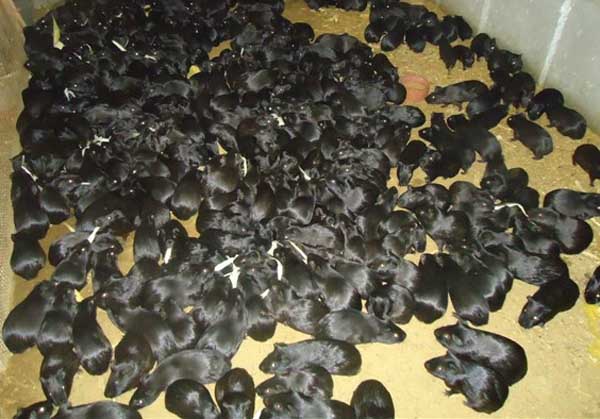
The black guinea pig is a high-protein, low-fat, low-cholesterol food. The melanin it contains can clear free radicals in the human body and prevent lipid peroxidation, thereby playing a role in delaying aging; its iron content is 3 times that of soft-shelled turtle, and it is also rich in the anti-cancer elements zinc and selenium, while its cholesterol and saturated fatty acid content is very low. It is an ideal nutritional and tonic health food, in line with the new 21st-century consumer trend for natural health-promoting black foods. Because black guinea pig meat is almost entirely muscle, its fibers are finer and more tender than rabbit meat, and it has no gamy or mutton-like odor, so it is easy to cook until tender and well suited to quick cooking. Black guinea pig meat is sweet in flavor and neutral in nature, with the effects of tonifying qi and nourishing blood and removing toxins, and is used to treat weakness, kidney deficiency in the elderly, and postpartum anemia. The testes of the black guinea pig can be used to produce drugs for treating epilepsy, and its blood can be used to extract the pharmaceutical raw material serotonin.
The fur and skin of the black guinea pig are a very good processing material for fur clothing and handicrafts. Its processing performance and decorative performance can rival mink fur, and it can be used to make fur clothing, shawls, gloves and a series of guinea pig leather toys. The black guinea pig can also serve as an ornamental animal, providing a beloved pet for pet breeders, especially children.
The black guinea pig is a small animal with a gentle temperament that is easy to restrain. Its blood is highly valuable for use and relatively convenient to collect, so it can be widely used in experiments in physiology, medicine, immunology, reproduction and bioengineering. According to reports, Japan, South Korea, China and other countries all use black guinea pigs as experimental animals, with annual demand of more than several hundred thousand, and domestic demand in the future will far exceed several hundred thousand. Therefore, the black guinea pig is an ideal experimental animal with wide applications.
Black guinea pig manure and urine are high-quality organic fertilizer. One adult black guinea pig accumulates 90-120 kg of fertilizer per year. The content of the three key elements nitrogen, phosphorus and potassium in black guinea pig manure is far higher than in the manure of other livestock and poultry. According to estimates, 100 kg of black guinea pig manure is equivalent in fertilizing effect to 10.92 kg of ammonium sulfate and 1.97 kg of potassium sulfate, and black guinea pig fertilizer can improve soil structure, increase organic matter and raise soil fertility. Tests in the yellow clay (acidic) soil of Phoenix Mountain in Chengdu, Sichuan Province showed that yellow clay soil treated with black guinea pig manure increased its organic matter by 42.3% and its nitrogen content by 43.86%, significantly improving the soil quality and soil structure.
In summary, given China's national conditions and the advantages of the black guinea pig industry, vigorously developing grain-saving black guinea pigs has excellent farming prospects. Of course, the key is correct guidance. Speculating in breeding stock is not real skill; developing a commodity economy is the way forward.