What are the prevention and treatment methods for bloat in guinea pigs?
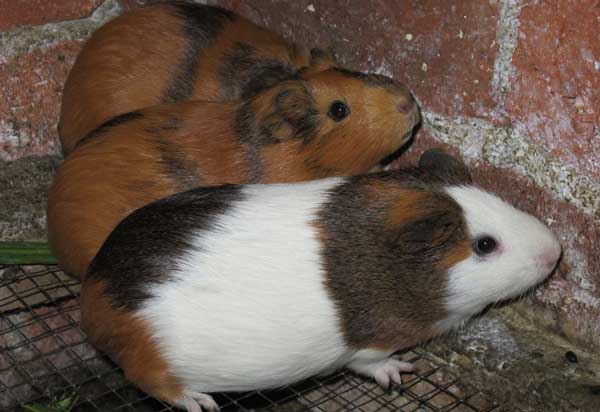
If you know how to raise guinea pigs in captivity and manage them strictly, you can effectively prevent disease, and even if some die from illness, it will only be a very small number. If the feed you give them spoils, if feeding is irregular, if the green feed is not clean, if the nutrition is incomplete, or if management is careless, disease will occur. Two common diseases are described below.
Bloat
It is mostly caused by eating moldy or spoiled feed or drinking contaminated water, or by eating greens that are still wet with dew or greens with too much water content, leading to indigestion. It mainly presents as abdominal swelling, listlessness, reduced or stopped eating, pale lips, and feces that are plentiful and loose or watery, green, and foul-smelling.
Once a sick animal is found, it must be isolated immediately and promptly given drugs such as chloramphenicol or oxytetracycline. You can also boil the herb Andrographis paniculata (chuanxinlian) in water and feed it, for 2-3 consecutive days, 1-2 times a day. You can also wash Centella asiatica (leigonggen) and let it dry, then feed it raw.
Emaciation disease
Because the diet has been monotonous for a long time, or due to malnutrition, or because dry feed is given without water, digestion is impaired and eating stops, or because a stomach disease in the guinea pig was not discovered and treated in time, the animal becomes thinner day by day.
You can supplement feeding with cod liver oil or egg yolk, then mix cooked soybeans into the feed and feed that, and after 10 consecutive days return to the regular feed. At the same time, add poultry multivitamins. If the body temperature rises, you can inject 20,000-30,000 units of penicillin intramuscularly, twice a day, for 3-5 consecutive days.