How Many Litters Do Bamboo Rats Have a Year? A Detailed Explanation of Bamboo Rat Breeding Patterns
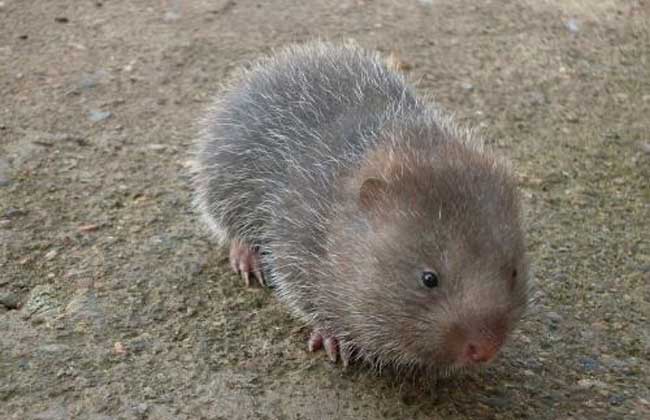
Bamboo rats are rodents of the genus Rhizomys in the family Spalacidae, with high economic and medicinal value. Developing bamboo rat farming has the characteristics of wide adaptability, grain saving, strong reproductive capacity, fast growth, easy raising and management, and substantial profits. It can not only be vigorously developed in rural areas, but is also suitable for household raising by urban residents and factory-scale farming. Let's take a look below at how many litters bamboo rats have a year!
How many litters do bamboo rats have a year?
Under normal circumstances, bamboo rats have 3 to 5 young per litter and 2 to 4 litters per year, and the litter production of different bamboo rat species is not the same. Generally, raised bamboo rats can reproduce after 6 months of age, usually producing more than 10 young per year. The hoary bamboo rat (Rhizomys pruinosus) has a gestation period of 45 days, 1 to 5 young per litter, and a lactation period of 1.5 months. The hoary bamboo rat reaches sexual maturity at 8 to 10 months, has a gestation period of about 45 days, a lactation period of 30 to 40 days, 1 to 5 young per litter, and three litters per year. The Chinese bamboo rat (Rhizomys sinensis) reaches sexual maturity at 7 to 8 months, the female bamboo rat generally has a gestation period of about 2 months, a lactation period of about 40-odd days, 2 to 6 young per litter, and 3 to 4 litters per year. The red-cheeked bamboo rat is a rare species with a small population; it reaches sexual maturity at 8 to 10 months, has a gestation period of 45 to 50 days, and 3 to 8 young per litter. The lesser bamboo rat has a gestation period of 60 days, a lactation period of 30-50 days, and 1 to 5 young per litter, with a small population.
Bamboo Rat Breeding Habits
Bamboo rats can come into estrus and mate throughout the year. Breeding rats mate 1 to 3 days per estrus, 1 to 2 times per day, and produce 1 to 6 young per litter. After mating and conceiving, the female rat gives birth after about 60 days. 6 to 7 days before giving birth, the nipples become exposed, activity decreases, and movement becomes sluggish. Before giving birth, it occasionally makes a “gu--gu--” sound. During delivery, the young are born together with the fetal membrane and placenta. While giving birth, the female rat eats the fetal membrane and placenta, and at the end bites off the umbilical cord and cleans the amniotic fluid from the young's bodies. Delivery takes 2 to 4 hours, and at the fastest it still takes 1 to 2 hours to complete. At this time, the “ji--ji--” calls of the young can be heard. During delivery, avoid watching and touching with hands, and keep the environment quiet. 12 hours after giving birth, the female rat begins to nurse the young. Newborn young weigh only about 10 grams and have no hair on their bodies. Bamboo rats grow relatively fast, and at 6 months of age they can reach a weight of about 2 kg.
Species of Bamboo Rats Raised
1. Chinese bamboo rat: The Chinese bamboo rat is distributed in central and southern China, northern Myanmar, Vietnam and other places. It is the most widely distributed among the bamboo rat species in China, hence it is called the “common bamboo rat.” Adults have a body length of 30 to 40 cm and a weight of 1.5 to 3 kg. Body color changes with age from dark to light: juveniles are dark grayish-black all over, adults have brownish-gray fur on the back, and older individuals have brownish-yellow back fur.
2. Hoary bamboo rat: The hoary bamboo rat is distributed in southeastern China, India, the Malay Peninsula and other places. It lives underground and feeds on reed grass roots, cogongrass roots, bamboo roots, bamboo nodes and bamboo leaves. It is smaller than the Chinese bamboo rat, with a body length of 35 cm and a weight of 1.3 to 2 kg. Its hair is relatively coarse, hence it is called the “coarse-haired bamboo rat.” Its back is brownish-gray, and the back fur has many white-tipped guard hairs with a sheen, which is how the “hoary bamboo rat” got its name.
3. Piebald bamboo rat: Piebald bamboo rat: The piebald bamboo rat is mainly distributed in northern Guangxi and western Yunnan and other places. Its body shape is similar to the Chinese bamboo rat, and its weight is about 2 kg. At present, there are pure white and gray-white mixed types, caused by gene mutation of the Chinese bamboo rat, and they are extremely rare.
4. Large bamboo rat: The large bamboo rat has a narrow distribution area and a small population, and is a rare species, mainly in China's Xishuangbanna region of Yunnan, the Malay Peninsula, Sumatra and other areas. It is large and obese, and is the largest bamboo rat. Adults are about 40 cm long and weigh 2 to 4 kg. Its fur is sparse and coarse, and its cheeks are light rusty brown or brownish-red, hence it is called the “red-cheeked bamboo rat.” Its back and flanks are light grayish-brown. It goes out to activity at dawn and dusk, feeding on bamboo roots and bamboo shoots, and also eats other plants.
5. Lesser bamboo rat: The lesser bamboo rat has a narrow distribution area and a small population, and belongs to the rare species. It is distributed in the tropical rainforests at an altitude of about 600 m along the China-Myanmar border and the bamboo thickets at the edges, mostly digging burrows to survive in environments such as taro and cassava fields. It is the smallest species in the family Spalacidae, similar in body shape to the Chinese bamboo rat, with a weight of only 0.2 to 0.3 kg, and its whole body is covered with brown fur.