What nutrients does a bamboo rat need in its daily diet?
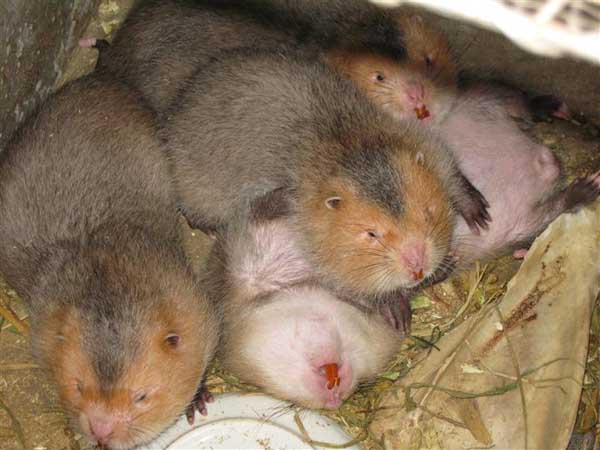
Based on nutritional principles, feed composition and the needs of bamboo rats at each stage of growth and development, selecting appropriate feeds in reasonable combinations and feeding them by scientific methods can significantly improve the production performance of bamboo rats. In bamboo rat breeding, we need to provide bamboo rats with the nutrients their bodily functions require, in order to increase their nutrition and speed up their growth rate. The following are the nutrients that bamboo rats need; let us learn about them together.
Protein nutrients
Protein is the material basis of all life. It is the main raw material for the renewal and repair of living body tissues, and is extremely important for growth and development. Dietary protein is divided into three categories:
1. Complete protein. Complete protein can not only maintain the health of the body, but also promote growth and development; it is mainly found in milk, egg white, fish and various lean meats.
2. Partially complete protein. Partially complete protein can sustain life, but cannot promote growth and development, such as gliadin in wheat.
3. Incomplete protein. Incomplete protein cannot provide the amino acids the animal body needs; on their own they can neither promote growth nor sustain life. For example, collagen in pork skin. Amino acids are the smallest units of protein, which is to say that protein exists in the body in the form of polypeptide chains composed of amino acids. There are several essential amino acids in the body, including lysine, methionine, leucine, isoleucine, threonine, valine, tryptophan and phenylalanine. The relative deficiency of lipids and complete protein is the fundamental reason why bamboo rats are naturally difficult to raise to full size.
Carbohydrate nutrients
70%~80% of the energy in a bamboo rat's body comes from carbohydrates. In the bamboo rat's body, carbohydrates are mainly distributed in the liver, muscles and blood, accounting for less than 1% of body weight; their main function is to produce heat energy and maintain life activities and body temperature. If a bamboo rat takes in too many carbohydrates, they are converted into fat in the body and deposited as energy storage; if the ration is short of carbohydrates, the bamboo rat uses the fat in its body as a source of heat. Therefore bamboo rats must be supplied with sufficient energy feed, such as sugarcane, corn, jicama, potato and so on, to meet their heat requirements.
Fat nutrients
Fat is a high-energy substance; its main role is to produce heat energy and it helps the absorption and utilization of fat-soluble vitamins (vitamin A/D). However, the main source of energy in a bamboo rat's body is converted from carbohydrates rather than fat, and most of the fat deposited in a bamboo rat's body is also converted from carbohydrates in the feed. Therefore bamboo rats do not need much specially supplemented fatty feed; it is enough to supply an appropriate amount of soybean, peanut and so on during the nursing period for young rats and in winter, at 2% of the diet. Fat is not easy to digest and should not be taken in excess, lest it cause indigestion and diarrhea.
Mineral nutrients
Minerals are indispensable nutrients for the growth and development of bamboo rats and for strengthening their disease resistance, and commonly include: calcium, phosphorus, potassium, sodium, chlorine, iron, zinc, copper, manganese, cobalt, molybdenum, selenium, iodine, chromium and so on.
1. Calcium and phosphorus. These are the main components of the bamboo rat's skeleton; calcium is the mineral contained in relatively large amounts in the bamboo rat's body, and the bones and blood serum contain large amounts of calcium. During pregnancy, the serum calcium of female rats is higher than usual. Both cell activity and blood clotting require calcium. Calcium and phosphorus exist in the bamboo rat's body in the form of calcium phosphate, and a small portion of phosphorus combines with magnesium to form magnesium phosphate, which exists in the blood serum, muscles and nervous tissue. If the diet is deficient in calcium and phosphorus, it will cause chondrodystrophy, soft-leg disease, poor development of young rats and rickets and so on. Various beans and bone meal are rich in calcium and phosphorus, and crop straw also contains small amounts of calcium and phosphorus. Grains contain more phosphorus and less calcium, so attention should be paid to balancing them when mixing feed.
2. Sodium and potassium. They exist in the body fluids and soft tissues of bamboo rats, often combined with chlorine or other non-metallic ions to form salts. Their main function is to maintain the acid-base balance and osmotic pressure of the blood. Feed is generally not deficient in potassium; sodium can be supplemented from salt, and domestic bamboo rats are commonly given refined feed mixed with salt water to supplement sodium.
3. Iron, copper, cobalt. They are important substances for blood formation. Iron is an important component of hemoglobin; iron deficiency will cause anemia. Red clay contains large amounts of iron, and the seeds of leguminous and arborous crops and green feed also contain a certain amount of iron. Copper is the catalyst needed for the formation of hemoglobin; if copper is deficient it will affect the normal absorption of iron and at the same time produce anemia. Cobalt is the main component of vitamin B12, and vitamin B12 promotes the regeneration of red blood cells and the formation of heme, so cobalt deficiency will cause pernicious anemia.
4. Manganese, zinc, iodine, sulfur, selenium. These elements are present in very small amounts in the bamboo rat's body, but they are also very closely related to the normal growth and breeding of bamboo rats.
Vitamin nutrients
There are two kinds of vitamins, fat-soluble and water-soluble; common water-soluble vitamins are B1, B2, B6, B12, C, folic acid and so on; fat-soluble ones are: AD, E and K groups. B6 and K can be synthesized by bacteria in the animal's intestinal tract, and the amount synthesized can meet the animal's needs. Vitamin C cannot be synthesized in primates and rodents, but it is abundant in green plants, and the same is true of folic acid.
Water
Water is the best solvent in the body; bamboo rats obtain it from green feed and succulent feed, so when raising them there is no need to give them water to drink directly.