Add a little something to your watering can and your plant roots will grow as strong as if they were treated with chemicals, while yellow leaves and mosquitoes disappear completely
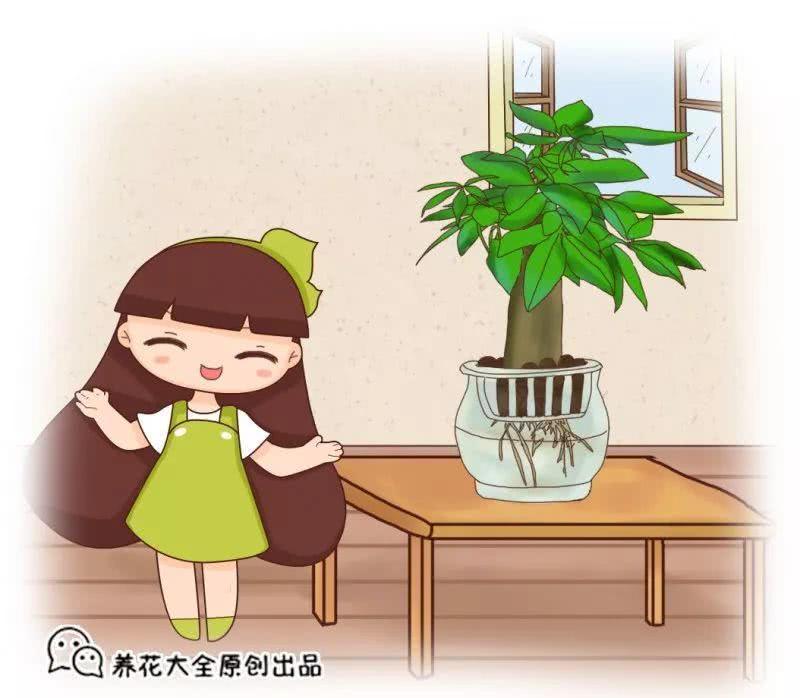
Recently a friend bought a few stalks of lucky bamboo, took them home and put them in a vase to grow in water. Within a few days the leaves turned yellow, which was really frustrating. Actually, this friend of Huahua is just like most flower lovers: when growing plants in water, they forget the following precautions. Come and take a look, and once you've learned them, your water-grown plants will be fine no matter how long you keep them!
No roots when grown in water, and they die within days
Complete Guide to Growing Flowers
Whether it is a water-grown plant you just brought home or one you casually tossed into water, if it still hasn't grown roots after a week, it is in danger. The plant will turn yellower and yellower and die very soon!
Solution: trim off the bottom and re-induce rooting
Trim off the plant's roots. For small plants like lucky bamboo, cut off 1-2 cm at an angle, then put them back in water to grow new roots. For plants prone to rot like the money tree, cut off the dead parts completely, then use water vapor to induce rooting; soaking it directly in water makes it prone to rotting again.
To increase the rooting rate, you can add one aspirin tablet to the water, preferably crushed and stirred in evenly. Aspirin contains salicylic acid, which can stimulate root growth.
No nutrients in the water, so leaves turn yellow and the plant doesn't grow
Complete Guide to Growing Flowers
Water-grown plants get fewer nutrients than soil-grown ones. Think about it: if you grow them in plain water alone, how can they keep growing without yellowing leaves?
Solution: add iron nails and nutrient solution
For the water used for water-growing, it is best to let it settle for half a day first before use, to reduce the chlorine in tap water. Put a few rusty iron nails in the water to supplement some trace elements for the plant, which can reduce the yellowing leaf problem.
Of course, flower lovers can also add nutrient solution twice a month, 2-3 drops each time is enough; no need for too much.
Too many roots cause severe oxygen deprivation
Complete Guide to Growing Flowers
Some flower lovers barely tend to their plants after they root in water, thinking the more roots the better. Little do they know that roots also need to breathe. When all the roots are tangled at the bottom of the bottle, the oxygen-deprived plant looks "pale" and its color turns yellow and faded.
Solution: trim the roots and remove the yellow leaves
Comb through the roots, tidy them up, then prepare to trim. The scissors or tools used for trimming are best sterilized first (scalding with boiling water, wiping with alcohol or carbendazim all work).
Trim the tidied roots to a uniform length, leaving just 3-5 cm. After trimming, it is best to soak them for half an hour in a carbendazim solution to disinfect, avoiding wound infection. Remove all the yellow leaves to reduce nutrient consumption, and place the plant in a cool, ventilated spot to continue growing in water.
Crowded leaves and lack of light
Complete Guide to Growing Flowers
Do you think all water-grown plants love shade and had better not see sunlight? Actually, you are only half right. Water-grown plants had best not be exposed to direct strong light, but without sufficient light they easily get yellow leaves. If the leaves are too crowded, the leaves shaded underneath easily turn yellow.
Solution: remove the yellow leaves and move the plant to a spot with good light
After yellowing, water-grown leaves are generally hard to turn green again, so it is best to remove them promptly. This both prevents them from shading each other and saves nutrients for growing new green leaves.
Water-grown plants are best placed in a spot at home with good light, as long as they are not exposed to direct strong light. In a dark place, even if they don't die, they will become "sallow and thin," which is bad for the plant's healthy growth~
Bugs appear and attract bugs, so annoying
Complete Guide to Growing Flowers
After growing plants in water, many flower lovers just keep adding water and are too lazy to wash the water-growing bottle, so insect eggs easily breed. The eggs later develop into mosquitoes and fungus gnats, which are very hard to clean up!
Solution 1: change the water promptly and clean monthly
In the early stage of water-growing, it is best to change the water once every 3-5 days. Let the tap water you collect settle for half a day before use each time. Once rooting is stable, you can change or add water once every 1-2 weeks. Flower lovers, don't be lazy; it is best to wash the water-growing bottle once a month~
Solution 2: put a fish in the water-growing container
After rooting in water, the roots grow more and more, and cleaning them becomes a hassle. Fortunately, there is a brilliant way to solve it: keep a fish!
The little fish will eat the dirt in the water and sweep up all the insect eggs, and their waste can also serve as flower fertilizer, killing two birds with one stone. Some flower lovers worry about space, but Huahua thinks that as long as our container is the right size, keeping 1-2 small ones is just fine!
Did you grow any water-grown plants this summer?
If you have any other water-growing tips
You are welcome to share them with everyone
?