How to select breeding stock for bamboo rat farming? These selection tips you need to master
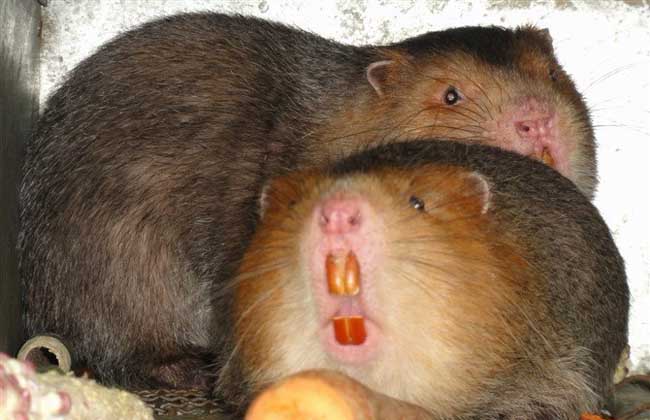
Breeding stock selection tips for bamboo rat farming
1. Head shape: Should be large, with a relatively short snout. The nose and mouth area should be relatively flat. The lower jaw should feel full and strong. The head should be straight and not tilted to either side.
2. Mouth: No fresh wounds on the lips, no redness or swelling. The hair at the corners of the mouth should be clean, with no drooling. The oral cavity should have no redness, swelling, or ulcers, and no unusual odor.
3. Eyes: Round, bright, and spirited. The eye sockets should have no tear stains, white discharge, redness, or swelling; the corners of the eyes should have no eye discharge or scabs. The eye area as a whole should not be sunken. The eyeballs should not bulge outward.
4. Nose: The rhinarium should be a moist, rosy red, with no nasal discharge. The nostril rims should be black. There should be no cyanosis or paleness. No damage and no unusual odor.
5. Ears: The pinnae should be intact, with no external injuries. The inside of the pinnae should be clean, with no unusual odor, scabs, or abscesses.
6. Teeth: The normal color is yellow agate, with even coloration. No alternating yellow and white mottled patches, no black teeth, cracked teeth, or lime-white teeth. Broken teeth are allowed, but the broken surface must be checked to ensure it is not hollow inside. The gums should have no redness, swelling, or ulcers. The tooth shape should be symmetrical and neat.
7. Limbs: Missing toes or claws are allowed. But the broken surface must be examined to see whether it has healed. On the back of the paws, there should be no abscesses and no lumpy red swelling caused by fungi, or silvery-white lesions left by sarcoptic mite infestation. The ankle joints must not be swollen. When walking, the joints should not turn outward. The thighs should be full, with firm muscle that is not withered.
8. Back: Straight and level; when standing, the lumbar muscles should be prominent, and the skin should be relatively tight. When moving, the skin should not be visible. The neck should be thick and strong, the rump round and solid, the flanks not noticeably sunken. The back should not be arched.
9. Abdomen: The sternum should not protrude, there should be no wrinkled skin under both armpits, and the skin should be full and warm to the touch. Do not choose those that are very red or very white. Except for pregnant rats, the belly must not bulge noticeably to both sides, or feel gas-filled and bloated when touched by hand. The abdominal hair should be sparse, and the hair along the midline of the abdomen should lie in a clear, uniform direction with no messiness, and no multiple zones of transverse striping. In female rats, the teats should be clear and distinct, with none missing. The genital area should be clean with no unusual odor. In male rats, the testicles should be noticeably full. No cryptorchidism or monorchidism. The opening of the penis should be clean. In young rats, the testicles are not obvious, but a slight bulge can be seen.
10. Tail: Thick and short is preferred. When lifted by the tail, it should feel firm and solid. The tail skin and the tail body should not feel loose. There should be no obvious abscesses on the surface. When walking, the tail should be held up and not drag on the ground. No abscesses, no external injuries, and not icy cold.
11. Rump: The rump should be full and firm, and the anus should be clean with no unusual odor.
12. Feces: When the tail is lifted, you can usually see a half-excreted dropping at the anus of the bamboo rat. Because wild rats and domestic rats have different feed structures, the color of the feces should not be like the yellow seen when feeding bamboo or the gray seen when feeding commercial feed. The color of wild rats' feces varies mainly with the types of food they eat. But in all cases, it must be capsule-shaped, with no mucus on the surface, no blood traces, and no loose or porridge-like feces. The feces should have no foul odor.
13. Hair: The hair should be glossy and smooth, with no reversed hair. Those with no hair on the nose must not be chosen; those with thin, dry, yellowed hair and an uneven hair surface must not be chosen. The rump hair and back hair should not cross, and the hair tips should point in the same direction. In young rats over half a jin, the downy hair should be more abundant than the guard hair. Those with messy body hair, or messy, upright, unruly hair on the head, must not be chosen. No patchy hair loss.
14. Skin: Moist and lustrous, tight, with no wrinkles. From the armpits of both forelimbs to the sides of the abdomen, there should be no wrinkled skin, and the whole body should have no blue-purple patches, raised red spots, or white patches with silvery-gray flakes. No abscesses, and no pus inside scabs. Those with deathly pale, pale gray, yellow-stained, or purple-red skin must not be chosen. In female rats, the teats should not be blackened or yellowed.
15. Spirit: The eyes should be spirited, responses to external stimuli should be quick, and movement should be agile. When lifted by the tail, it should bend upward quickly and powerfully. For female rats, even if they do not bend upward quickly, they are still required to alternately grasp and scratch quickly and powerfully with both forelimbs when lifted by the tail. The sound made when threatened should be powerful and loud, without cracking or gong-like tones.
16. Body shape: Male rats are required to have a large head and thick neck, a long body with a straight, level back, prominent lumbar muscles, a firm and powerful rump, a tucked abdomen that does not sag, sturdy limbs, and a raised tail. Female rats should have a relatively slightly smaller but refined head shape, full cheekbones, a moderate neck, a straight, level back, a rounded abdomen that is not shrunken, a full rump, steady limbs, and a raised tail.
By combining the above common knowledge on selecting bamboo rats and choosing carefully, you will select the young rats you want.