Detailed Explanation of Key Points of Bamboo Rat Breeding Technology in Guizhou
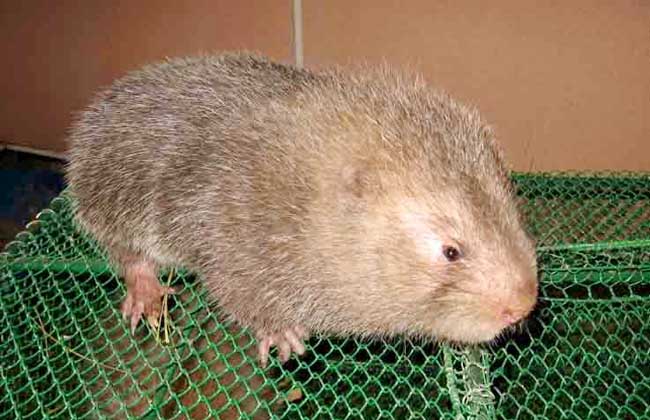
On the Adaptability of Out-of-Region Bamboo Rat Seedlings in Guizhou
In recent years, I have witnessed numerous cases in which local bamboo rat breeders in Guizhou purchased out-of-region seedlings, resulting in large-scale losses and total wipeouts of their breeding stock. For example, Dazhu Animal Husbandry in Jinsha, Guizhou, purchased 500 pairs of bamboo rat seedlings of about one jin each from Xiangxi, Hunan, in one batch. Within one month after purchase, more than 400 were lost due to various diseases, and the outbreak has still not been fully brought under control. A friend surnamed Jiang in Chishui, Guizhou, bought wholesale seedlings from Guangxi in Guiyang; after 2 months of breeding, he lost more than 50 percent. He had built rat sheds for breeding bamboo rats and obtained the relevant breeding certificates. But his enthusiasm and ambition for breeding were crushed by the devastating losses. There is also Xiao Yang in Chishui, who has bred bamboo rats for two years and from the time of purchase until now has suffered losses every few days, which also gives him endless headaches. Whenever he talks about bamboo rat breeding, he grits his teeth. Failures like Dazhu Animal Husbandry and Xiao Jiang, who bought seedlings out of region and failed, are too numerous to count. Why is this? Is it really that out-of-region rat seedlings are no good?
Bamboo rats were domesticated from wild animals, and the domestication time has been relatively short, so they still retain some habits from their wild state, such as being timid and easily startled. Artificial breeding methods vary from place to place, resulting in incomplete and non-uniform bamboo rat breeding techniques. After purchasing bamboo rats, newcomers have not grasped the habits and characteristics of bamboo rats and raise them according to methods they find online or simply assume to be correct. Some even rush into it without understanding basic temperature, humidity, temperature differences, or feed balance. The outcome can be imagined.
I believe the reasons for failure in out-of-region seedling purchases are as follows.
1. Quality of seedlings. Newcomers buying breeding stock all hope to buy cheap and fine bamboo rat seedlings. Because local seedlings are priced high, at around 500 yuan per pair, they search online for low-priced seedlings. Seedlings quoted from Guilin, Guangxi, are around 200, basically half the price of local ones in Guizhou. Many people think that even if they lose half after bringing the breeding stock home, the price would still be on par with local seedlings, and if they are lucky they will get a real bargain. What they fail to realize is that even those that survive by luck will become carriers of harmful bacteria because of earlier infections. When temperature changes, feed changes, or improper raising occurs, the outbreak will recur just the same, leading to a long-term nightmare.
2. Because buyers drive prices down, sellers have to consider feeding costs or transport costs, and try to buy cheap seedlings to sell to those pressing prices down. This is because if rat dealers went to buy good seedlings, adding transport costs would leave them no profit at all. In order to make a profit, inferior seedlings and mixed wild seedlings become the rat dealer's first choice. When you are happy about buying seedlings at a low price, your breeding has already set out on a rough road.
3. Local breeders act as rat dealers to deceive newcomers. This method is more concealed and more harmful. Also for profit, they resell various long-distance transported bamboo rat seedlings whose quality cannot be guaranteed.
4. Newcomers do not have enough knowledge and understanding of breeding technology. Blindly following the trend, they also invest in the bamboo rat industry because they are drawn by its huge profits. Even the best seedlings, without good management and technical support, and relying entirely on various technical materials shown off online to carry out bamboo rat breeding, or willfully innovating based on their own understanding, is utterly ridiculous. Utterly pitiful.
5. The stress that long-distance transport places on bamboo rats is easy to imagine. After long-distance closed transport, continuous transfers, and constant catching, strong and fatal stress responses have already been caused. Buyers also do not understand how to relieve stress or how to manage the many details after arrival. When the environment, feed structure, temperature differences, and other conditions change, the occurrence of disease in bamboo rats is unavoidable.
6. The sources of breeding stock are relatively mixed. No matter which site it is, it is impossible to provide a large number of seedlings in one go. Many breeding farms boast that their farm has several thousand pairs, or even more boast of tens of thousands of pairs, but the actual situation is that a site with 500 breeding females is already very rare. When breeding stock is insufficient and they cannot bear to lose the orders in hand, what do they do? They buy seedlings from other places or other farms to make up the number. The microbial environment of each site differs. When a breeding site frequently brings in seedlings from multiple sites, it also carries bacteria and viruses from other sites into its own site. This causes cross-infection and leads to bamboo rats becoming ill.