Detailed Explanation of Key Points in Wild Bamboo Rat Breeding Technology
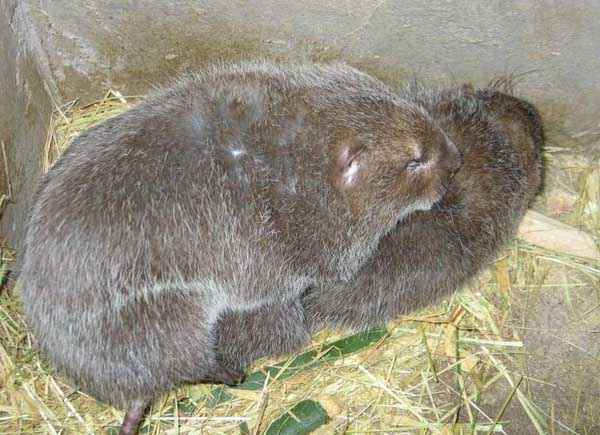
At present, there are more and more wild bamboo rats, and they are also favored by breeders, because catching wild bamboo rats and directly breeding them can save a considerable amount of cost. Since many breeders do not understand the living habits and behavioral patterns of wild bamboo rats, the key reason wild bamboo rat breeding fails is often that wild bamboo rats fight endlessly when kept together and refuse to eat. Therefore, it is necessary to understand the living habits of wild bamboo rats and master scientific breeding methods.
Selection of Wild Bamboo Rats
Select wild bamboo rats that are free of disease and injury and are physically strong as subjects for domestication.
Temporary Keeping in Small Groups
To prevent fighting, wild bamboo rats captured or purchased should be kept temporarily in groups of one litter each for a period of time, so that the bamboo rats can adapt to the artificial rearing environment. On days 1 to 3, the bamboo rats may not eat; this is a normal phenomenon. After they adapt to the environment, the bamboo rats will gradually begin to eat and start moving around. The temporary keeping period is 5 to 7 days.
Diet Training
This is the key to the success or failure of bamboo rat breeding. For wild bamboo rats, their living environment must be studied before diet training. When purchasing at the market, ask the seller where they were captured. If they were captured in a bamboo forest, then for diet training first use tender bamboo branches and bamboo shoots as lure food, while adding miscanthus stems and corn stalks, and gradually expand to other foods. If they were captured in a miscanthus-producing area, then first use silvergrass and corn stalks as lure food. After the lure feeding is successful, the single food used for lure feeding can be gradually reduced, then transition to a diversified diet, and concentrate feed should be added so that the bamboo rats obtain complete nutrition. During diet training, be patient and meticulous. If the feeding habits of the bamboo rats cannot be determined, various wild foods can be used separately for trial feeding. During diet training, feeding can follow the principle of gradually changing from wild miscanthus, bamboo branches, and thatch roots to artificially planted sugarcane stems, napier grass stems, sweet potato, corn kernels, and other coarse grains, and then transitioning to compound feed. Note that after wild food is provided and before the bamboo rats have eaten it, compound feed must absolutely not be fed. After such diet training, domestication can generally succeed.
Optimizing Group Composition
After wild bamboo rats are successfully domesticated, the groups must be further optimized in order to increase the reproductive rate of the bamboo rats and the body weight of the offspring. Breeding rats from different litters that are physically strong and uniform in size should be grouped in a ratio of 1 male to 1 female or 1 male to 2 females and kept in ponds for rearing. The female bamboo rats will soon become pregnant. In the late stage of pregnancy, the female rats must be kept in isolation. After the nursing female rats are weaned, they are returned to the original group for rearing. Grouping in this way can prevent inbreeding and can produce excellent offspring.